Fact-checked by the Prime Rate editorial team
Quick Answer
For most consumers, a bank credit card is the better financial choice. Store cards carry average APRs of 28.93% versus 21.47% for bank cards, and the gap makes carrying any balance extremely costly. Store cards only justify their place in a wallet when the cardholder spends heavily at one retailer, pays the full balance every month without exception, and holds an open-loop co-branded card rather than a closed-loop store-only product.
You’re standing at the checkout counter, and the cashier asks if you want to save 20% today by opening a store credit card. It sounds like a great deal, until you realize that store credit cards often carry average APRs exceeding 28%, compared to roughly 21% for standard bank cards. The store credit card vs bank card debate is not simply about perks. It’s about how much silent interest you might be paying every month without realizing it.
American consumers currently carry over $1.1 trillion in credit card debt, according to the Federal Reserve Bank of New York’s Household Debt and Credit Report. A significant portion of that debt sits on retail cards, products that are aggressively marketed at point-of-sale but rarely come with the full-picture disclosure that consumers deserve. Studies show that nearly 45% of store cardholders don’t pay their balance in full each month, meaning millions of Americans are quietly losing ground to double-digit interest on purchases they made at the mall.
This guide gives you a data-driven breakdown of every factor that matters, APRs, rewards structures, credit score impact, sign-up bonuses, acceptance limitations, and long-term financial consequences. By the time you finish reading, you’ll know exactly which card type belongs in your wallet, and which one you should probably leave on the counter.
Key Takeaways
- Store credit cards average an APR of 28.93%, versus 21.47% for general-purpose bank credit cards, a gap of more than 7 percentage points.
- A $500 store card balance carried for 12 months at 28.93% APR costs approximately $144 in interest, nearly 29% of the original purchase price.
- Sign-up discounts on store cards average 15%-20% off the first purchase, but the interest on any carried balance typically erases those savings within 60 days.
- Bank credit cards offering 2% flat cash back on all purchases can return $400-$600 per year to a household spending $20,000-$30,000 annually on cards.
- Opening a new store card can temporarily drop your credit score by 5-10 points due to a hard inquiry, with full recovery taking 3-6 months.
- Co-branded bank cards (e.g., airline or hotel cards issued by Visa/Mastercard) are accepted at 40+ million merchants globally, while closed-loop store cards work only at one retailer or family of brands.
In This Guide
- How Store Credit Cards Actually Work
- How Bank Credit Cards Work
- APR and Interest Rate Comparison
- Rewards, Cash Back, and Sign-Up Bonuses
- Credit Score Impact: What Opening Either Card Does
- Fees and Hidden Costs
- Acceptance, Flexibility, and Everyday Usability
- When a Store Card Actually Makes Sense
- When a Bank Card Is Clearly the Better Choice
- The Final Verdict: Store Credit Card vs Bank Card
How Store Credit Cards Actually Work
Store credit cards come in two primary forms. The first is the closed-loop store card, which can only be used at a specific retailer or its affiliated brands. The second is the open-loop co-branded card, which carries a Visa, Mastercard, or American Express logo and works anywhere those networks are accepted.
Closed-loop cards are typically easier to qualify for. Retailers partner with banks, often Comenity Bank, Synchrony Financial, or TD Bank, to issue these products. Because the underwriting criteria are more lenient, people with credit scores as low as 580-620 can often get approved. That accessibility sounds helpful, but it comes with a cost.
The Retail Partnership Model
The retailer earns a share of interchange fees and benefits from increased spending loyalty. The issuing bank profits from interest charges, which are substantially higher than those on standard bank cards. The consumer gets a short-term discount and long-term exposure to above-market interest rates.
Retailers design these cards to encourage habitual spending at their stores. Loyalty tiers, exclusive cardholder events, and bonus points on brand purchases are all engineered to increase your share of wallet at that specific retailer. According to Consumer Financial Protection Bureau research, point-of-sale credit offers increase average transaction size by 15%-25%, which benefits the retailer far more than the buyer.
Open-Loop Co-Branded Store Cards
Co-branded cards offer more flexibility since they function like regular bank cards at any merchant. Examples include the Amazon Prime Rewards Visa (5% back at Amazon), the Target Circle Card Mastercard (5% back at Target), and the Costco Anywhere Visa by Citi. These are genuinely competitive products with strong rewards in specific categories.
Even co-branded cards often carry higher APRs than their pure bank card equivalents. The brand partnership adds marketing and loyalty costs that get passed through to the interest rate. Always compare the APR of a co-branded card directly against a comparable bank card before deciding.
Synchrony Financial, one of the largest issuers of retail store cards, managed over 69 million active accounts across more than 1,400 retail partners, making it one of the biggest credit card issuers most consumers have never heard of by name.
How Bank Credit Cards Work
Bank credit cards are issued directly by financial institutions, Chase, Citi, Bank of America, Capital One, Discover, American Express, and others. They operate on open payment networks (Visa, Mastercard, Amex, Discover) and are accepted at virtually every point-of-sale terminal in the world.
Bank cards come in a broad spectrum: no-annual-fee cash-back cards, premium travel rewards cards, secured cards for credit building, and balance transfer cards with 0% introductory APR periods. The variety is enormous, and competition between issuers keeps product quality relatively high.
Underwriting Standards and Credit Access
Bank cards generally require stronger credit profiles. A card like the Chase Sapphire Preferred typically requires a credit score of 700 or higher. However, there are excellent no-fee bank cards, like the Discover it Cash Back or the Citi Double Cash, that are accessible to consumers with scores in the mid-600s.
Because bank issuers underwrite more carefully, their cardholder base tends to have lower default rates. That lower risk allows them to offer more competitive interest rates and better rewards than most store cards. The economics simply work differently when you’re not relying on impulsive point-of-sale approvals to drive volume.
The Role of Rewards Programs
Bank card rewards programs are designed to be broadly useful. Cash back, transferable points, airline miles, and hotel points can be redeemed across a wide range of spending categories. The Federal Reserve’s Survey of Consumer Finances consistently shows that higher-income households capture significantly more value from bank card rewards, largely because they pay balances in full and never pay interest. Paying in full every month is the real key to making any rewards card work.
According to the Consumer Financial Protection Bureau, the top 8 credit card issuers in the U.S. generated $105 billion in interest and fee revenue in 2023 alone, with store card APRs contributing disproportionately to that figure.
APR and Interest Rate Comparison
The most significant difference between store and bank cards is the annual percentage rate (APR). This single number can transform a modest balance into a serious financial burden within a year.
According to data from the CFPB’s credit card market reports, the average APR on store-branded credit cards consistently runs 6-9 percentage points above the average for general-purpose bank cards. In a high-rate environment, those spreads become especially painful.
| Card Type | Average APR (2024) | Interest on $1,000 Balance (12 months) |
|---|---|---|
| Store Credit Card (closed-loop) | 28.93% | ~$289 |
| Co-Branded Store Card (open-loop) | 24.50% | ~$245 |
| Average Bank Credit Card | 21.47% | ~$215 |
| Best Bank Cash-Back Cards | 17.00%–19.99% | ~$170–$200 |
| 0% Intro APR Bank Cards | 0% for 15–21 months, then 19.99%+ | $0 during promo period |
Deferred Interest: The Hidden Trap
Many store cards advertise “no interest if paid in full” promotional financing. This is deferred interest, not true 0% APR. If you don’t pay the entire balance before the promotional period ends, interest is retroactively charged on the full original balance from day one.
A consumer who charges $800 on a “12 months same as cash” store card plan and has $50 left unpaid at month 12 could suddenly owe $200+ in backdated interest. This is one of the most predatory features of retail card financing and is fundamentally different from how bank card promotional APR periods work.
Deferred interest promotions are not the same as 0% APR. If you carry even a $1 balance past the promotional deadline on a store card, you may owe interest on the entire original purchase amount, sometimes hundreds of dollars applied retroactively.
Variable Rate Mechanics
Both store and bank card APRs are typically variable, tied to the prime rate plus a margin. When the Federal Reserve raises rates, both types of cards get more expensive, but store cards start from a higher base. Understanding how the prime rate affects your credit card interest rates is essential context for evaluating any card’s long-term cost.
Rewards, Cash Back, and Sign-Up Bonuses
Rewards are where the store credit card vs bank card debate gets genuinely nuanced. Store cards can offer exceptional value, but only under specific, disciplined conditions that many cardholders never achieve consistently.
Store Card Rewards: High Ceiling, Narrow Use
The best store card rewards are impressive in isolation. A Target Circle Card giving 5% back, a Kohl’s Rewards card offering 7.5% in Kohl’s Cash during promotions, or an Amazon Prime Visa at 5% for Prime members, these are legitimately strong earning rates for their specific contexts.
The problem is category restriction. If you spend $3,000 per year at Target and always pay your balance in full, a 5% store card earns you $150 in reward value. But if your spending across that retailer is only $800/year, you earn $40, while a flat 2% bank card earns $16 less but works everywhere else too.
| Card | Top Reward Rate | Annual Spend Needed to Beat 2% Bank Card | Usability |
|---|---|---|---|
| Target Circle Card | 5% at Target | $500+ annually at Target | Target only (closed-loop) |
| Amazon Prime Visa | 5% at Amazon | $400+ at Amazon | Anywhere Visa accepted |
| Costco Anywhere Visa (Citi) | 4% on gas | $600+ in gas annually | Anywhere Visa accepted |
| Citi Double Cash | 2% on everything | Baseline comparison | Anywhere Mastercard accepted |
| Chase Freedom Unlimited | 3% dining, 1.5% all else | N/A, broadly competitive | Anywhere Visa accepted |
Sign-Up Bonuses: The Short Game
Retail cards almost always lead with a point-of-sale discount, typically 15%-20% off your first purchase. On a $200 transaction, that’s $30-$40 in immediate savings. Bank cards, by contrast, offer spend-based bonuses: earn $200 after spending $500 in the first 3 months, for example.
The bank card bonus is often larger in absolute dollars for moderate spenders, but requires meeting a threshold within a set timeframe. If you can hit that threshold on purchases you’d make anyway, bank card welcome offers are almost always more valuable than a one-time store discount.
Before accepting a store card’s sign-up discount, calculate whether the interest cost on a carried balance would exceed the savings within 60 days. At 28% APR, a $500 balance costs roughly $12 in interest per month, so a $30 sign-up discount is neutralized in under three months of carrying a balance.
Bank Card Rewards: Broad and Transferable
Premium bank cards like the Chase Sapphire Preferred ($95 annual fee) offer transferable points redeemable across 14 airline and hotel partners. The redemption potential can far exceed the stated cash value. A 50,000-point welcome bonus might be worth $500 in cash back, or $1,000+ when transferred to the right airline program.
No store card offers anything close to that level of rewards flexibility. If you want to understand how credit card rewards tie into broader personal finance strategy, it’s also worth reviewing what a good credit score unlocks in terms of card product access.

Credit Score Impact: What Opening Either Card Does
Every credit card application triggers a hard inquiry on your credit report. Both store and bank card applications have the same initial impact: a 5-10 point temporary score reduction, lasting 3-6 months before full recovery.
The long-term credit effects, though, differ meaningfully based on how each card type affects your credit utilization, credit mix, and average account age.
Credit Utilization and Limit Size
Retail cards typically offer lower initial credit limits, often $300 to $1,000. A $500 charge on a $600-limit store card puts you at 83% utilization on that individual account. Even if your overall utilization remains low, per-card utilization above 30% can damage your score.
Bank cards, especially for applicants with good credit, often offer starting limits of $1,500 to $5,000+. That larger ceiling gives you more room before hitting utilization thresholds. Over time, responsible use of a higher-limit bank card does more to build a strong credit profile than a low-limit retail card used near its ceiling.
FICO scores weight credit utilization at approximately 30% of your total score, the second-largest factor after payment history. Keeping individual card utilization below 10% (not just 30%) is associated with the highest credit scores, according to FICO data.
Credit Building With Store Cards
For consumers with limited or damaged credit histories, a store card can serve as a legitimate entry point. If you’re building credit from scratch, a store card you pay in full monthly adds a positive payment history with a relatively accessible approval threshold.
The caveat is that many credit experts recommend a secured bank card over a store card for this purpose. Secured cards from reputable issuers often have lower APRs, report to all three bureaus, and frequently upgrade to unsecured products after 12-18 months of responsible use.
Long-Term Credit Health
Opening too many store cards hurts your average account age, which accounts for 15% of your FICO score. Each new account lowers the average. The short-term discount incentives at checkout can create a pattern of account openings that quietly erodes the depth and age of your credit history over several years.
According to the LendingTree Annual Study of Store Credit Card Rates and Terms, the average store card APR sat at 28.93% in 2024, and cardholders who carry balances on these accounts are paying rates that rival those on subprime lending products. The rewards headline obscures what is, for balance carriers, a genuinely expensive form of credit.
Fees and Hidden Costs
Beyond interest rates, both card types come with a fee structure that can significantly affect your total cost of ownership. The store credit card vs bank card comparison here tends to favor bank cards, but only if you know what to look for.
| Fee Type | Store Card (Typical) | Bank Card (Typical) |
|---|---|---|
| Annual Fee | $0–$30 | $0–$695 (premium cards) |
| Late Payment Fee | Up to $40 | Up to $40 |
| Foreign Transaction Fee | 2.7%–3% (most) | 0%–3% (varies) |
| Cash Advance Fee | 3%–5% | 3%–5% |
| Returned Payment Fee | Up to $40 | Up to $40 |
| Balance Transfer Fee | Rarely available | 3%–5% (often with 0% APR) |
Foreign Transaction Fees
Most closed-loop store cards charge foreign transaction fees of around 3%, but since they can only be used at one retailer domestically, this is rarely triggered. Co-branded store cards that work internationally usually carry the same 3% fee unless specifically waived (Amazon Prime Visa, waives it).
Bank travel cards increasingly waive foreign transaction fees entirely. If you travel internationally even once per year, carrying a bank card that waives these fees saves you meaningfully over time. A $3,000 international trip charged to a 3% foreign fee card costs an extra $90 you didn’t budget for.
Annual Fees: Where Bank Cards Get Expensive
Premium bank cards can carry substantial annual fees, $95 to $695 for top-tier travel products. These fees are justified only if you actually use the card’s benefits. The Chase Sapphire Reserve at $550/year offers a $300 travel credit, Priority Pass lounge access, and 3x points on travel and dining, worth well over $550 in real value for frequent travelers.
Most retail cards are no-annual-fee products, which makes them superficially cheaper. But a $0 annual fee on a 29% APR card is not a good deal if you carry any balance. If you’re working on managing debt more broadly, understanding how to pay off credit card debt efficiently is essential before adding any new card to your wallet.
Acceptance, Flexibility, and Everyday Usability
One of the most underappreciated differences in the store credit card vs bank card debate is simple usability. How many places can you actually use the card?
Closed-Loop Limitations
A closed-loop store card is, by definition, a single-retailer instrument. You cannot use your Macy’s card at a grocery store, gas station, or restaurant. This fundamental limitation means the card can never serve as your primary financial tool, it’s always a secondary product with restricted utility.
The practical consequence is that many consumers end up carrying multiple cards: one or two bank cards for general use and one or more store cards for specific retailers. That increases the complexity of managing payments, due dates, and balances, and increases the risk of a missed payment.
Network Acceptance: Visa vs. Mastercard vs. Store-Only
Visa and Mastercard are accepted at over 40 million and 37 million merchant locations worldwide, respectively. American Express trails at around 35 million globally but has expanded significantly in recent years. Store-only cards, by contrast, work at one chain and nowhere else.
Co-branded store cards with Visa or Mastercard logos close this gap considerably. But the rewards tilt heavily toward the partner retailer, meaning you carry a Visa that rewards you most at just one brand while offering mediocre returns everywhere else.
Visa processed over 192 billion transactions in fiscal year 2023, generating acceptance at more than 130 million merchant locations globally. A closed-loop store card offers access to exactly one retailer’s POS terminals, a fraction of a fraction of that network.
Digital Wallet and Technology Integration
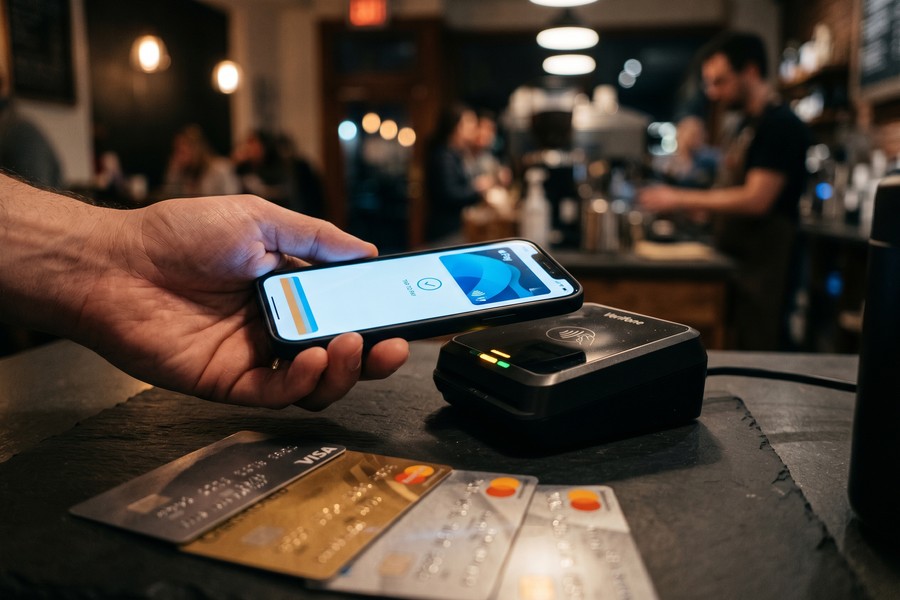
Most bank cards integrate with Apple Pay, Google Pay, and Samsung Pay. Store cards vary widely, some major retailers have their own apps that integrate their store cards, but cross-platform mobile wallet support is often limited for closed-loop products. In an era of tap-to-pay dominance, that friction matters for everyday usability.
When a Store Card Actually Makes Sense
Retail cards are not universally bad, but they are contextually good only under specific, disciplined conditions. Here’s when the math actually works in your favor.
You Are a Heavy, Loyal Shopper at One Retailer
If you spend $3,000+ annually at a single retailer, think Amazon for online shoppers or Costco for families buying groceries and gas, a co-branded card at that retailer can generate $150-$200+ in annual rewards at 5% back. That handily beats a 2% flat-rate bank card’s $60 return on the same spending.
The key qualifier: you must pay in full every month. The moment you carry a balance, the interest cost erodes and then exceeds the reward value within weeks. This is not a hypothetical risk, it is the statistical norm for many retail cardholders.
You Are Building Credit and Have Limited Options
For someone with a credit score below 620 or a thin credit file, a store card may be one of the few unsecured credit products available. Used carefully, with small purchases and full monthly payments, it adds a positive payment history that improves future creditworthiness.
A secured bank card is usually a better tool for this purpose. It reports identically to the credit bureaus, typically has a lower APR, and upgrades to an unsecured product with broader acceptance. A store card should only be the first choice if secured bank options are unavailable.
“The only time a store card makes unambiguous sense is when you’re a disciplined, full-balance payer who shops heavily at that specific retailer. Everyone else is essentially subsidizing those rewards with interest payments they didn’t have to make.”
You Want the Sign-Up Discount on a Planned Large Purchase
If you’re already planning to spend $800 on furniture at a retailer offering 20% off for opening a store card, that’s $160 in immediate savings, real money. The strategy only works if you pay the balance in full before the statement closes, never trigger deferred interest, and close the card (or keep it open with zero balance) after the initial benefit is realized.
This “strategic open and close” approach works, but it requires discipline and a clear plan. It also has a small credit score cost from the hard inquiry and account age reduction.
When a Bank Card Is Clearly the Better Choice
For the majority of consumers in the majority of situations, a well-chosen bank credit card outperforms any store card on nearly every dimension that matters for long-term financial health.
You Carry a Balance Occasionally
The single most important factor in the store credit card vs bank card comparison is whether you ever carry a balance. If you do, even occasionally, the APR difference of 6-9 percentage points means a bank card is dramatically cheaper. On a $1,000 balance for 12 months, the difference between 21% and 29% APR is roughly $80 in additional interest. That compounds.
Strategies like the debt avalanche method specifically target highest-APR balances first for this reason. Store card debt, sitting at 28%+, should always be the first target in any debt reduction plan.
You Want Maximum Rewards Flexibility
To optimize rewards across all your spending, not just at one store, a combination of 2-3 bank cards built around your actual spending patterns will outperform any store card setup. The classic combination of a 5x travel card, a 3x dining card, and a 1.5%-2% catch-all card captures elite earning rates across every major spending category.
The average American household with credit card rewards earns approximately $167 per year in cash back or equivalent rewards value, according to NerdWallet’s annual credit card rewards analysis. Full-paying bank card users in higher-spend households routinely earn $500–$1,200 annually with optimized card strategies.
You Travel Internationally
This is a clean win for bank cards. Premium travel bank cards waive foreign transaction fees, offer trip delay insurance, primary rental car coverage, and airport lounge access. Retail cards offer none of these benefits and are largely useless outside their home retailer’s physical footprint. If travel is part of your life, a bank card is the only sensible choice.
You’re Managing a Budget Holistically
If you’re actively using a budgeting framework, especially something like the 50/30/20 budget rule, managing multiple narrow-purpose store cards makes tracking your “wants” spending more complex. A single or dual bank card setup with clean monthly statements simplifies reconciliation and supports more intentional financial behavior.

The Final Verdict: Store Credit Card vs Bank Card
The store credit card vs bank card decision comes down to one fundamental question: do you pay your balance in full every single month, and do you spend enough at one retailer to justify the rewards concentration?
If the answer to both is yes, and you’re considering a co-branded open-loop card like the Amazon Prime Visa or Costco Anywhere Visa, a store card can be a legitimate addition to a well-managed wallet. These specific products offer category-leading rewards with reasonable overall fee structures.
For everyone else, occasional balance carriers, broad spenders, travelers, or those still building credit strategically, a quality bank credit card is the more rational, financially sound choice. Lower APRs, broader acceptance, superior rewards flexibility, better consumer protections, and stronger credit-building mechanics all tilt decisively toward bank cards. The store credit card vs bank card comparison, when measured honestly across all variables, produces a clear result for the majority of American consumers.
“Consumers who carry balances on store cards are essentially paying a loyalty tax. The retailer captures more of their spending, and the issuing bank captures more of their income in interest. It’s a well-engineered trap that starts with a 20% discount at checkout.”
Real-World Example: The True Cost of the Checkout Counter Offer
Sarah, a 31-year-old teacher in Ohio, opened a department store credit card in November 2022 to save 20% on a $650 holiday shopping haul, pocketing $130 in instant savings. The card carried a 29.99% APR. She planned to pay it off quickly but carried a $450 balance into January, then added another $200 in winter clearance purchases in February, pushing her balance to $620.
By the time she analyzed her statements in April, she had paid $89 in interest over five months, nearly wiping out her original sign-up discount. Her utilization on the card was 77% against a $800 credit limit, which dragged her credit score down 18 points, affecting her auto insurance renewal rate. She calculated that the “savings” card had actually cost her a net $41 in interest after accounting for the $130 discount.
Sarah switched her strategy: she opened a Citi Double Cash bank card with a $3,500 limit and an 19.99% APR. She transferred her $620 balance (paying a 3% balance transfer fee of $18.60) and committed to the debt avalanche method. Over the next four months, she paid off the balance entirely, earned $22 in cash back on new purchases at 2%, and watched her credit utilization drop to 8%, recovering her credit score by 22 points.
At year-end, Sarah’s net position was dramatically different: the store card experiment had cost her roughly $130 in net costs (interest minus discount). Her bank card year earned her $94 in cash back on $4,700 in annual spending, with zero interest charges. The 12-month swing between the two approaches: roughly $224 in her favor once she made the switch.
Your Action Plan
-
Audit your current wallet
List every card you currently carry, store and bank, along with its APR, credit limit, annual fee, and current balance. This baseline gives you a clear picture of your total interest exposure and reward-earning potential. If any store card has a balance above $0, that should immediately become a priority payoff target given the elevated APR.
-
Calculate your actual rewards value from existing store cards
Pull your last 12 months of statements and total up the actual rewards earned from each store card. Compare this number to what a 2% flat bank card would have earned on the same spending. If the store card’s advantage is less than $50/year, the card is not earning its place in your wallet, especially if its high APR creates any risk of interest charges.
-
Evaluate your balance-carrying history honestly
Look at the past 12 months. How many months did you carry any credit card balance? If the answer is more than two, you are at high risk of paying significant interest on any card with a double-digit APR. A balance transfer to a 0% introductory APR bank card should be your immediate next step, not opening another high-APR store card.
-
Research the right bank card for your spending profile
Use a tool like the CFPB’s credit card comparison database or NerdWallet’s card-matching tool to identify bank cards aligned with your top spending categories. If you spend heavily on groceries, a card like the Blue Cash Preferred from Amex (6% back at U.S. supermarkets) delivers far more value than any store card in that category.
-
Apply for a bank card that fits your credit score
If your score is above 700, you qualify for the best rewards bank cards. If you’re in the 620-699 range, target cards like the Discover it Cash Back or Capital One QuicksilverOne, which offer competitive rewards with more accessible approval criteria. Understand how your credit score range affects your card options before applying.
-
Use store cards strategically, or close them
For each store card in your wallet, make a binary decision: either it earns enough category rewards to justify keeping (and you commit to full monthly payment), or you close it. If closing would significantly reduce your total available credit (hurting utilization), consider keeping it open with a zero balance and locking it in a drawer rather than carrying it.
-
Set up autopay for every card you keep
The fastest way to neutralize the risk of any credit card, store or bank, is to set up autopay for the full statement balance. This ensures you never pay interest if your cash flow allows it, and eliminates the late payment risk that can damage your credit score and trigger penalty APRs. If you’re uncertain how to fit autopay into your cash management, learning to create a monthly budget that actually works is the essential foundation.
-
Revisit your card portfolio annually
Credit card products change, APRs adjust, rewards programs are modified, and new products enter the market. Set a calendar reminder once per year to review your card lineup. Check whether any store card you kept is still earning enough to justify holding, and whether a better bank card alternative has emerged for your top spending categories.
Frequently Asked Questions
Is a store credit card bad for your credit score?
Not necessarily, but the risk is real. Opening a store card creates a hard inquiry (5-10 point temporary drop) and typically provides a low credit limit, which can spike your utilization ratio if you charge anything substantial to it. Used carefully with full monthly payments and low utilization, a store card can actually add positive payment history. The long-term problem comes when consumers open many store cards over time, shortening average account age and increasing the number of low-limit accounts on file.
Can I use a store credit card anywhere?
It depends on the card type. Closed-loop store cards can only be used at that specific retailer or its affiliate brands. Co-branded store cards carrying a Visa, Mastercard, or Amex logo can be used anywhere that network is accepted, which covers tens of millions of merchants globally. Always confirm which type you’re being offered before applying.
Are store credit card APRs really that much higher?
Yes. Based on CFPB and Bankrate data, the average store card APR in 2024 runs approximately 28.93%, compared to 21.47% for general-purpose bank cards. That 7+ percentage point difference translates to roughly $70 in additional interest per year on every $1,000 of balance carried. For consumers with larger balances, the cost differential is proportionally higher and compounds over time.
What is deferred interest and how does it affect store cards?
Deferred interest is a financing structure common on store cards where interest accrues throughout a promotional period but is only charged if you don’t pay the full balance before the period ends. It is fundamentally different from a true 0% APR promotion offered by bank cards. With deferred interest, a single dollar of remaining balance at the promotional deadline triggers retroactive interest charges on the entire original purchase amount, a practice the CFPB has flagged as potentially harmful to consumers.
Which store credit cards are actually worth having?
The strongest performers are co-branded open-loop cards at retailers where consumers genuinely spend heavily: the Amazon Prime Rewards Visa (5% back for Prime members), the Costco Anywhere Visa by Citi (4% on gas, 3% on restaurants and travel), and the Apple Card (3% at Apple, 2% on Apple Pay purchases) stand out as legitimately competitive products. Closed-loop store cards are harder to recommend except for specific use cases involving very high single-retailer spending combined with perfect monthly payment discipline.
Does opening a store credit card hurt your credit score?
In the short term, yes, a hard inquiry typically reduces your score by 5-10 points for 3-6 months. If the new account significantly reduces your average account age or increases your utilization at that card level, the impact can be larger. However, if you use the card responsibly and maintain low utilization, the long-term impact is neutral to slightly positive through added payment history. The damage is primarily an issue if you open multiple store cards in a short period.
Can store credit cards help build credit?
Yes, they can, but they’re not the ideal tool for that purpose. A store card reports to the major credit bureaus and adds payment history just like any other card. However, a secured bank card from a reputable issuer typically offers a lower APR, broader acceptance, and a clearer path to an unsecured upgrade after 12-18 months. If you’re actively working on credit building, review the complete guide to building credit from scratch for a full strategy.
Should I cancel a store credit card I never use?
It depends on how the card affects your overall credit utilization and average account age. If the card is one of your older accounts, closing it shortens your credit history and may hurt your score. If the card has zero balance and a meaningful credit limit, keeping it open (even unused) improves your overall utilization ratio. The main reason to close it would be if it charges an annual fee that isn’t justified by the benefits, which is rare for store cards, most of which are no-fee.
How do I choose between a store credit card and a bank card?
Ask three questions: Do you pay your balance in full every month? Do you spend enough at that specific retailer for the category rewards to beat a flat 2% bank card? And is the card open-loop (usable anywhere) or closed-loop (retailer only)? If you can answer yes to the first two questions and the card is a co-branded product, it may be worth carrying. If you carry balances, the high APR of store cards makes any bank card with a lower rate the better financial choice.
What’s the best strategy for combining store cards and bank cards?
Many financially organized consumers carry 1-2 specialized co-branded store cards at retailers where they spend heavily (earning 4%-5% back) alongside 1-2 bank cards that cover all other spending categories. Every card in this setup must be paid in full monthly, the moment any balance carries, the high APR of the store card destroys the reward advantage. This “card stack” approach requires tracking spending across multiple cards, so it works best for organized budgeters who can manage the complexity without risk of missed payments.
Sources
- Federal Reserve Bank of New York, Household Debt and Credit Report
- Consumer Financial Protection Bureau, Credit Card Market Data and Reports
- myFICO, What’s In Your FICO Credit Score
- Synchrony Financial, About Us: Retail Partner Credit Program Scale
- Federal Reserve, G.19 Consumer Credit Outstanding Statistical Release