
Quick Answer
To build credit from scratch, open a secured credit card or become an authorized user on someone else’s account, then pay every bill on time. Most people can establish a scoreable credit file within 3–6 months and reach a good credit score (670+) in 12–24 months by keeping utilization below 30% and avoiding hard inquiries. As of July 2025, these strategies remain the fastest, most reliable path.
Building credit from scratch means creating a credit history where none exists — or nearly none. According to the Consumer Financial Protection Bureau (CFPB), approximately 26 million Americans are “credit invisible,” meaning they have no credit file at all with the major bureaus. Another 19 million have files too thin or stale to generate a score.
If you are starting with zero credit history, the right moves made early will compound over time — much like money does. This guide walks through every proven step, in order, so you know exactly what to do, what to avoid, and how long to expect the process to take.
Key Takeaways
- 26 million Americans have no credit file at all, according to the CFPB’s credit invisibility research.
- Payment history accounts for 35% of a FICO Score, making on-time payments the single most powerful credit-building action (myFICO).
- A secured credit card requires a deposit — typically $200–$500 — and is one of the most accessible tools for people who need to build credit from scratch.
- Credit utilization below 30% is widely recommended to protect your score, and below 10% is optimal for maximum scoring benefit (Experian).
- Experian Boost and similar programs can add an average of 13 points to a FICO Score by reporting on-time utility and streaming payments (Experian Boost).
In This Guide
- What Does It Mean to Build Credit From Scratch?
- Which Tools Work Best for Building Credit With No History?
- How Does Payment Behavior Affect Your Score?
- What Is Credit Utilization and Why Does It Matter?
- How Long Does It Take to Build Credit From Scratch?
- What Mistakes Slow Down Credit Building?
- How Do You Monitor and Protect Your New Credit?
What Does It Mean to Build Credit From Scratch?
Building credit from scratch means establishing a brand-new credit history with Equifax, Experian, and TransUnion — the three major credit bureaus. Without any accounts reported to these bureaus, you have no FICO Score or VantageScore, which makes lenders unable to assess your risk.
A credit score is not generated until you have at least one account that is six months old and has been active within the last six months, under the standard FICO scoring model. VantageScore can generate a score with as little as one month of history, which is why some lenders use it for thin-file applicants.
Why Credit History Matters Beyond Borrowing
Your credit file affects more than loan approvals. Landlords run credit checks before approving rental applications. Employers in certain industries check credit history during hiring. Insurance companies in most states use credit-based insurance scores to set premiums.
Starting to build credit from scratch early — even before you need a loan — gives your file time to mature, which benefits the “length of credit history” factor that makes up 15% of a FICO Score.
Consumers with no credit score are often treated as higher-risk borrowers than those with a poor score — because lenders have no data to work with. This is why establishing even a thin credit file quickly is preferable to remaining credit invisible.
Which Tools Work Best for Building Credit With No History?
The five most effective tools for building credit from scratch are secured credit cards, credit-builder loans, becoming an authorized user, student credit cards, and alternative data reporting programs. Each works differently, and the best approach often combines two or more.
Secured Credit Cards
A secured credit card requires a refundable security deposit — typically between $200 and $500 — which becomes your credit limit. The card issuer reports your payment activity to the major bureaus monthly, creating a credit history. Look for cards with no annual fee or a low one, such as those offered by Discover and Capital One, both of which have well-regarded secured card products.
After demonstrating responsible use for 6–12 months, many issuers upgrade you to an unsecured card and return your deposit automatically.
Credit-Builder Loans
A credit-builder loan works in reverse of a standard loan: the lender holds the loan amount in a savings account while you make monthly payments. Once paid off, you receive the funds. These are offered by many credit unions and online lenders. Self Financial is one of the largest providers, reporting to all three major bureaus.
According to research from the CFPB’s study on credit-builder loans, participants without existing debt saw their credit scores increase by an average of 60 points over the loan period.
Authorized User Status
Becoming an authorized user on a family member’s or trusted friend’s credit card allows their account history to appear on your credit report. The primary account holder retains full responsibility for the balance. You benefit from their on-time payments and low utilization — without needing to qualify for a card yourself.
Alternative Data and Rent Reporting
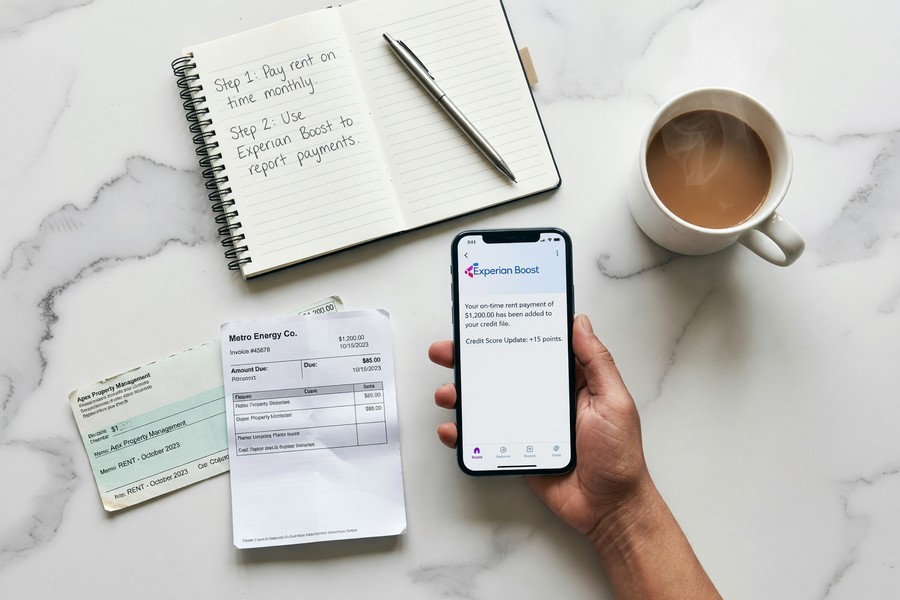
Programs like Experian Boost and Rental Kharma allow on-time rent, utility, and streaming payments to be factored into your credit profile. Experian Boost is free and adds an average of 13 points to eligible FICO Scores. For people who pay rent on time every month, rent reporting through services like RentTrack or Boom can meaningfully accelerate credit building.
| Credit-Building Tool | Typical Deposit or Cost | Bureaus Reported To | Score Impact Timeline |
|---|---|---|---|
| Secured Credit Card | $200–$500 deposit | All 3 major bureaus | 3–6 months for first score |
| Credit-Builder Loan | $15–$30/month fee | All 3 major bureaus | 3–6 months for first score |
| Authorized User | $0 (no cost) | Depends on issuer | As fast as 1 billing cycle |
| Experian Boost | $0 (free) | Experian only | Immediate (Experian score) |
| Rent Reporting Service | $0–$10/month | 1–3 bureaus (varies by service) | 1–3 months |
For readers who want faster results beyond the basics, our guide on proven strategies to build credit fast in 2026 covers accelerated techniques in depth.
How Does Payment Behavior Affect Your Score?
Payment history is the single largest factor in your credit score, accounting for 35% of your FICO Score. A single missed payment can cause a significant score drop — even for someone who has spent months building from zero.
The Cost of a Late Payment
A payment is not reported as late to the bureaus until it is 30 days past due. A payment that is 29 days late may trigger a late fee from the lender, but it will not appear on your credit report. Once a 30-day late mark appears, it stays on your report for seven years, per the Fair Credit Reporting Act (FCRA).
Set up automatic minimum payments on every account as a safety net. Pay the full balance manually if you can — but never miss the minimum, especially when you are trying to build credit from scratch.
“The best thing a credit newcomer can do is make every payment on time, every month, without exception. That consistency compounds — lenders see it, scoring models reward it, and it cannot be substituted by any other credit behavior.”
Paying in Full vs. Paying the Minimum
Paying your full statement balance each month avoids interest charges entirely and keeps your reported balance low. The credit bureaus see the balance reported by the issuer — typically the statement balance — not your real-time balance. Paying in full each cycle keeps reported utilization at or near zero.
What Is Credit Utilization and Why Does It Matter?
Credit utilization is the percentage of your available revolving credit that you are currently using. It accounts for 30% of a FICO Score and is second only to payment history in its impact. Keeping utilization below 30% is the widely cited threshold — but below 10% is optimal for the highest scores.
How to Keep Utilization Low
If your secured card has a $300 limit, carrying a balance of more than $90 pushes you above the 30% threshold. Request a credit limit increase after 6–12 months of on-time payments — this raises your available credit and automatically lowers your utilization ratio if your spending stays flat.
You can also make multiple payments per month to reduce your reported balance before your statement closes. This is sometimes called “paying early” and is a legitimate strategy to keep reported utilization artificially low.
Set up a calendar reminder to pay down your credit card balance a few days before your statement closing date — not just the due date. The closing date balance is what gets reported to the bureaus, so reducing it before that moment lowers your reported utilization immediately.
How Long Does It Take to Build Credit From Scratch?
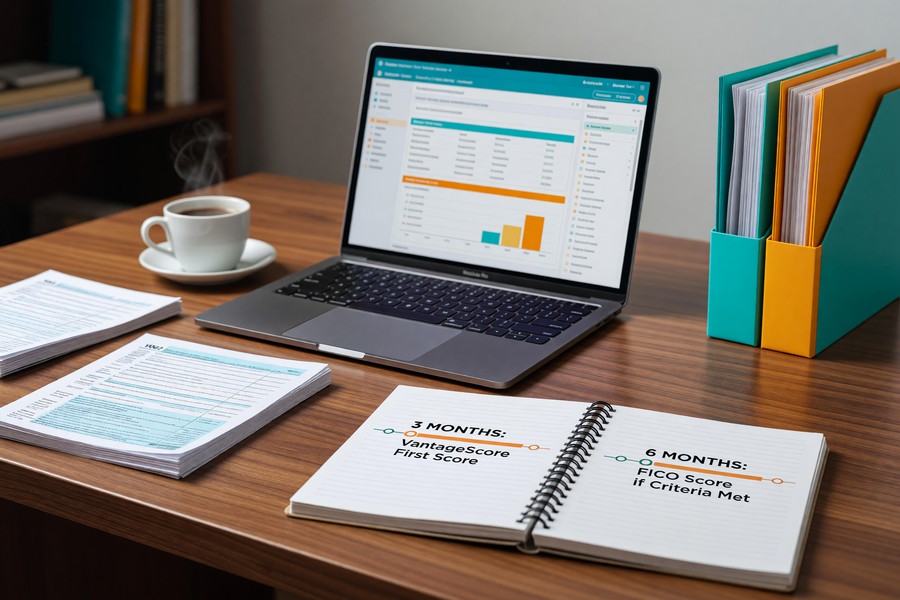
Most people can generate their first credit score within 3–6 months of opening their first account. Reaching a “good” credit score of 670 or higher under the FICO model typically takes 12–24 months of consistent, responsible behavior.
Credit Score Milestones by Timeline
At 1–3 months: VantageScore may generate a first score. At 6 months: FICO generates your first score if account criteria are met. At 12 months: Consistent on-time payments and low utilization can push scores into the 600s. At 24 months: A mix of accounts, clean payment history, and growing average account age can reach the “good” range of 670–739.
These timelines assume no derogatory marks. A single collection account or missed payment can extend the timeline significantly. For a broader look at your overall financial foundation during this period, the guide on building a personal financial system is a useful companion resource.
The average FICO Score in the United States reached 715 in 2023, according to myFICO’s annual average score report. That is the target benchmark for anyone building credit from scratch — and it is achievable within two years of disciplined effort.
What Mistakes Slow Down Credit Building?
The most common mistakes that slow credit building are applying for too many accounts at once, closing old accounts, maxing out cards, and ignoring errors on your credit report. Each mistake has a measurable, negative effect on your score.
Hard Inquiries and Over-Application
Every time you apply for new credit, the lender performs a hard inquiry, which can lower your FICO Score by up to 5 points per inquiry. Multiple applications in a short window signal financial stress to scoring models. Limit new applications to one or two accounts when you are just starting out.
Rate shopping for auto loans and mortgages is treated differently — multiple inquiries within a 14–45 day window are counted as a single inquiry by FICO. But for credit cards, each application is counted separately.
Closing Accounts Too Soon
Closing a credit account reduces your total available credit (raising utilization) and, over time, shortens your average credit age. Keep your oldest accounts open and active, even if you rarely use them. A small recurring charge — like a streaming subscription — can keep the account active without adding significant debt.
Speaking of streaming subscriptions, be mindful that small recurring charges can accumulate quickly. The article on how subscription creep drains your budget explains how to audit these charges without disrupting your credit-building accounts.
Errors on Your Credit Report
According to a Federal Trade Commission (FTC) study on credit report accuracy, 1 in 5 consumers had an error on at least one of their three credit reports. Errors — such as accounts that are not yours or incorrect late payment records — can drag your score down unfairly. Dispute them directly with the relevant bureau through AnnualCreditReport.com.
Understanding all the factors that move your score is equally important. The detailed breakdown at Credit Scores: What Actually Moves the Number is a strong complement to this guide.
How Do You Monitor and Protect Your New Credit?
Monitoring your credit actively is essential once you begin to build credit from scratch — errors and fraud are easier to resolve when caught early. You are entitled by federal law to free weekly credit reports from all three bureaus through AnnualCreditReport.com, the only government-authorized site for this purpose.
Free Tools for Ongoing Monitoring
Credit Karma and Credit Sesame offer free VantageScore monitoring updated regularly, which is useful for tracking trends even if the scores differ slightly from FICO. Many credit card issuers — including Discover and Chase — now provide free FICO Score access to cardholders monthly.
Consider placing a free credit freeze with all three bureaus if you are not actively applying for credit. A freeze prevents new accounts from being opened in your name, offering strong protection against identity theft — especially important when your file is new and potentially easier to exploit.
Using New Credit Responsibly as Your Score Grows
Once your score reaches the mid-600s, you will qualify for a broader range of financial products. Before applying for larger credit products — such as personal loans — it is worth comparing rates. Our breakdown of the best personal loan rates in 2026 and our roundup of the best credit cards for 2026 are useful next steps once your credit foundation is established.
A credit freeze at all three bureaus — Equifax, Experian, and TransUnion — is completely free under federal law, can be placed and lifted instantly online, and has no effect on your existing accounts or credit score.
Frequently Asked Questions
How do I build credit from scratch with no credit history at all?
Start with a secured credit card or a credit-builder loan — both are designed for people with no credit file. Open one account, use it lightly, pay it on time every month, and you will have a scoreable FICO profile within six months. Adding an alternative data program like Experian Boost can accelerate the process at no cost.
What credit score do I start with when I have no credit history?
You do not start with a zero score — you simply have no score at all until you meet minimum scoring criteria. FICO requires at least one account that is six months old and active within the past six months before generating a score. VantageScore can calculate a score with as little as one month of history.
Is a secured credit card the best way to build credit from scratch?
A secured credit card is one of the most effective single tools for building credit from scratch because it reports to all three major bureaus and requires no prior credit history to obtain. The deposit eliminates risk for the issuer, making approval nearly guaranteed for most applicants. Pairing it with a credit-builder loan creates a stronger profile faster.
Can becoming an authorized user build my credit?
Yes — becoming an authorized user on a responsible person’s credit card account can add that account’s history to your credit report, sometimes in as little as one billing cycle. The primary cardholder’s on-time payments and low utilization benefit your file. However, if the account has a poor payment history, it can hurt your score instead.
Does checking my own credit score hurt it?
No. Checking your own credit score or report is a soft inquiry and has no effect on your score whatsoever. Only hard inquiries — which occur when a lender reviews your credit for a lending decision — can lower your score, and only by a small amount. Check your report as often as you like.
How many credit cards should I get when starting out?
Start with one card and manage it responsibly for at least six to twelve months before adding another. Opening multiple accounts at once generates multiple hard inquiries, reduces your average account age, and increases the risk of overspending. One well-managed card is more valuable than three poorly managed ones.
Can I build credit without a credit card?
Yes. Credit-builder loans, becoming an authorized user, and rent reporting services all build credit without requiring you to open a credit card. These tools report to the credit bureaus and create a payment history, which is the most important scoring factor. A diverse mix of account types will ultimately strengthen your profile, but a credit card is not mandatory.
Sources
- Consumer Financial Protection Bureau — Credit Invisible Report
- myFICO — What’s in Your Credit Score
- Experian — What Is a Good Credit Utilization Rate?
- Consumer Financial Protection Bureau — Study of Credit-Builder Loans
- Federal Trade Commission — Fair Credit Reporting Act
- Federal Trade Commission — Report on Credit Report Accuracy
- myFICO — Average U.S. FICO Score
- AnnualCreditReport.com — Free Credit Reports
- Experian Boost — Average Score Increase Data