
Fact-checked by the Prime Rate editorial team
Quick Answer
Credit scores run from 300 to 850 and divide into five tiers: Poor (300–579), Fair (580–669), Good (670–739), Very Good (740–799), and Exceptional (800–850). Your tier determines the rates you pay, the cards you qualify for, and even your insurance premiums. The most actionable target for most borrowers is 760, where lenders typically unlock their best mortgage rates.
Credit score ranges explained simply: your three-digit score is a prediction of how likely you are to repay debt on time, and lenders use it to decide both whether to approve you and what rate to charge. The Consumer Financial Protection Bureau confirms that most scores fall on a 300–850 scale, with a higher number making it easier to qualify and resulting in a lower interest rate. That 550-point spread is not cosmetic. The dollar difference between tiers can run into the tens of thousands over the life of a mortgage.
Most Americans are closer to the top of that range than they realize. According to Experian’s 2024 annual credit review, 71.2% of U.S. consumers hold a FICO Score of 670 or above. But being in the majority does not mean getting the best deal. Approval odds and interest rates are not the same thing, and the gap between a Good score and a Very Good one can cost far more than most people expect.
This guide breaks down every tier, names the specific financial products each one unlocks, quantifies the cost of sitting in a lower bracket, and addresses two questions most credit articles skip: how your score affects insurance and rent, and why the number on your free monitoring app is almost certainly not the number a lender will pull.
Key Takeaways
- 71.2% of Americans have a FICO Score of 670 or higher, according to Experian’s annual credit data, but most sit in the Good tier where approval is likely but optimal pricing is not.
- Moving from a 620 to a 760 FICO score on a $300,000 30-year mortgage can save approximately $56,000–$92,000 in total interest, a difference that dwarfs the effort required to reach the higher tier.
- FICO Scores are used by 90% of top lenders, according to myFICO, and the five weighted factors are: payment history (35%), amounts owed (30%), length of history (15%), new credit (10%), and credit mix (10%).
- Homeowners with credit scores below 580 pay roughly 35% more in insurance premiums than those at 740–799 in states that permit credit-based insurance scoring, a cost most credit articles never mention.
- 760 is the practical threshold for most lenders’ best mortgage rates, not 800; borrowers with 760+ and 800+ receive virtually identical rate offers on conventional loans, making 800 an unnecessary stretch goal for most people.
- Average U.S. credit card utilization hit 35% in April 2024, up 3% year-over-year, according to FICO’s official blog, putting millions of otherwise healthy credit profiles at risk of tier downgrade.
In This Guide
- Step 1: What Credit Score Ranges Actually Mean, and Why the Labels Vary
- Step 2: Poor and Fair Credit (300–669): What You Can Get and What It Costs You
- Step 3: Good Credit (670–739): The Approval Zone That Leaves Money on the Table
- Step 4: Very Good and Exceptional Credit (740–850): Where the Real Perks Unlock
- Step 5: The Hidden Ways Your Credit Score Tier Affects Non-Loan Decisions
- Frequently Asked Questions
Step 1: What Credit Score Ranges Actually Mean, and Why the Labels Vary
Both FICO and VantageScore use the same 300–850 scale, but their tier boundaries do not match, and that mismatch creates real confusion for anyone trying to act on their score. A score of 650, for example, sits in FICO’s “Fair” range (580–669) but lands inside VantageScore’s “Prime” category (661–780). If you rely on a free monitoring app that uses VantageScore, you might think you’re in solid shape. When you apply for a mortgage, the lender pulls a FICO and sees something different.
FICO vs. VantageScore: The Tier Breakdown
According to FICO’s official score education resource, the five FICO tiers are: Exceptional (800–850), Very Good (740–799), Good (670–739), Fair (580–669), and Poor (300–579). VantageScore 4.0 uses four categories on the same scale: Superprime (781–850), Prime (661–780), Near Prime (601–660), and Subprime (300–600). A consumer can simultaneously see “Fair” on a free app and “Good” on a lender pull, and that is not an error. It is two different models drawing different lines.
The lender-specific layer adds another variable. Mortgage lenders typically pull FICO Scores 2, 4, and 5 (one from each bureau). Auto lenders often use FICO Auto Score 8 or 9. Credit card issuers commonly rely on FICO 8. The “score that matters” is not a single number; it shifts based on what you are applying for. Equifax notes that lenders use scores alongside other application data, meaning two borrowers with identical FICO 8s can receive different decisions at different institutions.
Where Most Americans Actually Stand
Roughly 16% of Americans fall in the Poor tier, 17% in Fair, 21% in Good, 25% in Very Good, and 21.2% in the Exceptional tier of 800 or above, according to LendingTree’s analysis of FICO distribution data. Knowing where you sit relative to that distribution matters. If you are at 700, you are not far from the majority. If you are at 550, a realistic improvement plan looks very different from someone pushing from 720 to 760.
One structural reality worth naming: the median score in majority-white communities runs roughly 100 points higher than in majority-Black communities (approximately 727 versus 627). State averages vary by more than 60 points. Credit scores are shaped by behavior, but they are also shaped by access to credit products and historical lending patterns, context that matters when readers are trying to understand why their tier differs from a neighbor’s.
VantageScore 4.0 can score approximately 37 million more consumers than traditional FICO models because it requires less credit history to generate a score, according to VantageScore Solutions. If you have thin credit history, you may have a VantageScore but no FICO Score at all.

Step 2: Poor and Fair Credit (300–669): What You Can Get and What It Costs You
At the lower two tiers, the question shifts from “what rate will I get?” to “can I get approved at all?” The financial penalties are real, specific, and larger than most articles acknowledge.
What Each Sub-Band Actually Gets You
Scores between 300 and 579 (Poor) mean most mainstream lenders will decline your application. What remains: secured credit cards, which require a cash deposit that becomes your credit limit; subprime personal loans at APRs that commonly run 20–35%; and subprime auto financing at 15–25% APR. FHA mortgage loans are technically accessible with scores as low as 500 with a 10% down payment, but very few lenders actually price and approve at the floor. In practice, 580 is the functional minimum for FHA at 3.5% down.
Scores between 580 and 669 (Fair) open more doors. FHA mortgages become accessible at standard terms. Some mainstream unsecured credit cards appear. Auto loan APRs drop into the 10–15% range. The options are real, but the pricing remains punishing compared to higher tiers.
The True Cost: A Worked Example
Here is concrete arithmetic. On a $300,000 30-year fixed mortgage, a borrower with a 620 FICO might receive a rate of approximately 7.5% in a mid-2024 rate environment. A borrower at 760 might receive 6.5%. At 7.5%, the monthly payment is roughly $2,098 and total interest paid over 30 years is approximately $455,400. At 6.5%, the monthly payment is roughly $1,896 and total interest is approximately $382,600. The difference: $202 per month and $72,800 over the life of the loan, before accounting for Private Mortgage Insurance.
PMI is the cost most competitors skip entirely. A borrower with a 620 score putting less than 20% down can pay $530–$760 per month in PMI on that same loan. A 760-score borrower in the same scenario pays roughly $114–$171 per month. That gap, up to $589 per month, dwarfs the rate difference and can add over $70,000 in PMI costs across the years before the loan reaches 20% equity. If you are in the Fair tier and considering a home purchase, understanding how benchmark rates interact with your credit tier is essential before you commit.
Beyond Loan Rates: What Poor Credit Costs Outside the Bank
Landlords in competitive rental markets routinely screen applicants by credit tier. They cannot change the rent based on your score, but they can, and often do, pass over applicants below a local threshold. A co-signer or a larger security deposit can partially compensate, but neither is free. Utility companies and cell phone carriers in many states are permitted to require deposits from applicants with poor credit, adding upfront costs that can run $150–$500 per account.
Under FICO 8, paid and unpaid collections carry similar scoring weight. If you have resolved old debts expecting a significant score jump, you may be disappointed, many lenders still use FICO 8, not FICO 9, where paid collections are ignored entirely. Ask any lender which model they use before assuming your payoff will move the needle.
Step 3: Good Credit (670–739): The Approval Zone That Leaves Money on the Table
Being in the Good tier means approval is likely. It does not mean you are getting a good deal. The national average FICO sits near 715, according to FICO’s own reporting, which means most Americans are already here. Average is not optimal.
The concrete gap between 670 and 739 is visible in rate sheets. Auto loan APRs for Good-tier borrowers typically run 5–8%, compared to 3–5% for Very Good. Personal loan APRs often land at 10–15% versus 6–8% at the next tier. On a $25,000 auto loan over 60 months, the difference between 6% and 8% is roughly $27 per month and over $1,600 in total interest. The most common reasons people plateau in the Good range: utilization slightly above 30%, a thin mix of account types, or a single missed payment that has not yet aged off the report. Each of those has a specific fix, and the step-by-step approach to building credit systematically applies here even for those who are not starting from zero.
Average U.S. credit card utilization reached 35% in April 2024, up 6 percentage points from April 2020, according to FICO’s official blog. The CFPB recommends keeping utilization below 30%. At 35%, a significant share of Americans in the Good tier are being held back by a single, fixable factor.
Step 4: Very Good and Exceptional Credit (740–850): Where the Real Perks Unlock
At 740 and above, the financial picture changes materially, but not indefinitely. There is a practical ceiling where additional score gains stop producing additional savings.
The 760 Threshold: More Useful Than 800
Most lenders price their best mortgage rates starting at 760, not 800. That is the threshold where conventional loan pricing typically reaches its floor. Borrowers at 760 and borrowers at 810 receive virtually identical rate offers on most consumer lending products. Pushing from 760 to 800 is a reasonable long-term goal, but treating it as a financial priority over other money decisions is hard to justify. The marginal benefit above 760 is largely psychological for most products.
This is the point most competitors bury or miss entirely. Saying “excellent credit starts at 800” without clarifying that the best rates are available from 760 sends borrowers chasing a number that costs them months of effort for minimal financial return. If you are already at 770, your energy is better spent on eliminating high-interest debt than on optimizing your score further.
What Premium Access Looks Like in Practice
At the Very Good and Exceptional tiers, premium travel rewards cards become accessible. These include cards that reimburse TSA PreCheck or Global Entry fees ($78–$100 value), provide airport lounge access (a $300–$500 annual benefit if used regularly), and offer sign-up bonuses worth $500–$1,000 in travel. Cards in the Good tier typically offer 1–2% flat cashback with no annual fee and none of those perks. The difference in accessible rewards is not marginal.
The Honest Ceiling
One genuine caveat: a single overlooked account or a credit inquiry can temporarily drop a 790 score to 760 without any change in actual financial behavior. At this tier, score maintenance requires attention but not obsession. Check all three bureau reports annually at AnnualCreditReport.com to catch errors before they cause real damage.
| Credit Tier | FICO Range | Typical Mortgage APR | Typical Auto Loan APR | Credit Card Access |
|---|---|---|---|---|
| Poor | 300–579 | Not typically approved / FHA 500+ | 15–25% | Secured cards only |
| Fair | 580–669 | FHA at ~7.5–8.0% | 10–15% | Some unsecured; limited rewards |
| Good | 670–739 | Conventional at ~6.75–7.25% | 5–8% | Most mainstream cards; basic rewards |
| Very Good | 740–799 | Best rates from ~760; ~6.25–6.75% | 3–5% | Premium rewards; travel cards |
| Exceptional | 800–850 | Same as Very Good tier (760+) | 3–4.5% | Top-tier rewards; best sign-up bonuses |
Rate figures reflect a mid-2024 rate environment and vary by lender, loan type, and individual application profile. They are directional benchmarks, not guaranteed offers.

Step 5: The Hidden Ways Your Credit Score Tier Affects Non-Loan Decisions
Your credit score follows you into decisions most people never connect to a three-digit number. Insurance premiums, rental applications, employment screens, and utility deposits are all influenced by the same score that determines your mortgage rate.
Insurance Premiums: A Cost Most Articles Skip
In states that permit credit-based insurance scoring, homeowners with scores below 580 pay roughly 35% more in premiums than those at 740–799. Renters with poor credit pay approximately 66% more for renters insurance. On a $1,200 annual renters policy, that premium gap means roughly $792 extra per year, paid annually, not amortized over a 30-year loan. Eight states currently prohibit or significantly restrict the use of credit scores for insurance pricing: California, Hawaii, Maryland, Massachusetts, Michigan, Oregon, Utah, and Washington. In every other state, the practice is legal and widespread.
This is not a footnote. Over five years, a renter with a Poor score pays approximately $3,960 more in renters insurance than an equivalent renter with a Very Good score. That number compounds if homeowners insurance, auto insurance, and loan costs are added together.
Rentals, Employment, and Utilities
Landlords in competitive markets use credit score thresholds as a first filter. They cannot charge a higher monthly rent based on your score, but they can reject your application. A co-signer or an extra month of security deposit can sometimes compensate, but not always, and neither option is costless. For employment, certain roles in finance, government, and security require a credit check with your written consent. Poor credit does not automatically disqualify a candidate, but it can trigger additional scrutiny or, in some cases, rejection for positions that require fiduciary trust. Utility companies in many states also pull credit. Applicants below certain thresholds may be required to pay deposits of $150–$500 per account before service activates.
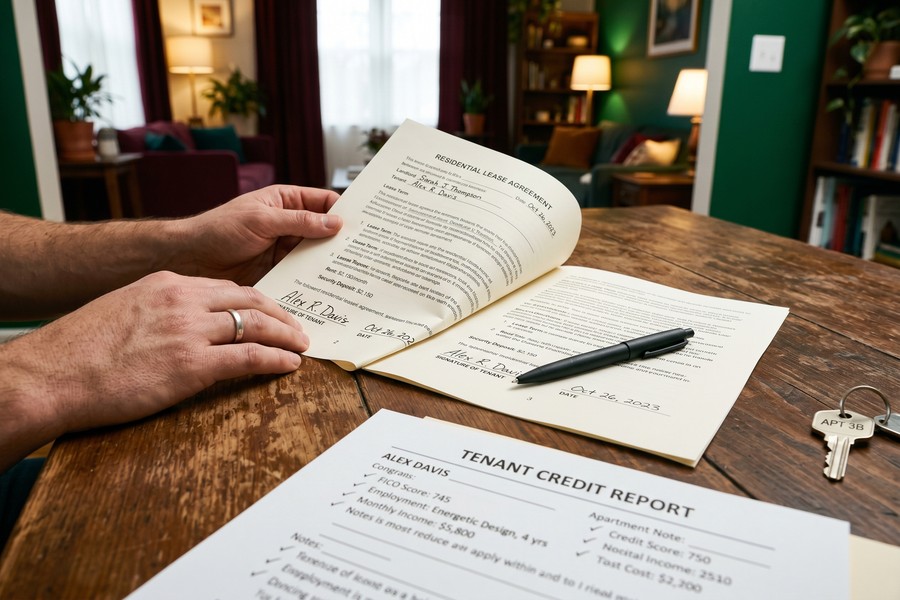
If you are apartment hunting with a Fair credit score, pull your own reports first and address any errors before applying. A dispute that resolves in your favor can move a score 10–30 points in 30–45 days, enough to clear a landlord’s minimum threshold without changing anything else about your financial profile. Pulling your own report creates a soft inquiry and does not affect your score.
Track all three of your credit reports at the CFPB’s credit score resource to understand what data each bureau holds. Credit score improvement also works best when embedded inside a broader financial plan, one that addresses both the credit factors and the spending patterns underneath them. If high utilization is holding your score back, building a monthly budget that controls discretionary spending is often the prerequisite to any meaningful score movement.
The Federal Trade Commission also notes that under federal law, lenders must disclose the credit score they used when taking adverse action against a consumer. If you are declined for credit, insurance, or a rental, you have the legal right to know the score that drove that decision, and which bureau provided it.
Frequently Asked Questions
What is the difference between FICO and VantageScore credit score ranges?
Both FICO and VantageScore use a 300–850 scale, but their tier boundaries differ in ways that matter. FICO’s “Good” range starts at 670; VantageScore’s equivalent “Prime” tier starts at 661. A score of 650 is “Fair” under FICO but “Near Prime” under VantageScore. The practical implication: the score shown on a free monitoring app (often VantageScore) may place you in a different tier than the FICO score a lender actually pulls. According to Experian’s score education resource, a “Good” FICO starts at 670, while a “Good” VantageScore starts at 661, a gap small enough to cause real confusion.
Can I get a mortgage with a 580 credit score?
An FHA loan is accessible at 580 with a 3.5% down payment, and technically available at 500–579 with 10% down, though very few lenders approve applications at the floor. The approval hurdle is real but so is the cost: PMI on an FHA loan with a 580 score can add $400–$700 per month to your payment, and FHA mortgage insurance premiums are often required for the life of the loan unless you refinance. Conventional financing typically requires at least 620, and competitive pricing does not begin until 670 or above.
How long does it take to go from fair to good credit?
Rebuilding from the Fair tier (580–669) to the Good tier (670–739) typically takes 6–12 months of consistent on-time payments and controlled utilization, assuming no new negative marks. Reducing credit card balances below 30% of your limit can show results within 30 days, since utilization recalculates each billing cycle. A 30-day late payment, by contrast, remains on your report for seven years regardless of what else you do, meaning the fastest and slowest levers operate on completely different timelines.
Should I try to get my credit score to 800, or is 760 good enough?
For most borrowers, 760 is the more practical target. Most lenders price their best conventional mortgage rates starting at 760, and borrowers at 760 and 810 receive virtually identical rate offers on most consumer loan products. Pushing from 760 to 800 rarely changes your offered rate, your card approval odds, or your insurance tier. The exception: if you apply for a mortgage and sit at 759, moving one point can unlock meaningfully better pricing, so treat 760 as a minimum, not a ceiling.
What happens to my FICO score when I pay off a collection account?
Under FICO 8 (which most lenders still use), paying off a collection account does not remove it from your report and may produce little to no score improvement, since paid and unpaid collections carry similar weight. Under FICO 9, paid collections are ignored entirely and no longer factor into your score. This is a meaningful distinction: if a lender uses FICO 9, resolving old collections can produce a notable score increase. Always ask which model the lender uses before expecting a payoff to move your score significantly.
How does credit utilization affect which credit score tier I’m in?
Amounts owed, including utilization, accounts for 30% of a FICO Score, the second-largest factor after payment history, according to myFICO. The CFPB recommends keeping utilization below 30% of your total credit limit. People with exceptional scores typically carry utilization in the single digits. If your utilization sits at 35–40%, dropping it to below 30%, even by paying down one card, can shift your score by 20–40 points within a single billing cycle.
What credit score do landlords typically require?
There is no universal threshold; requirements vary by city, property type, and rental market competitiveness. In most major metropolitan areas, landlords commonly seek scores of 650–700 as a minimum, with premium properties setting bars at 700–720 or higher. Falling below the threshold does not automatically disqualify you: offering a larger security deposit, demonstrating strong income, or providing a creditworthy co-signer can offset a lower score in many cases. Be prepared to explain any derogatory marks proactively.
Why is my credit score different on Credit Karma versus what my lender pulled?
A single consumer can have 8–12 different credit scores at any given time, varying up to 50 points depending on the scoring model, model version, and which bureau’s data is used. Credit Karma uses VantageScore 3.0 data from TransUnion and Equifax; a mortgage lender pulls FICO 2, 4, and 5 from all three bureaus and typically uses the middle score. Treat free monitoring scores as directional indicators, not definitive numbers. Assume the lender-pulled score at application could differ by 10–30 points, and ask the specific lender which model they use before drawing conclusions from what your app shows.
Sources
- Consumer Financial Protection Bureau, Understand Your Credit Score
- myFICO, Credit Score Education: FICO Score Ranges and Factors
- Experian, What Is a Good Credit Score? FICO and VantageScore Ranges
- Equifax, What Is a Good Credit Score? Five Tiers Explained
- VantageScore Solutions, The Complete Guide to Your VantageScore
- Federal Trade Commission, Credit Scores: What They Are and How They Affect You
- FICO Official Blog, Average U.S. FICO Score and Credit Utilization Trends (2024)
- Experian via WPXI, What Is the Average Credit Score in the U.S.? (2024)
- LendingTree, Credit Score Statistics and FICO Score Distribution Data (2024)