Fact-checked by the Prime Rate editorial team
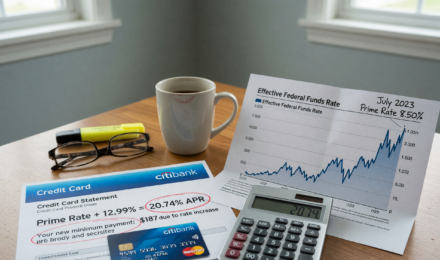
Buying a business is one of the most expensive financial decisions a person can make, and most buyers walk into the process without understanding how a single benchmark rate can swing their total loan cost by hundreds of thousands of dollars. The business acquisition loan prime rate connection is rarely explained clearly by lenders, yet it directly determines whether a deal pencils out or falls apart at the closing table. In 2023, the Federal Reserve held its benchmark rate at a 22-year high, pushing the prime rate to 8.50%, a level not seen since 2001, and many acquisition loans priced at prime plus 2% or more hit double digits.
The U.S. Small Business Administration’s 7(a) loan program, the most popular financing vehicle for business acquisitions, approved over $27.5 billion in loans in fiscal year 2023 alone. A large share of those loans carried variable rates tied directly to prime. When rates rose sharply between 2022 and 2023, buyers who locked deals in at lower rates suddenly faced monthly payments that were hundreds, sometimes thousands, of dollars higher than projected. Many sellers, meanwhile, pulled back on seller financing, leaving buyers with fewer options to offset the rate shock.
This guide breaks down exactly how prime rate movements affect business acquisition loans, which loan products expose you most to rate risk, and what concrete strategies, from rate locks to hybrid structures, can protect your deal in a volatile rate environment. You will leave with a clear framework for evaluating any financing package before you sign.
Key Takeaways
- The prime rate peaked at 8.50% in July 2023, its highest level in over two decades, directly raising variable-rate acquisition loan costs by 2-3 percentage points compared to 2021 levels.
- SBA 7(a) loans for business acquisitions are capped at prime plus 2.75% for loans over $50,000 with maturities exceeding 7 years, meaning rates exceeded 11% at the 2023 peak.
- A $500,000 acquisition loan at 11% vs. 6% over a 10-year term costs approximately $130,000 more in total interest payments.
- Conventional bank acquisition loans typically require 20-30% down and carry rates of prime plus 1% to prime plus 3%, depending on deal size, industry, and borrower credit profile.
- Seller financing, used in roughly 60-80% of small business transactions under $1 million, often carries fixed rates in the 6-8% range and is unaffected by prime rate movements.
- The Federal Reserve held rates steady through most of 2024 before cutting in late 2024, with further cuts projected into 2025-2026, creating a narrow window for buyers to lock favorable terms.
In This Guide
- What Is the Prime Rate and How Is It Set
- How Prime Rate Directly Affects Business Acquisition Loans
- SBA Loan Structures for Business Acquisitions
- Conventional Bank Loans and Prime Rate Pricing
- Variable vs. Fixed Rates: The Core Trade-Off
- Seller Financing as a Rate-Shield Strategy
- Deal Structuring Strategies in a High-Rate Environment
- How Your Credit Profile Shapes Your Rate Spread
- Rate Outlook and Timing Your Acquisition
- Common Mistakes Buyers Make With Rate-Sensitive Loans
What Is the Prime Rate and How Is It Set
The prime rate is a benchmark interest rate that U.S. commercial banks use as a baseline for pricing variable-rate loans, including business acquisition financing. It is not set by government decree. It is a market convention, typically fixed at 3 percentage points above the Federal Reserve’s federal funds rate target. When the Fed moves, the prime rate moves in lockstep, usually within days.
The Federal Reserve publishes the federal funds rate target after each Federal Open Market Committee meeting. Between March 2022 and July 2023, the Fed raised rates 11 times in 17 months, the most aggressive tightening cycle since the early 1980s. That pushed the prime rate from 3.25% to 8.50% in under two years.
The Prime Rate’s Historical Range
Understanding the historical range gives buyers a critical sense of perspective. The prime rate averaged roughly 4-5% during the decade following the 2008 financial crisis. It touched a historic high of 21.50% in December 1980. Its low was 3.25%, held from December 2008 through March 2022.
| Year | Prime Rate | Context |
|---|---|---|
| 2020-2021 | 3.25% | COVID-era emergency low |
| 2022 (start) | 3.25% | Pre-tightening cycle |
| 2022 (end) | 7.50% | Rapid Fed hikes |
| 2023 (peak) | 8.50% | 22-year high |
| 2024 (late) | 7.75% | Initial Fed cuts |
| Historical avg (2010-2021) | ~3.50-4.00% | Post-crisis normal |
Why Lenders Use Prime Rate as a Pricing Anchor
Banks tie acquisition loan rates to prime because it lets them maintain margin regardless of where the broader rate environment sits. A lender charging “prime plus 2%” earns a consistent spread above their own cost of funds. For borrowers, this means their effective rate floats: it can rise or fall with Fed policy over the life of the loan.
This floating structure transfers interest rate risk from the lender to the borrower. That is a critical fact every business buyer should internalize before signing any variable-rate loan document.
How Prime Rate Directly Affects Business Acquisition Loans
When lenders price a business acquisition loan, they almost never offer a fixed rate at the outset, at least not at competitive terms. Most acquisition loans are structured as variable-rate instruments with pricing set at a defined spread above prime. That spread, typically 1% to 3%, reflects the lender’s assessment of deal risk, borrower creditworthiness, and loan structure.
Here is the practical math: a $750,000 acquisition loan priced at prime plus 2.25% cost a buyer 5.50% (3.25% + 2.25%) in early 2022. By mid-2023, the same loan structure cost 10.75% (8.50% + 2.25%). Monthly payments on a 10-year term jumped from roughly $8,050 to nearly $10,100, an increase of over $2,000 per month on the same loan amount.
A $750,000 acquisition loan at prime plus 2.25% cost buyers $2,050 more per month in mid-2023 versus early 2022, purely due to prime rate movement. That is $24,600 more per year in debt service from a single benchmark change.
The Spread: What It Means and Who Controls It
The “spread” above prime is the portion the lender negotiates based on risk factors. Buyers with strong personal credit scores (720+), solid DSCR on the target business, and significant equity injection get lower spreads. Buyers with weaker profiles, or deals in riskier industries, see spreads of 2.5% to 3.5% or higher.
Negotiating the spread is one of the few areas where buyers have genuine leverage. Even a 0.25% reduction in spread on a $500,000 loan saves roughly $1,250 per year, or $12,500 over a 10-year term. Over a 25-year SBA loan term, that same 0.25% saves over $30,000.
Cash Flow Impact on Business Valuation
Higher rates do not just raise monthly payments, they compress what a buyer can afford to pay for the business in the first place. Debt service coverage ratio (DSCR), the primary underwriting metric for acquisition loans, requires that business cash flow cover annual loan payments by at least 1.25x. When monthly payments rise, the maximum loan amount that meets DSCR thresholds falls, sometimes by 15-25% in a rising rate environment.
This effectively reduces the pool of financeable acquisitions. A business generating $200,000 in annual seller discretionary earnings (SDE) might support a $1 million acquisition loan at 5% but only a $750,000 loan at 9%. That $250,000 gap has killed many deals, or forced painful renegotiations of purchase price.

SBA Loan Structures for Business Acquisitions
The SBA 7(a) loan is the dominant financing tool for small business acquisitions in the United States. It allows buyers to acquire businesses with as little as 10% down, government-guaranteed up to 85% on loans under $150,000 and 75% on larger loans. This makes it attractive, but also tightly tied to prime rate movement.
The SBA publishes maximum allowable interest rates for 7(a) loans. For loans over $50,000 with maturities over seven years, the ceiling is prime plus 2.75%. Lenders frequently charge the maximum on acquisition deals, which are considered higher-risk than simple working capital loans.
The SBA 7(a) loan program can finance up to $5 million for a business acquisition. Repayment terms extend up to 10 years for most acquisitions, and up to 25 years if real estate is included in the deal. That longer amortization significantly affects the total cost impact of prime rate changes.
SBA 7(a) Rate Caps and Current Pricing
| Loan Size / Maturity | Maximum Rate Over Prime | Rate at 8.50% Prime | Rate at 7.75% Prime |
|---|---|---|---|
| Over $50K, over 7 years | Prime + 2.75% | 11.25% | 10.50% |
| Over $50K, 7 years or less | Prime + 2.25% | 10.75% | 10.00% |
| $25K to $50K, over 7 years | Prime + 3.25% | 11.75% | 11.00% |
| $25K or less, over 7 years | Prime + 4.25% | 12.75% | 12.00% |
SBA 504 Loans: A Fixed-Rate Alternative
The SBA 504 loan is less commonly used for pure business acquisitions but becomes relevant when the deal includes significant real property or equipment. The 504 program offers a fixed-rate component, set at the time of closing and based on U.S. Treasury rates, which removes a portion of the deal from prime rate exposure.
In a typical 504 deal structure, a conventional bank covers 50% of the project cost at variable rates, while a Certified Development Company (CDC) covers 40% at a fixed rate, and the buyer injects 10%. The fixed-rate component can provide meaningful cost stability over a 20- or 25-year term.
Understanding how rising rates affect your SBA loan is directly related to how the prime rate affects personal loan rates more broadly. The same benchmark, the same ripple effect on your monthly obligations.
Conventional Bank Loans and Prime Rate Pricing
Not every business acquisition is financed through the SBA. Larger deals, typically those above $2 million, and acquisitions by experienced buyers with significant collateral often use conventional commercial bank loans. These carry more flexible structures but also require larger down payments and shorter terms.
Conventional acquisition loans typically demand 20-30% equity injection. Loan terms run 5-7 years with balloon payments or full amortization. Rates are commonly set at prime plus 1% to prime plus 3%, depending on deal quality, though banks have wide discretion. A buyer with a 780 credit score acquiring a stable, cash-flowing business in a low-risk industry might secure prime plus 1%. A first-time buyer in a cyclical sector might see prime plus 3% or higher.
Acquisition borrowers often focus on the spread without fully accounting for the base rate environment. A “favorable” prime plus 1.5% at 8.50% prime is still a 10% effective rate, which was considered a penalty rate just three years earlier. Comparing lender offers requires modeling the total rate, not just the spread.
Community Banks vs. National Banks: Who Offers Better Terms
Community banks and credit unions are often more competitive on spread pricing for acquisition deals under $2 million. They have more flexibility on loan structure and are more likely to underwrite based on relationship and industry expertise rather than algorithmic credit models.
National banks apply more rigid underwriting standards but may offer interest rate swap products that allow borrowers to convert a variable-rate loan into an effective fixed rate. This hedging tool is rarely offered by community banks and is worth exploring for loans above $1 million.
USDA Business and Industry Loans
The USDA Business and Industry (B&I) Guaranteed Loan Program is an underutilized option for rural business acquisitions. It offers terms of up to 30 years, government guarantees up to 80%, and maximum rates tied to prime plus market conditions, often competitive with SBA 7(a) pricing. Buyers acquiring businesses in rural communities should always evaluate B&I loan eligibility alongside SBA options.
Variable vs. Fixed Rates: The Core Trade-Off
The choice between variable and fixed rates on a business acquisition loan is, at its core, a bet on the future direction of interest rates. Variable rates are almost always lower at origination: lenders price in less risk because rate adjustments protect their margin. Fixed rates carry a premium but offer payment certainty over the full loan term.
In 2021, when prime was 3.25%, the difference between a variable rate of 5.50% and a fixed rate of 6.50% seemed significant. Buyers who chose variable in 2021 watched their rate nearly double by 2023. Those who secured fixed terms, even at the higher initial rate, saved dramatically over the same period.
Many SBA 7(a) loans reset quarterly based on the prime rate published on the first business day of each quarter. A rate increase announced mid-year can raise your payment with as little as 30-90 days’ notice. Always read the rate adjustment provisions in your loan agreement before signing.
Interest Rate Caps and Floors
Some lenders offer rate caps on variable-rate acquisition loans, a ceiling above which the rate cannot rise regardless of prime movement. Caps typically cost 0.25% to 0.75% in additional spread at origination but provide a meaningful safety net. A cap at prime plus 3% with a 12% ceiling would have protected borrowers during the 2022-2023 rate surge.
Floors work in the opposite direction, setting a minimum rate below which your interest cannot fall even if prime drops significantly. Floors protect the lender’s minimum yield but limit your savings in a declining rate environment. Always ask whether your loan has both a cap and a floor, and model out the financial impact of each.
Hybrid Rate Structures
A hybrid rate loan offers a fixed rate for an initial period, typically 3-7 years, followed by a variable rate tied to prime. This structure is common in acquisition financing and gives buyers short-term payment certainty during the critical post-acquisition stabilization phase. The trade-off is a slightly higher fixed-period rate and uncertainty after the conversion date.
| Rate Structure | Typical Rate Premium | Best For | Key Risk |
|---|---|---|---|
| Full Variable | None (lowest at origination) | Declining rate environments | Payment volatility |
| Fixed Rate | 0.50-1.50% higher at origination | Rate stability priority | Miss rate drop savings |
| Hybrid (5/1) | 0.25-0.75% higher than variable | Post-acquisition stabilization | Uncertainty after year 5 |
| Capped Variable | 0.25-0.75% higher than uncapped | Rate spike protection | Cap may still allow significant increase |
Seller Financing as a Rate-Shield Strategy
Seller financing, where the seller of the business acts as the lender for part of the purchase price, is one of the most effective tools buyers have to reduce their exposure to prime rate movements. Unlike bank loans, seller notes are privately negotiated and do not float with prime. They are almost always fixed-rate instruments.
According to data from BizBuySell, approximately 60-80% of small business sales under $1 million involve some form of seller financing. Typical terms range from 3 to 7 years with interest rates fixed between 6% and 9%. In a high-prime-rate environment, even a seller note at 8% can be favorable compared to bank financing at prime plus 2.75%.
SBA-approved deals can include seller financing, but the seller note must typically be on full standby (no payments) for the first 24 months of the SBA loan. This rule is designed to ensure the business’s cash flow services the senior bank debt first. Always confirm standby requirements with your SBA lender before structuring a seller note.
Structuring Seller Notes for Maximum Benefit
A well-structured seller note can bridge the gap between the buyer’s down payment and the amount a bank will lend. On a $1.5 million acquisition, for example, a bank might lend $1.05 million (70%), require $300,000 in equity, and leave a $150,000 gap. A seller note at 7% fixed for 5 years fills that gap at a predictable cost, while the bank’s variable loan fluctuates with prime.
Sellers often prefer carrying a note because it spreads their tax obligation across multiple years through installment sale treatment under IRS rules. That tax benefit gives buyers negotiating leverage. Sellers who understand the tax advantages are more willing to offer competitive interest rates.
Earnouts as an Alternative to Debt Financing
An earnout is a portion of the purchase price paid contingent on the business hitting future performance milestones. While not technically a loan, earnouts reduce the up-front financing need, and therefore reduce the total amount exposed to prime rate risk. Buyers in volatile rate environments increasingly use earnouts to keep initial debt loads manageable while still offering sellers full value if performance targets are met.

Deal Structuring Strategies in a High-Rate Environment
When the business acquisition loan prime rate environment is unfavorable, as it was from 2022 through most of 2024, buyers need a more creative approach to deal structure. Waiting for rates to fall is not always viable, especially when deal windows are time-sensitive or competition for quality businesses is high.
The core objective is to minimize the amount of variable-rate senior debt while maximizing the proportion of the capital stack that is either fixed-rate, equity, or seller-financed. Each percentage point shifted away from floating bank debt reduces rate exposure proportionally.
The Layered Capital Stack Approach
A sophisticated acquisition financing structure typically involves three or four layers of capital, each with different rate characteristics. The senior bank or SBA loan sits at the bottom with the lowest rate but highest sensitivity to prime. Seller financing sits above it, fixed and independent of prime. Buyer equity sits at the top with no rate exposure at all.
| Capital Layer | Typical Size (% of Deal) | Rate Type | Prime Rate Sensitivity |
|---|---|---|---|
| Senior Bank / SBA Debt | 50-75% | Variable (prime-based) | High, fully exposed |
| Seller Note | 10-25% | Fixed | None |
| Subordinated / Mezzanine Debt | 5-15% | Fixed or PIK | Low to none |
| Buyer Equity | 10-20% | N/A | None |
Negotiating Price Reductions Based on Rate Environment
Rising rates are a legitimate basis for negotiating a lower purchase price. When a seller prices their business at 3x or 4x EBITDA, that multiple often assumes 5-6% financing. At 10-11% financing, the same EBITDA generates less buyer cash flow after debt service, meaning the multiple needs to compress to maintain deal viability.
Buyers who can clearly articulate the debt service math to sellers, showing how rate changes affect affordability, are in a stronger position to justify price adjustments. This requires building a simple but compelling financing model that both parties can review together.
Build a rate sensitivity table in your acquisition model showing monthly payments and DSCR at prime rates of 6%, 7%, 7.75%, 8.5%, and 9%. Present this to the seller when negotiating price, it makes the rate risk tangible and positions you as a sophisticated, credible buyer.
How Your Credit Profile Shapes Your Rate Spread
Your personal and business credit profile directly determines the spread above prime that a lender charges. That spread is not arbitrary. It is the lender’s risk-adjusted return above the base rate, and understanding every factor that influences it gives you the ability to improve your pricing before you apply.
The most important factors in acquisition loan spread pricing include personal FICO score, business cash flow history (typically 3 years), debt service coverage ratio of the target business, industry risk classification, collateral coverage, and the buyer’s industry experience. SBA lenders also weigh the business broker’s valuation quality and the credibility of the financial projections submitted with the loan package.
Credit Score Impact on Acquisition Loan Rates
| Personal Credit Score | Typical Spread Above Prime | Rate at 7.75% Prime | Annual Cost on $500K Loan |
|---|---|---|---|
| 740+ | Prime + 1.75% | 9.50% | ~$47,500 (year 1) |
| 700-739 | Prime + 2.25% | 10.00% | ~$50,000 (year 1) |
| 670-699 | Prime + 2.75% | 10.50% | ~$52,500 (year 1) |
| Below 670 | Prime + 3.25%+ | 11.00%+ | ~$55,000+ (year 1) |
Improving your credit score before applying for an acquisition loan is one of the highest-return activities a prospective buyer can undertake. Moving from 695 to 730 can reduce your spread by 0.50%, saving $2,500 annually on a $500,000 loan. Our guide on what constitutes a good credit score and what you can do with it covers the specific thresholds that unlock better financing terms.
DSCR Requirements and How to Meet Them
Most SBA and conventional lenders require a minimum DSCR of 1.25x, meaning the business’s annual net operating income must be at least 1.25 times the total annual debt service. Some lenders require 1.35x or higher for acquisition deals, which they view as riskier than refinancing existing business debt.
If the target business’s DSCR falls below threshold at current rates, buyers have three options: increase the down payment to reduce debt service, negotiate a lower purchase price, or add a co-borrower or guarantor to strengthen the credit package. Each of these directly reduces the lender’s risk, and often the spread they charge.
Collateral and Its Influence on Rate
Lenders prefer deals where tangible collateral, such as real estate, equipment, or inventory, covers a meaningful portion of the loan. An acquisition that includes real property often qualifies for lower spreads because the collateral reduces loss-given-default risk. Businesses with primarily intangible value (brand, customer relationships, intellectual property) face higher spreads and more stringent SBA requirements around collateral pledging.
Rate Outlook and Timing Your Acquisition
Timing a business acquisition around interest rate movements is imprecise at best. The Fed’s future rate decisions depend on inflation data, employment trends, and economic conditions that are inherently unpredictable. Buyers can, however, make probabilistic assessments based on current Fed guidance and market expectations.
As of late 2024, the Federal Reserve had begun cutting rates after holding them at peak levels through most of 2024. The federal funds futures market, tracked through the CME FedWatch Tool, provides real-time probability assessments of future rate changes. Buyers watching these markets can make more informed decisions about whether to lock rates now or wait for further cuts.
Rate timing is often less important than deal quality. A well-structured acquisition at a slightly higher rate will outperform a poorly structured deal at a low rate. Business fundamentals come first; financing optimization comes second.
Rate Lock Strategies
Some lenders offer interest rate locks during the underwriting and closing process. Rate locks for SBA loans typically run 30-90 days and may carry a fee of 0.25-0.50% of the loan amount. In a volatile rate environment, locking in even a week before a Fed announcement can save meaningful money on a large acquisition loan.
Interest rate swap agreements, available through larger commercial banks, allow borrowers to exchange a variable rate for a fixed rate after loan origination. Swaps are typically available on loans above $1 million and carry a cost that depends on the rate differential and swap term. They are complex instruments and require careful legal and financial review before execution.
The Opportunity Cost of Waiting
Buyers who delayed acquisitions in 2022-2023, hoping rates would fall quickly, often lost deals to competitors who acted despite higher rates. Meanwhile, well-priced businesses continued to sell. The opportunity cost of missing the right business can easily exceed the interest cost savings from waiting for a 1-2% rate reduction on the financing.
This is especially true for businesses with strong cash flow and favorable seller terms. A business generating $300,000 in annual SDE purchased at a fair multiple creates immediate equity value that compounds, regardless of the rate at which the acquisition was financed.
BizBuySell’s Insight Report found that the median small business sale price rose 4% in 2023 despite high interest rates, and buyer activity remained within 10% of pre-rate-hike levels. Most sophisticated buyers did not pause, they adapted their deal structures.
Common Mistakes Buyers Make With Rate-Sensitive Loans
Even experienced buyers make costly errors with rate-sensitive acquisition loans. The most common mistakes are structural, poor loan design that amplifies rate risk, rather than execution failures. Awareness of these patterns is half the battle.
The top mistake is accepting the first loan structure presented without comparing alternatives. Lenders have significant discretion in how they structure acquisition loans. A buyer who shops only one lender, especially under deadline pressure, almost always leaves money on the table in spread, fees, or loan term.
Underestimating Total Loan Cost Over the Full Term
Buyers frequently focus on monthly payment rather than total interest paid. A 10-year loan at 10% costs dramatically more in total interest than a 7-year loan at 10.5%, counter-intuitively, because of the extended amortization. Always calculate total interest paid, not just monthly payment, when comparing loan offers.
The prepayment penalty is another overlooked cost. Many SBA and conventional acquisition loans carry prepayment penalties of 1-5% of the remaining balance if the loan is paid off within the first 3-5 years. If rates drop significantly after closing and you want to refinance, that penalty becomes a real cost of your original variable-rate decision.
Buyers who understand their debt service the day they close are prepared. Those who discover their payment adjusted upward six months later are reactive, and sometimes in trouble. Reading the rate adjustment clause before signing is not optional; it is the most basic form of deal protection available.
Ignoring the Impact on Working Capital
High acquisition loan payments drain working capital in the critical first year of ownership. Many buyers calculate DSCR based on the seller’s historical cash flow without accounting for the fact that new ownership transitions almost always involve temporary revenue disruption. A business that barely passes DSCR at current rates leaves no buffer for the first-year operational challenges that virtually every acquisition experiences.
Smart buyers build a working capital cushion, typically 3-6 months of operating expenses, into the financing package itself. SBA 7(a) loans can include a working capital component alongside the acquisition financing. Tapping this at origination, rather than scrambling for emergency credit later, is a more disciplined approach. Understanding how to build a monthly budget that actually works is just as critical for a new business owner as it is for an individual. Cash discipline is the foundation of a successful acquisition.
Failing to Model Rate Scenarios
Every business acquisition model should include at least three rate scenarios: base case (current prime), upside (prime minus 1.5%), and stress case (prime plus 2%). Buyers who model only the base case are one Fed meeting away from a deal that no longer works on paper. Lenders, meanwhile, appreciate borrowers who can demonstrate stress-tested financial projections because it signals sophistication and reduces perceived credit risk.
Given that the prime rate also affects your mortgage and home equity loan, buyers who are also carrying personal real estate debt should model the combined impact of rate changes on total household and business cash flow simultaneously. The interconnection between personal and business debt loads is often underestimated.

The SBA requires lenders to use a Global Cash Flow analysis for acquisition loans, meaning they evaluate the borrower’s personal income, personal debt obligations, and business cash flow together. A buyer with significant personal debt, including a high mortgage, may qualify for less business acquisition financing than expected even with a strong target business.
Real-World Example: How One Buyer Navigated a 10%+ Rate Environment to Close a $1.2M Acquisition
In early 2023, Maria Chen, a regional marketing executive in Austin, Texas, identified a digital marketing agency with $380,000 in annual seller discretionary earnings priced at $1.2 million, approximately 3.16x SDE. Her initial financing plan called for a standard SBA 7(a) loan of $1.08 million (90% of purchase price) at the maximum rate of prime plus 2.75%, which at the time translated to 11.25%. Monthly payments on a 10-year term would have been approximately $14,900, leaving DSCR at a dangerously thin 1.11x, well below the 1.25x minimum required by her target lender.
Rather than walking away, Maria restructured the deal in three stages. First, she negotiated the purchase price down to $1.1 million by presenting the seller with a rate sensitivity analysis showing that the original price was no longer supportable at current financing costs. Second, she arranged $150,000 in seller financing at a fixed 7% rate over five years with interest-only payments for the first 24 months (within SBA standby requirements). Third, she increased her equity injection from 10% to 15% ($165,000), drawing on savings and a home equity line of credit she had pre-arranged. The revised SBA loan dropped to $785,000, and her DSCR improved to 1.31x, comfortably meeting underwriting thresholds.
Total financing package: $785,000 SBA 7(a) at 11.00% (prime plus 2.50% negotiated down from max), $150,000 seller note at 7% fixed, $165,000 equity. Monthly combined debt service: approximately $11,600, versus the original $14,900 estimate. Over the 10-year loan term, the restructured deal saved Maria an estimated $195,000 in interest costs compared to her original financing plan, simply through disciplined deal structure rather than waiting for rates to fall.
By late 2024, as the Fed began cutting rates, Maria’s SBA loan rate dropped to approximately 10.25%, reducing her monthly payment by another $350. Her business grew revenue 18% in year one and SDE expanded to $430,000. The acquisition she nearly walked away from had become her highest-performing financial asset, made possible entirely by understanding the mechanics of the business acquisition loan prime rate relationship and structuring around it.
Your Action Plan
-
Check the current prime rate before modeling any deal
The prime rate changes with every Fed move. Before running any acquisition financial model, confirm the current prime rate (published daily by the Wall Street Journal and the Federal Reserve). Build your payment projections around actual current rates, not estimates or outdated figures from a broker’s presentation.
-
Pull your personal credit report and score 90+ days before applying
Your personal credit score directly affects your spread above prime. Pull reports from all three bureaus at AnnualCreditReport.com and dispute any errors. If your score is below 720, take 60-90 days to pay down revolving balances before applying. Even a 20-point improvement can reduce your spread and save tens of thousands over the loan term. Reviewing our guide on how to build credit from scratch can help if your profile needs significant work.
-
Build a three-scenario rate sensitivity model for every deal
Create a simple spreadsheet showing monthly payments, annual debt service, DSCR, and total interest cost at current prime, prime minus 1.5%, and prime plus 2%. Any deal that fails the stress-case scenario should be restructured or reconsidered. Share this model with your lender. It demonstrates financial sophistication and can accelerate underwriting approval.
-
Shop a minimum of three lenders, including SBA preferred lenders and community banks
Spreads above prime vary by as much as 1-1.5% between lenders for the same deal. Contact at least one SBA Preferred Lender (PLP), one community bank with SBA experience, and one conventional commercial lender. Compare not just the spread but also fees, prepayment penalties, rate adjustment frequency, and cap/floor provisions. The lowest headline rate is not always the best total cost of financing.
-
Negotiate seller financing as part of every acquisition offer
Always ask the seller to carry a note, even if only for 10-15% of the purchase price. A seller note at a fixed rate of 7-8% reduces your variable-rate exposure and can push DSCR above the lender’s minimum threshold. Present the seller’s tax benefits of installment sale treatment to make the conversation easier. Most sellers are more open to carrying a note than buyers assume.
-
Understand the rate adjustment mechanics in your loan agreement
Before closing, have your attorney or financial advisor explain exactly how your rate adjusts: when it changes (monthly, quarterly, annually), what index it tracks, whether there is a cap or floor, and what the prepayment penalty is. These terms are in the loan agreement, often buried in fine print, and they determine your actual risk profile over the full term of the loan.
-
Include a working capital reserve in your financing package
Request that your SBA 7(a) loan include a working capital component equal to 3-6 months of projected operating expenses. Lenders can include this in the total 7(a) loan amount. Having $50,000-$100,000 in reserve prevents cash flow crunches during ownership transitions, which almost always involve some revenue disruption in the first 6-12 months. Understanding how to size an emergency fund applies equally to business ownership as it does to personal finance.
-
Monitor the Fed calendar and rate lock opportunities after signing LOI
Once you have a signed Letter of Intent (LOI), track upcoming FOMC meeting dates and request rate lock options from your lender. Locks of 60-90 days can protect you if a Fed meeting falls during your underwriting and closing window. The cost of a rate lock, typically 0.25-0.50%, is usually far less than the cost of a 0.25% rate increase on a large acquisition loan.
Frequently Asked Questions
What is the current prime rate and how does it affect my acquisition loan payment?
As of late 2024, the prime rate stood at 7.75% following initial Federal Reserve rate cuts from the July 2023 peak of 8.50%. Most SBA 7(a) acquisition loans are priced at prime plus 2.25% to prime plus 2.75%, translating to effective rates of approximately 10.00-10.50% at current prime levels. A 0.25% move in the prime rate changes the monthly payment on a $500,000 10-year loan by approximately $65-80.
Can I get a fixed-rate business acquisition loan?
Fixed-rate acquisition loans exist but are less common for SBA-backed deals. SBA 7(a) loans are almost always variable. Fixed rates are more available through conventional bank lenders, typically for deals above $1 million with strong collateral. The SBA 504 program offers a fixed-rate component but is primarily designed for real estate and equipment deals. Seller financing is your most reliable source of fixed-rate acquisition capital.
How much does the prime rate have to drop before I should refinance my acquisition loan?
Refinancing is generally worth analyzing when the prime rate drops 1.5 percentage points or more from your original closing rate, enough to reduce monthly payments meaningfully after accounting for closing costs and any prepayment penalty. On a $750,000 loan, a 1.5% rate reduction saves approximately $938 per month, or $11,250 per year. Compare that savings to the cost of refinancing (typically $5,000-$15,000 for SBA loans) to calculate the break-even timeline.
What credit score do I need to qualify for a business acquisition loan?
Most SBA lenders require a minimum personal FICO score of 680-700 for acquisition loan approval, though the SBA itself does not mandate a specific minimum. The best rates, the lowest spreads above prime, go to borrowers with scores above 720-740. Scores below 670 make approval difficult and push spreads to their highest levels. Check your score well in advance and address any derogatory items before applying. Our resource on good credit score ranges and benefits breaks down exactly where you need to be.
How does the business acquisition loan prime rate affect my DSCR calculation?
DSCR is calculated as net operating income divided by total annual debt service. As the prime rate rises, debt service rises, which reduces DSCR for any given loan amount. A business with $200,000 NOI supporting a $1 million loan at 7% has DSCR of 1.39x (comfortably above the 1.25x threshold). At 10.5%, debt service on that same loan rises to approximately $162,000, pushing DSCR to 1.23x, just below most lender minimums. This is why rate changes can flip a deal from approvable to declined without any change in the business itself.
Should I wait for rates to fall before buying a business?
Waiting for rates to fall has a real opportunity cost: you may miss the right business, pay a higher purchase price as competition increases when rates drop, or lose 12-18 months of business ownership equity-building. Most acquisition advisors recommend focusing on business quality first, then optimizing deal structure to make the financing workable at current rates. If rates drop later, refinancing is always an option. Missing the right deal is permanent.
What fees should I expect on an SBA 7(a) business acquisition loan?
SBA 7(a) loans carry a guarantee fee charged by the SBA to the lender, which is almost always passed to the borrower. For loans above $1 million, the guarantee fee is typically 3.5% of the guaranteed portion, which can represent $25,000-$35,000 in upfront cost on a $1 million loan. Additional costs include origination fees (0.5-1% of loan amount), appraisal fees ($2,000-$5,000), legal fees, and title insurance if real estate is included. Total closing costs on SBA acquisition loans commonly run 4-6% of the loan amount.
Can I include goodwill in a business acquisition loan?
Yes, and this is one of the most important features of SBA 7(a) acquisition financing. Conventional bank loans typically cannot be used to finance goodwill (the premium paid above tangible asset value). SBA 7(a) loans explicitly allow goodwill financing, making them the preferred vehicle for service businesses, professional practices, and any acquisition where the primary value is intangible. The SBA does require careful documentation of the valuation methodology used to support the goodwill amount.
How does prime rate movement affect business valuation multiples?
Rising rates compress acquisition multiples because buyers can afford to pay less while maintaining viable DSCR. When prime was at 3.25% and financing cost 5.5%, many small businesses traded at 3-4x SDE. As rates pushed toward 10-11%, supportable multiples for the same businesses compressed toward 2.5-3x SDE, a 15-25% reduction in effective price that sellers were often slow to accept. This rate-valuation relationship is one of the least-discussed dynamics in small business M&A, but it directly determines deal flow and pricing in any given rate environment.
What is the difference between a business acquisition loan and a business line of credit for buying a company?
A business acquisition loan is a term loan with a fixed repayment schedule, used to finance the purchase of a company. A business line of credit provides revolving access to funds up to a set limit and is designed for working capital management, not acquisitions. Lines of credit also float with prime, often at higher spreads than term loans, making them expensive tools for permanent acquisition financing. Some buyers use a line of credit to bridge timing gaps during acquisition closing, but the term loan remains the appropriate long-term financing vehicle. The relationship between prime rate and your savings accounts is also worth understanding. As rates fall, your high-yield savings return will decline while your variable loan cost decreases.
Sources
- Federal Reserve, Selected Interest Rates (H.15): Prime Rate Historical Data
- U.S. Small Business Administration, 7(a) Loan Program Overview
- U.S. Small Business Administration, SBA Loan Interest Rates and Maximum Spreads
- U.S. Small Business Administration, 504 Loan Program Overview
- Federal Reserve, Open Market Operations: FOMC Meeting Decisions and Rate History
- AnnualCreditReport.com, Official Free Credit Report Access (CFPB-Mandated)
- The Wall Street Journal, Money Rates: Current Prime Rate and Benchmark Rates
- FDIC, Statistics on Depository Institutions: Commercial Loan Pricing Data