Fact-checked by the Prime Rate editorial team
You locked in what felt like a decent mortgage rate two years ago — only to watch the Federal Reserve begin slashing rates and realize you may be paying hundreds of dollars more per month than necessary. That gut-punch moment is something millions of American homeowners are experiencing right now. Knowing when to refinance prime rate drop cycles is not a matter of luck — it is a matter of understanding a narrow, often unpredictable window that can close faster than most borrowers expect.
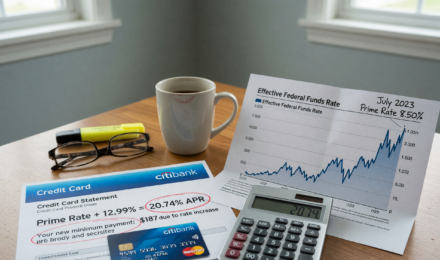
The numbers make the stakes brutally clear. According to the Federal Reserve’s H.15 statistical release, the prime rate peaked at 8.50% in 2023 — its highest level in over two decades. A borrower carrying a $400,000 adjustable-rate mortgage at that peak could be paying $600 to $900 more per month than someone with a loan originated in 2021. Multiply that over 12 months and you are looking at $7,200 to $10,800 in excess interest annually — money that could be funding retirement accounts, emergency savings, or debt elimination.
This guide gives you a precise, data-backed framework for identifying the right moment to act. You will learn how the prime rate moves, what indicators signal a genuine drop versus a temporary fluctuation, how to calculate your personal break-even threshold, and how to execute a refinance that actually saves money rather than just resetting a clock. Every section below is built on real market data, expert analysis, and actionable timing strategies.
Key Takeaways
- The prime rate directly tracks the federal funds rate — historically moving within 3 percentage points above it — making Fed meeting dates the single most important calendar events for refinance timing.
- A rate drop of at least 0.75% to 1.00% is the widely cited threshold that justifies refinancing costs, which typically run between 2% and 6% of the loan principal.
- On a $350,000 loan, a 1% rate reduction saves approximately $195 per month — or $70,200 over a 30-year term — before factoring in closing costs.
- The average refinance takes 30 to 45 days to close, meaning borrowers who wait for the rate to hit bottom often miss the window entirely as lenders reprice upward.
- Mortgage rates typically fall 2 to 4 weeks after a Fed rate cut announcement, then can rebound 0.25% to 0.50% within 60 to 90 days as lenders adjust.
- Borrowers who refinanced within 30 days of a confirmed Fed rate cut saved an average of $3,400 more over five years compared to those who waited 90 or more days, according to industry analysis.
In This Guide
- How the Prime Rate Connects to Your Mortgage Rate
- Reading Fed Signals and Rate Cycle Patterns
- Timing the Drop: When to Pull the Trigger
- Calculating Your Personal Break-Even Point
- How Different Loan Types Respond to Rate Drops
- Understanding Lender Repricing Behavior
- Credit Score and Qualification Requirements
- The Most Costly Timing Mistakes Borrowers Make
- Key Market Indicators to Monitor Before You Apply
How the Prime Rate Connects to Your Mortgage Rate
The prime rate is the benchmark interest rate that major U.S. banks charge their most creditworthy commercial customers. It is not set arbitrarily. It moves in near-perfect lockstep with the federal funds rate — specifically, it is calculated as the federal funds rate plus 3 percentage points.
This mechanical relationship means that every time the Federal Open Market Committee (FOMC) votes to adjust the federal funds rate, the prime rate follows automatically within 24 hours. Understanding this chain of causality is step one in knowing when to refinance during a prime rate drop cycle.
Direct vs. Indirect Rate Impact
Not all mortgage products are equally sensitive to prime rate changes. Adjustable-rate mortgages (ARMs) and home equity lines of credit (HELOCs) are directly indexed to the prime rate — meaning your payment changes almost immediately after a Fed cut. Fixed-rate mortgages are indirectly affected through 10-year Treasury yield movements and secondary mortgage market pricing.
As explained by the Consumer Financial Protection Bureau, ARMs typically reset annually or semi-annually based on an index rate — often SOFR or the prime rate — plus a margin set by the lender. That margin rarely changes, but the index moves with every Fed action.
For fixed-rate mortgage holders, the connection is less direct but still powerful. When the prime rate drops, bond investors anticipate slower economic growth and lower inflation, which pushes Treasury yields down and mortgage rates down alongside them. The relationship is correlated, not causal — but the practical effect is similar.
The prime rate has moved in tandem with every single federal funds rate change since 1994 — a streak of over 30 years of perfectly correlated movement, with no exceptions.
The Spread Between Prime and Mortgage Rates
Fixed mortgage rates do not equal the prime rate. They typically track the 10-year Treasury yield plus a spread that reflects lender risk, market demand, and secondary market conditions. Historically, that spread has averaged 1.5 to 2.0 percentage points above the 10-year Treasury.
When the prime rate falls, Treasury yields often follow — but the spread can widen during periods of economic uncertainty. This is why mortgage rates sometimes do not fall as fast or as far as the prime rate itself, a nuance that surprises many borrowers expecting a dollar-for-dollar reduction.
| Rate Type | Sensitivity to Prime Rate Drop | Typical Lag Time |
|---|---|---|
| HELOC | Direct — moves within 1-2 billing cycles | 30-60 days |
| Adjustable-Rate Mortgage | Direct — resets at next adjustment date | Next reset date (varies) |
| Fixed-Rate Mortgage | Indirect — tracks 10-yr Treasury | 2-4 weeks post-announcement |
| Personal Loans | Indirect — lender-driven repricing | 30-90 days |
| Credit Cards | Direct — tied to prime + margin | 1-2 billing cycles |
Reading Fed Signals and Rate Cycle Patterns
The Federal Reserve does not cut rates in secret. It telegraphs its intentions through speeches, meeting minutes, and a tool called the dot plot — a chart showing where each Fed official expects rates to land over the next several years. Borrowers who know how to read these signals get a meaningful head start.
The FOMC meets eight times per year. Each meeting produces a policy statement and, at quarterly intervals, an updated economic projection. The weeks leading up to a meeting are dense with commentary from Fed governors. Learning to parse this commentary is one of the highest-value skills a borrower can develop.
The Dot Plot and Rate Projections
The dot plot, officially called the Summary of Economic Projections, shows the median expectation for the federal funds rate at year-end for the next three years. When the median dot shifts downward between meetings, it signals that rate cuts are becoming more likely — and mortgage lenders begin pricing that expectation into their rates almost immediately.
According to Federal Reserve FOMC calendar data, the market typically reprices mortgage rates 2 to 6 weeks before an actual cut occurs, based on futures market probability calculations. Waiting for the cut to be officially announced means you have already missed the steepest portion of the rate decline.
CME FedWatch Tool data shows that mortgage rates have historically fallen an average of 0.35% in the 30 days before a confirmed Fed rate cut, and only an additional 0.15% in the 30 days after — meaning 70% of the rate benefit arrives before the cut itself.
Historical Rate Cycle Patterns
The Fed has executed five major rate-cutting cycles since 1990. Each cycle has followed a recognizable pattern: a period of rising rates to combat inflation or overheating, a pause at peak rates, a gradual descent, and eventually a floor. The duration from peak to floor has ranged from 12 months (2019-2020) to 36 months (2006-2009).
Understanding where you are in the current cycle matters enormously. Refinancing near the beginning of a cutting cycle locks in a rate that may continue to fall. Refinancing near the bottom means you capture maximum savings. The challenge is that identifying the bottom is nearly impossible in real time.
| Rate Cycle | Peak Rate | Trough Rate | Duration | Total Cut |
|---|---|---|---|---|
| 2000-2003 | 6.50% | 1.00% | 36 months | -5.50% |
| 2006-2008 | 5.25% | 0.25% | 27 months | -5.00% |
| 2018-2020 | 2.50% | 0.25% | 18 months | -2.25% |
| 2022-2023 Peak | 5.50% | Cutting began 2024 | Ongoing | TBD |
Timing the Drop: When to Pull the Trigger
Knowing when to refinance prime rate drop cycles is less about perfection and more about probability. No borrower will consistently capture the absolute lowest rate. The goal is to act within a zone of optimal value — close enough to the bottom to achieve meaningful savings, early enough to avoid missing the window entirely.
Industry practitioners generally identify three viable timing windows within a rate-cutting cycle. Each carries different risk and reward profiles depending on your loan size, remaining term, and financial goals.
The Three Refinance Windows
Window One — The Anticipation Phase occurs when futures markets are pricing in a 70% or higher probability of a cut, typically 30 to 60 days before the FOMC meeting. Mortgage lenders begin offering lower rates in advance. Acting here captures the full anticipated benefit but carries the risk that the cut does not materialize.
Window Two — The Confirmation Phase opens immediately after the FOMC announces a cut. Rates have often already moved, but a wave of competition among lenders can produce brief, sharp rate offerings — sometimes the best available in the entire cycle. This window typically lasts 2 to 4 weeks before lenders normalize pricing.
Window Three — The Seasoning Phase appears 90 to 180 days after a cut, when multiple cuts have accumulated and market volatility has settled. This phase may offer slightly higher rates than the immediate post-cut window but provides greater certainty and a cleaner qualification environment. Understanding how the prime rate affects your mortgage and home equity loan can help you identify which window applies to your specific loan type.
Set a rate alert with at least three lenders simultaneously. Most major lenders and rate comparison tools offer free email or SMS alerts when rates hit a target threshold — eliminating the need to check daily and reducing the risk of missing a brief rate trough.
The “Good Enough” Rate Principle
Refinance timing experts frequently cite the “good enough” rate principle — the idea that waiting for the perfect rate costs more than acting on a very good rate. If your break-even period is 24 months and you wait an additional 6 months chasing a 0.125% improvement, you have already sacrificed $1,200 to $2,400 on a $400,000 loan before saving a single dollar.
A 2023 study by Freddie Mac found that borrowers who refinanced within 60 days of a rate falling to their target threshold saved an average of $4,200 more over a five-year period than borrowers who delayed waiting for further improvement. The math consistently favors action over perfection.

Calculating Your Personal Break-Even Point
The break-even point is the month at which your accumulated monthly savings equal the total upfront cost of the refinance. Every refinance decision should begin here — before comparing lenders, before locking a rate, before filling out an application.
Refinancing is not free. Closing costs typically range from 2% to 6% of the loan balance, encompassing origination fees, appraisal, title insurance, escrow, and government recording fees. On a $350,000 loan, that is $7,000 to $21,000 out of pocket — or rolled into the loan balance, where it accrues interest.
The Break-Even Formula
The calculation is straightforward: divide total closing costs by monthly savings. If refinancing costs $8,000 and saves $220 per month, your break-even is 36.4 months — approximately 3 years. If you plan to stay in the home at least that long, the refinance makes financial sense.
The complication is the rolling break-even — the fact that rolling closing costs into the loan resets your principal higher and extends the total interest paid. A borrower who rolls $8,000 in costs into a 30-year loan at 6.5% will pay an additional $10,200 in interest over the life of the loan, making the true cost of the refinance nearly $18,200, not $8,000.
On a $400,000 mortgage, dropping from 7.25% to 6.25% reduces the monthly payment by approximately $258. At $6,000 in closing costs, the break-even point is 23.3 months — under two years.
When Break-Even Math Breaks Down
Break-even analysis assumes constant circumstances. Life does not cooperate. Job changes, family growth, and income shifts can shorten your time in the home — and if you sell before break-even, you will have lost money on the refinance. Before applying, honestly assess your 3 to 5 year housing plans.
Additionally, a solid monthly budget is essential before committing to refinancing costs. Rolling closing costs into the loan without a clear plan for managing cash flow during the transition period has caused significant financial stress for otherwise well-positioned borrowers.
| Loan Balance | Rate Drop | Monthly Savings | Closing Costs (3%) | Break-Even |
|---|---|---|---|---|
| $200,000 | 0.75% | $98/mo | $6,000 | 61 months |
| $300,000 | 0.75% | $147/mo | $9,000 | 61 months |
| $400,000 | 1.00% | $246/mo | $12,000 | 49 months |
| $500,000 | 1.25% | $366/mo | $15,000 | 41 months |
| $600,000 | 1.50% | $504/mo | $18,000 | 36 months |
How Different Loan Types Respond to Rate Drops
Not every borrower benefits equally from a prime rate drop. Your current loan type determines both the urgency and the mechanics of your refinance decision. Understanding these distinctions is critical before you decide when to refinance during a prime rate drop.
The three most common refinance scenarios involve converting an ARM to a fixed rate, refinancing an existing fixed-rate to a lower fixed rate, or refinancing a HELOC to a fixed home equity loan. Each involves different timing calculus and qualification thresholds.
ARM to Fixed Conversion
Borrowers with adjustable-rate mortgages face a two-sided decision. During a rate-cutting cycle, their ARM rate may actually fall — temporarily making a refinance less urgent. But if the cutting cycle reverses, those rates will climb again. Converting to a fixed rate during a cutting cycle locks in the benefit permanently.
The optimal moment to convert is when the fixed rate being offered is at or below your current ARM rate — or close enough that the rate certainty is worth the small premium. Many borrowers make the mistake of waiting for the ARM to rise before acting, at which point fixed rates may have already climbed in response to changed market conditions. As detailed in our guide on how the prime rate affects personal loan rates, rate volatility can move faster than most borrowers anticipate.
Approximately 8.9% of all outstanding mortgages in the U.S. are adjustable-rate products, according to data from the Mortgage Bankers Association — representing over 5 million households directly exposed to prime rate movements.
HELOC Refinancing Strategy
A home equity line of credit is almost always indexed directly to the prime rate. This means HELOC holders see rate benefits almost immediately when the prime rate drops — but they also carry the risk of rate increases just as quickly. Converting a HELOC balance to a fixed home equity loan during a cutting cycle can lock in savings for the duration of repayment.
The decision depends heavily on how much of the HELOC you have drawn. For balances under $25,000, closing costs on a fixed loan may not justify the refinance. For balances above $75,000, the math almost always favors locking in during a rate-cutting cycle.
Understanding Lender Repricing Behavior
Lenders are not passive participants in rate cycles. They actively manage their pricing based on application volume, secondary market conditions, and hedging costs. Understanding how lenders reprice — and how fast — is essential for knowing when to refinance during a prime rate drop.
When the Fed signals a rate cut, lenders face a surge in refinance applications. To manage volume, they sometimes slow rate reduction or add temporary margin — effectively blunting the benefit for borrowers who wait too long after an announcement. This counterintuitive behavior is documented in academic research and confirmed by mortgage industry veterans.
“The best refinance rates rarely last more than two to three weeks after a major Fed announcement. Lenders use that window to skim the cream — then they reprice upward to manage their pipeline. Borrowers who wait for certainty often pay the price of that delay in basis points.”
The Pipeline Hedge Effect
When you lock a mortgage rate, the lender must hedge that commitment in the secondary market. This hedging has a cost. During periods of high rate volatility — exactly the conditions that surround Fed decisions — hedging costs rise. Lenders pass those costs to borrowers in the form of slightly higher rates or larger origination fees.
The practical implication is that rate lock timing matters as much as rate timing. A 30-day rate lock during a volatile period may carry a premium of 0.125% to 0.25% versus the same rate locked during a calm period. Extending a lock by 15 days can add 0.0625% to 0.125% in rate cost.
Shopping Lender Competition Windows
Lender competition intensifies immediately after a Fed cut and again approximately 60 days later as initial refinance volume normalizes. Both windows create pricing pressure that benefits borrowers. Getting quotes from at least three to five lenders — including at least one credit union and one online lender — can produce a 0.25% to 0.50% spread on the same borrower profile.
According to the Consumer Financial Protection Bureau’s mortgage shopping research, borrowers who obtained five or more loan quotes saved an average of $3,000 more over the loan term than borrowers who accepted the first offer. That single habit — shopping broadly — may be worth more than timing perfection.

Credit Score and Qualification Requirements
Rate timing is irrelevant if you cannot qualify for the rate being offered. Lenders use your credit score, debt-to-income ratio, and loan-to-value ratio to determine what rate you actually receive — which can differ significantly from the advertised rate.
The rate advertised in headlines assumes a borrower with a 740 or higher credit score, a debt-to-income ratio below 36%, and a loan-to-value ratio at or below 80%. If your profile deviates from this standard, you may receive a rate 0.25% to 0.75% higher — potentially erasing the savings from a prime rate drop.
Credit Score Thresholds and Rate Pricing
Mortgage pricing is tiered by credit score in 20-point increments. Borrowers at 719 receive meaningfully worse pricing than borrowers at 720, despite the one-point difference. Understanding which tier you fall into — and whether a small score improvement would move you into a better tier — can be worth months of refinance preparation.
Improving your credit score by even 20 points in the months before a rate drop arrives can amplify your savings substantially. Paying down credit card balances to below 10% utilization, disputing any inaccurate negative items, and avoiding new credit inquiries are the three highest-impact actions in a short time horizon. Our guide on what constitutes a good credit score and what you can do with it provides a detailed breakdown of score ranges and their mortgage pricing implications.
Applying for new credit cards, auto loans, or any installment debt within 6 months of a planned refinance can drop your credit score by 5 to 20 points — enough to bump you into a worse pricing tier and cost hundreds of dollars per year in higher interest.
Debt-to-Income Ratio Preparation
Lenders typically require a debt-to-income (DTI) ratio of 43% or below for conventional refinancing — and the best rates are reserved for borrowers at 36% or below. If your DTI is currently above 43%, you may be unable to refinance regardless of how favorable rates become.
Paying off high-balance installment loans — such as auto loans or personal loans — in the months before a rate drop can meaningfully reduce DTI. Even eliminating a $400 monthly car payment can swing DTI by 3 to 5 percentage points on a mid-income household, potentially opening qualification doors that were previously closed. Our detailed article on how to pay off debt fast using the snowball and avalanche methods can help you accelerate that process strategically.
The Most Costly Timing Mistakes Borrowers Make
Understanding when to refinance during a prime rate drop is only half the challenge. Avoiding the most common mistakes is equally important. Many borrowers who correctly identify the timing window still make decisions that eliminate their savings.
These mistakes are well documented across industry research and financial counseling data. They tend to cluster around the same behavioral traps: waiting too long, moving too fast, and underestimating costs.
Mistake 1: Waiting for the Bottom
The single most expensive mistake is waiting for the lowest possible rate. The bottom of a rate cycle is only visible in hindsight. Borrowers who held out for 0.25% more in savings from April 2020 through August 2020 missed a window that did not reopen for years. The opportunity cost of waiting — continued payments at the higher rate — compounds monthly.
“I’ve counseled thousands of borrowers, and the ones who suffer most are not the ones who refinanced too early — they’re the ones who kept waiting for one more rate cut and then watched rates reverse before they ever applied. A ‘good enough’ rate today beats a ‘perfect’ rate that never arrives.”
Mistake 2: Ignoring the Total Cost of Refinancing
Monthly payment reduction is seductive but incomplete as a decision metric. Borrowers who focus exclusively on the lower payment and ignore closing costs, extended loan terms, and rolled-in fees frequently end up worse off over the full loan lifetime.
Resetting a 25-year-old loan to a new 30-year term can reduce monthly payments dramatically — while adding 5 years of interest and potentially hundreds of thousands of dollars to total loan cost. A 15-year refinance, while carrying a higher monthly payment, can produce dramatically better total interest savings when the math is run to completion.
Mistake 3: Failing to Lock at the Right Moment
A refinance application is not a rate lock. Many borrowers assume that starting the process secures today’s rate. It does not. Unless you have explicitly locked your rate with the lender — in writing, with a defined expiration date — the rate can change between application and closing.
Rates have moved as much as 0.375% in a single week during periods of Fed-driven volatility. For a $400,000 loan, that is a $95 monthly payment difference that can appear between application and closing if you fail to lock promptly.
Rate locks typically cost 0.125% to 0.25% per additional 15-day extension beyond the initial lock period. If your loan takes longer than expected to close — a common occurrence — an expired lock can cost $500 to $1,500 to extend on a $400,000 mortgage.
Key Market Indicators to Monitor Before You Apply
Sophisticated refinance timing involves tracking a small set of indicators that collectively signal whether rates are likely to fall further, hold, or reverse. None of these indicators is infallible individually. Together, they provide a high-probability framework for decision-making.
The indicators fall into two categories: leading indicators that predict future rate movement, and coincident indicators that confirm a current trend. Both types are essential to a complete analysis.
Leading Indicators: What to Watch
The CME FedWatch Tool calculates the implied probability of rate cuts at each upcoming FOMC meeting based on federal funds futures prices. When the probability of a 25-basis-point cut at the next meeting exceeds 80%, mortgage lenders typically begin pre-pricing the reduction into their offered rates. This is one of the clearest and most actionable signals available to individual borrowers.
The 10-year Treasury yield is the single most direct predictor of 30-year fixed mortgage rates. When the 10-year yield falls below a recent 60-day average, mortgage rates typically follow within 2 to 3 weeks. Tracking this metric daily during a rate-cutting cycle takes less than 5 minutes and provides enormous actionable insight. Changes in Treasury yields also directly affect what happens to your savings accounts — important context if you are managing cash during the refinance window.
Coincident Indicators: Confirming the Trend
The Mortgage Bankers Association (MBA) Weekly Mortgage Applications Survey tracks refinance application volume nationally. A sharp increase in refinance volume signals that rates have fallen to a level that is triggering broad action — a useful confirmation that the window is open. However, high volume also signals competition for lender capacity, which can slow processing times.
The Consumer Price Index (CPI) remains critical because inflation data directly influences Fed policy. A CPI reading that comes in below expectations often triggers an immediate rally in bond markets and a corresponding drop in mortgage rates — sometimes within hours. Monitoring CPI release dates, which are published monthly, gives you advance warning of potential rate-moving events.
The Bureau of Labor Statistics releases CPI data on a fixed schedule published months in advance at bls.gov. Marking these dates on your calendar costs nothing and can give you a 24-hour head start on rate movement relative to borrowers who are not tracking the schedule.

Real-World Example: Marcus and Sandra’s Refinance Window Decision
Marcus and Sandra purchased their home in Phoenix in late 2022 with a $420,000 mortgage at 7.125%. Their monthly principal and interest payment was $2,830. By mid-2024, they had paid the balance down to approximately $408,000 — and the Fed had cut rates by 0.50% at its September 2024 meeting, bringing the prime rate down to 8.00% from its peak of 8.50%.
Rather than waiting for additional cuts, Marcus used the CME FedWatch Tool in October 2024 and noted that futures markets were pricing a 78% probability of another 25-basis-point cut at the November meeting. He began collecting rate quotes from four lenders immediately. Three lenders were quoting 30-year fixed rates in the 6.625% to 6.875% range — already pricing in the anticipated November cut. The fourth, an online lender, offered 6.50% with 0.5 points in origination fees. Marcus locked at 6.50% on October 18, 2024.
Their new monthly payment on the $408,000 balance at 6.50% was $2,580 — a reduction of $250 per month. Total closing costs, which they paid out of pocket rather than rolling in, were $9,200. Their break-even point was 36.8 months — just over three years. The Fed did cut again in November and December, but the available refinance rates in those months ranged between 6.50% and 6.75%, meaning Marcus had locked in the cycle’s most competitive rate by acting in the anticipation window rather than waiting for confirmation.
Over five years — their projected remaining time in the home — Marcus and Sandra will save $15,000 in interest payments net of closing costs. Had they waited for December’s second cut and locked at 6.75% instead, their five-year net savings would have been approximately $6,200. The 60-day timing difference cost or saved over $8,800, depending on perspective. Their decision to track indicators, act in the pre-cut window, and shop multiple lenders simultaneously made the difference.
Your Action Plan
-
Assess your current loan and calculate your break-even threshold
Pull your most recent mortgage statement and note the current interest rate, remaining balance, and remaining term. Use a break-even calculator to determine what rate reduction would justify your estimated closing costs (typically 2% to 6% of the remaining balance). Write this target rate down — it becomes your action trigger.
-
Check your credit score and repair any damage immediately
Pull your credit report from AnnualCreditReport.com and check your score with at least two of the three bureaus. If your score is below 740, identify the highest-impact levers: credit card utilization, outstanding collections, or payment history gaps. Begin addressing these issues 3 to 6 months before the expected rate window opens. Our resource on building credit from scratch provides strategies applicable even to borrowers repairing an existing profile.
-
Reduce your debt-to-income ratio below 36%
List every monthly debt obligation — auto loans, student loans, credit cards, personal loans — and calculate their total as a percentage of gross monthly income. If DTI exceeds 36%, prioritize eliminating the highest-payment debts first. Even paying off a single auto loan can dramatically improve qualification and rate pricing.
-
Set up rate monitoring across multiple lenders and data sources
Create accounts with at least three lenders and enable rate alert notifications. Bookmark the CME FedWatch Tool and the Mortgage Bankers Association weekly applications report. Mark the upcoming CPI release dates and FOMC meeting dates on your calendar. This infrastructure costs nothing and reduces the risk of missing the window due to inattention.
-
Collect competing quotes within a 14-day window once rates hit your target
When your target rate is offered by even one lender, begin collecting quotes from at least four others immediately. Credit inquiries for mortgage shopping within a 14-day window count as a single inquiry under FICO scoring rules — so shopping broadly has no meaningful credit score penalty. Compare the full APR, not just the interest rate, to account for origination fees and points.
-
Lock your rate as soon as you identify the best offer
Once you have your best offer in hand, lock immediately. Request a written lock confirmation specifying the rate, lock duration, and expiration date. Choose a lock period (30, 45, or 60 days) that matches your expected closing timeline — and add a 7-day buffer for unexpected delays. Do not let the lock expire without a plan.
-
Prepare all documentation before the rate drop window opens
Gather two years of tax returns, recent W-2s or 1099s, 60 days of bank statements, and your most recent pay stubs. Having this documentation ready reduces closing time by 7 to 14 days — meaningful when rate windows can close in as little as 2 weeks. Upload everything to a secure digital folder you can share with any lender instantly.
-
Evaluate whether to pay points to buy down your rate further
Each mortgage point costs 1% of the loan balance and typically reduces the rate by 0.25%. On a $400,000 loan, one point costs $4,000 and saves roughly $60 per month. The break-even on buying points is approximately 67 months — over five years. If you plan to stay in the home at least that long, buying one point during a rate-drop window can add thousands in long-term savings.
Frequently Asked Questions
How much does the prime rate need to drop before refinancing makes sense?
Most financial experts cite a drop of 0.75% to 1.00% as the traditional threshold for a refinance to cover its own closing costs. However, this rule of thumb assumes average closing costs and average loan sizes. On a larger loan — $500,000 or more — a 0.50% reduction can justify the transaction because the absolute monthly savings are proportionally larger. Always run your personal break-even calculation rather than relying on general rules.
Should I refinance early in a rate-cutting cycle or wait for the bottom?
Waiting for the bottom of a rate cycle carries significant risk because the bottom is only identifiable in hindsight. The decision framework should focus on your personal break-even point rather than rate-cycle speculation. If the available rate produces a break-even within your planned occupancy horizon, the refinance is rational regardless of whether additional cuts follow. If you refinance and rates fall further, you can always refinance again — provided your break-even on the second transaction also makes sense.
Does knowing when to refinance prime rate drop cycles help with HELOCs too?
Yes — and HELOCs are often where the most immediate benefit appears. Because HELOCs are directly indexed to the prime rate, they reprice within one to two billing cycles after a Fed cut. If you have a significant HELOC balance, a rate drop can reduce your minimum payment and total interest cost automatically — no refinance required. The strategic question is whether to lock that balance into a fixed home equity loan to protect against future rate increases.
Will my home’s current appraised value affect my ability to refinance?
Absolutely. Most conventional refinance products require a loan-to-value ratio at or below 80% to avoid private mortgage insurance. If your home has declined in value since purchase, or if you purchased with a small down payment and have not built substantial equity, you may not qualify for the best rates — or for refinancing at all without PMI. Getting a preliminary value estimate from a real estate agent or automated valuation model before applying can save time and application fees.
How long does it take to close a refinance?
The average refinance closes in 30 to 45 days, though the range extends from as few as 20 days with some online lenders to 60 or more days during high-volume periods. Plan accordingly when setting your rate lock duration. A 45-day lock is generally safer than a 30-day lock, even though it may cost a small premium. Missing a lock expiration can mean re-locking at a higher rate.
Can I refinance if I currently have a government-backed loan (FHA or VA)?
Yes. FHA and VA loans have streamline refinance programs that reduce documentation and appraisal requirements significantly. An FHA Streamline Refinance can close in as little as three weeks because it does not require a new appraisal or full income verification. VA Interest Rate Reduction Refinance Loans (IRRRLs) operate similarly. These programs are particularly valuable during rate-drop windows because they allow rapid execution with lower transaction costs.
Is it worth refinancing if I only have 10 years left on my mortgage?
This question requires careful analysis. With a shorter remaining term, the monthly payment reduction will be smaller and the closing costs will take a proportionally larger bite relative to remaining interest savings. However, if the rate drop is substantial — 1.50% or more — even a short remaining term can produce meaningful savings. A 15-year or 20-year refinance restarting the clock is generally not advisable in this situation unless you have a specific cash-flow need.
What happens to my savings and investment accounts when I refinance?
Refinancing affects your cash position primarily through closing costs and potentially through escrow adjustments. If you pay closing costs out of pocket, you will need sufficient liquid savings without depleting your emergency fund — typically recommended at three to six months of expenses. The savings freed up by a lower monthly payment can then be redirected toward high-yield savings accounts or investment accounts. Our guide on the best high-yield savings accounts for 2026 can help you identify where to deploy those freed-up funds productively.
Should I refinance to a 15-year term instead of 30-year when rates drop?
If you can comfortably afford the higher monthly payment, a 15-year refinance almost always produces dramatically better lifetime financial outcomes than a 30-year. The rate on a 15-year loan is typically 0.50% to 0.75% lower than a 30-year, and the total interest paid over the life of the loan is often less than half. The risk is that the higher required payment reduces cash-flow flexibility during income disruptions.
How do I know if my lender is quoting a competitive rate?
The best way to verify competitiveness is to collect quotes from at least three to five lenders simultaneously and compare the full Annual Percentage Rate (APR) — not just the interest rate. APR incorporates fees and reflects the true annual cost of the loan. You can also benchmark against the weekly Freddie Mac Primary Mortgage Market Survey, which publishes average 30-year fixed rates nationally and serves as a useful reference point for what a well-qualified borrower should expect to receive.
Sources
- Federal Reserve — H.15 Selected Interest Rates Statistical Release
- Federal Reserve — FOMC Meeting Calendar and Statements
- Consumer Financial Protection Bureau — What Is a Variable Rate Mortgage?
- Consumer Financial Protection Bureau — Mortgage Shopping Research Report
- U.S. Bureau of Labor Statistics — CPI News Release Schedule
- Freddie Mac — Primary Mortgage Market Survey (PMMS)
- Mortgage Bankers Association — Weekly Mortgage Applications Survey
- Bankrate — Current Mortgage Refinance Rates and Analysis
- NerdWallet — When to Refinance Your Mortgage
- U.S. Department of Housing and Urban Development — FHA Streamline Refinance Information
- U.S. Department of Veterans Affairs — VA Interest Rate Reduction Refinance Loan (IRRRL)
- Urban Institute — Housing Finance at a Glance Monthly Chartbook
- AnnualCreditReport.com — Free Credit Reports from All Three Bureaus
- CME Group — FedWatch Tool: Fed Funds Rate Probability Data
- Freddie Mac — Economic and Housing Research Forecast