Fact-checked by the Prime Rate editorial team
Quick Answer
The prime rate changes only when the Federal Reserve adjusts its federal funds rate target, which happened 8 times in 2022 and 3 times in 2024. As of early 2026, the prime rate stands at 7.50%, set by major U.S. banks following each Fed decision.
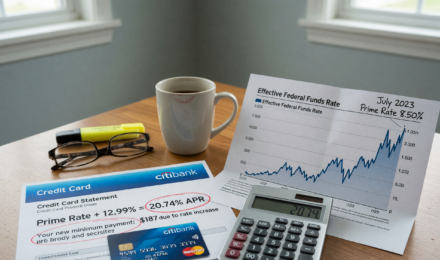
Understanding how often the prime rate changes matters most to people carrying variable-rate debt or planning a major financial move. The prime rate has shifted dramatically over the past three years, moving from a historic low of 3.25% in early 2022 to a peak of 8.50% in 2023 before gradually declining to its current level. Anyone with a credit card, home equity line of credit, or adjustable-rate loan felt those moves directly in their monthly payment.
According to the Federal Reserve’s official FOMC calendar, the Fed holds eight scheduled policy meetings per year, and each one is a potential trigger for a prime rate change. The prime rate itself is not set by any single government body. It is a convention maintained by commercial banks, traditionally sitting exactly 3 percentage points above the federal funds rate target, as confirmed by the Wall Street Journal’s prime rate monitor.
This guide covers who controls the prime rate, how the decision-making process works, how often changes have occurred historically, and what each change means for your finances. By the end, you will have a clear framework for anticipating rate moves and protecting your financial position.
Key Takeaways
- The prime rate changes only when the Federal Reserve adjusts the federal funds rate, it does not change on a fixed schedule (Federal Reserve, 2025).
- The Fed holds 8 scheduled FOMC meetings per year, each representing a potential prime rate change (Federal Reserve, 2025).
- The prime rate is always set at exactly 3 percentage points above the federal funds rate, a convention maintained by U.S. commercial banks since the 1990s (Wall Street Journal, 2025).
- Between 2022 and 2023, the Fed raised rates 11 times, pushing the prime rate from 3.25% to 8.50%, the fastest tightening cycle in 40 years (Federal Reserve Historical Data, 2024).
- In 2024, the Fed cut rates 3 times (September, November, and December), lowering the prime rate from 8.50% to 7.50% (Federal Reserve, 2025).
- A single 0.25% prime rate increase adds approximately $25 per year in interest for every $10,000 of variable-rate debt outstanding (Consumer Financial Protection Bureau, 2024).
In This Guide
- What Is the Prime Rate and How Is It Defined?
- Who Decides the Prime Rate?
- How Often Does the Prime Rate Actually Change?
- What Is the FOMC Meeting Schedule and Why Does It Matter?
- What Does the Historical Record of Prime Rate Changes Show?
- How Does the Prime Rate Affect Your Loans and Credit Cards?
- How Can You Predict Upcoming Prime Rate Changes?
- How Does the Prime Rate Compare to Other Benchmark Rates?
- What Should You Do When the Prime Rate Changes?
What Is the Prime Rate and How Is It Defined?
The prime rate is a benchmark interest rate used by U.S. commercial banks as the starting point for pricing a wide range of consumer and business loans. It represents the rate banks charge their most creditworthy customers, historically large corporations, though today it functions primarily as a reference rate tied directly to federal monetary policy.
The 3-Point Relationship With the Federal Funds Rate
The prime rate is not independently set. It is calculated as the federal funds rate plus 3 percentage points, a formula that has held consistently since the early 1990s. When the Federal Reserve raises or lowers the federal funds rate target, every major U.S. bank adjusts its prime rate by the same amount, almost always on the same day.
For example, when the Fed cut its benchmark rate by 0.25% in December 2024, the prime rate dropped from 7.75% to 7.50% within hours. This mechanical relationship is why tracking FOMC decisions is the most reliable way to anticipate prime rate movements.
The Wall Street Journal publishes what is considered the definitive U.S. prime rate, defined as the base rate posted by at least 70% of the top 10 U.S. banks. This is the figure most lenders reference in loan agreements.
How Banks Use the Prime Rate
Banks use the prime rate as a floor for consumer lending. Your actual interest rate on a credit card, HELOC, or personal line of credit is typically expressed as “prime plus” a margin, for example “prime + 5.99%.” When the prime rate changes, your rate adjusts by the exact same amount. This is why understanding how often the prime rate changes has such direct consequences for borrowers.
Who Decides the Prime Rate?
No single government body officially sets the prime rate, but in practice, the Federal Open Market Committee (FOMC), a division of the Federal Reserve System, controls it indirectly through its federal funds rate decisions. The prime rate moves in lockstep with every FOMC rate change.
The Role of the Federal Open Market Committee
The FOMC is composed of 12 voting members: the 7 members of the Federal Reserve Board of Governors, the president of the Federal Reserve Bank of New York, and 4 rotating presidents from the remaining 11 regional Federal Reserve Banks. This committee meets 8 times per year to evaluate economic conditions and vote on the federal funds rate target.
The current chair of the Federal Reserve, Jerome Powell, has led the FOMC since 2018. His public statements, known as “forward guidance,” are closely watched by financial markets for signals about future rate decisions.
“The federal funds rate is the primary tool the Federal Open Market Committee uses to influence financial conditions in pursuit of the dual mandate of maximum employment and price stability. All other short-term rates, including the prime rate, follow from it.”
How Banks Formalize the Prime Rate
After each FOMC decision, major commercial banks including JPMorgan Chase, Bank of America, Wells Fargo, and Citibank each announce their updated prime rate. These announcements are typically made the same day as the Fed’s decision. The Wall Street Journal then confirms the consensus prime rate based on the rates posted by the majority of the top 10 U.S. banks.
The Federal Reserve has changed the federal funds rate, and therefore the prime rate, 42 times between January 2000 and July 2025, according to Federal Reserve H.15 Selected Interest Rates data.
How Often Does the Prime Rate Actually Change?
The prime rate changes irregularly and has no fixed schedule, but it can only change when the FOMC votes to move the federal funds rate. How often that happens depends entirely on the economic environment: during stable periods the rate can sit unchanged for years, while during crises it can move multiple times in a single year.
Frequency by Era
Between 2009 and 2015, the prime rate did not change once, holding at 3.25% for more than six consecutive years as the Fed maintained near-zero interest rates following the financial crisis. By contrast, in 2022 alone, the prime rate changed 7 times as the Fed launched the most aggressive rate-hiking campaign since the 1980s to combat inflation.
The table below summarizes prime rate change frequency across key periods.
| Period | Number of Changes | Prime Rate Range | Economic Context |
|---|---|---|---|
| 2006–2007 | 5 cuts | 7.25% to 4.25% | Housing crisis response |
| 2009–2015 | 0 changes | 3.25% (flat) | Post-crisis low rate environment |
| 2015–2018 | 9 increases | 3.25% to 5.50% | Gradual normalization |
| 2019–2020 | 5 cuts | 5.50% to 3.25% | Trade war + COVID-19 emergency |
| 2022–2023 | 11 increases | 3.25% to 8.50% | Inflation fight (40-year high CPI) |
| 2024 | 3 cuts | 8.50% to 7.50% | Inflation cooling, soft landing |
Emergency Changes Outside Scheduled Meetings
The FOMC can also act between its scheduled meetings in emergencies. The most dramatic example occurred in March 2020, when the Fed made two emergency rate cuts within two weeks: one of 0.50% on March 3 and one of 1.00% on March 15, in response to COVID-19. Each of these emergency cuts immediately moved the prime rate by the same amount.
The fastest single-day prime rate move in modern history occurred on March 15, 2020, when the Fed slashed its benchmark rate by a full 1.00% in an emergency Sunday session, dropping the prime rate from 4.25% to 3.25% overnight.
What Is the FOMC Meeting Schedule and Why Does It Matter?
The FOMC holds exactly 8 scheduled meetings per year, spaced roughly every six to eight weeks. Each meeting is a two-day session ending with a policy statement and, four times per year, a press conference by the Fed Chair. These meetings are the only regularly scheduled occasions when the prime rate can change.
2025 FOMC Meeting Dates
According to the Federal Reserve’s official FOMC calendar for 2025, the scheduled meeting dates are as follows.
| Meeting Date | Decision Announced | Press Conference |
|---|---|---|
| Jan 28–29 | January 29 | Yes |
| Mar 18–19 | March 19 | Yes |
| May 6–7 | May 7 | Yes |
| Jun 17–18 | June 18 | Yes |
| Jul 29–30 | July 30 | Yes |
| Sep 16–17 | September 17 | Yes |
| Oct 28–29 | October 29 | Yes |
| Dec 9–10 | December 10 | Yes |
As of 2025, the Fed holds press conferences after every meeting, a change from the previous practice of holding them only quarterly. This gives the Fed more flexibility to move rates at any meeting, and it means borrowers need to track all eight dates, not just four.
What Happens Between Meetings?
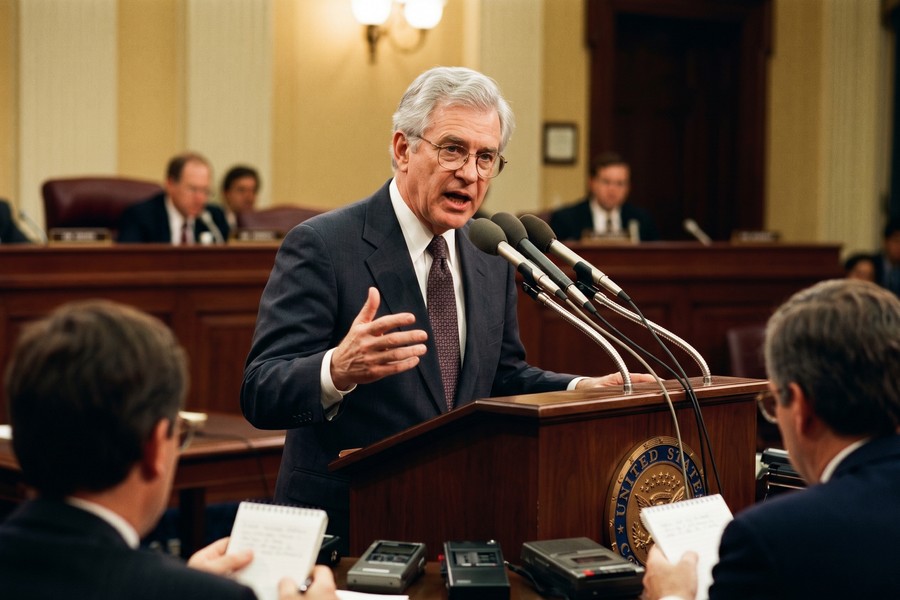
Between meetings, FOMC members frequently give speeches, congressional testimony, and interviews that signal their policy intentions. This “forward guidance” often moves financial markets in anticipation of an official rate decision. Watching speeches from Fed governors and regional bank presidents, published on the Federal Reserve’s speeches archive, can give you advance notice of how often prime rate changes are likely in the coming months.
What Does the Historical Record of Prime Rate Changes Show?
The historical record reveals that the prime rate is far more volatile than most people expect. Multi-year stretches of total stability alternate with sharp, rapid movements. Studying that history is the best way to contextualize current rates and anticipate future changes.
The All-Time High and the Modern Era
The prime rate reached its all-time peak of 21.50% in December 1980, during the Federal Reserve’s aggressive campaign under Chair Paul Volcker to break double-digit inflation. That era saw the prime rate change dozens of times in a single year. The modern post-2008 era has been defined by historically low rates and infrequent changes, which made the 2022 hiking cycle feel especially disorienting for borrowers who had never experienced rapid rate increases.
According to Federal Reserve Economic Data (FRED) maintained by the St. Louis Fed, the prime rate has averaged approximately 5.5% over the past 30 years, though that average masks enormous swings at both ends of the spectrum.
The 2022–2023 hiking cycle delivered 425 basis points of tightening in under 12 months, a pace not seen since the Volcker era. Anyone carrying a variable-rate loan felt that directly in their monthly payment, which is exactly what history suggests will happen again in the next aggressive cycle.
Prime Rate Changes in the 21st Century
Since 2000, the prime rate has cycled through three distinct phases: aggressive cuts during crises (2001, 2008, 2020), extended holds during recovery, and eventual normalization hikes. The 2022–2023 hiking cycle was the sharpest in four decades, raising the prime rate by 525 basis points in approximately 16 months.
If you carry a variable-rate credit card or HELOC, understanding that history helps you appreciate just how much your rate can move, and how quickly.
The prime rate has been changed more than 60 times since 1990, according to FRED historical data from the St. Louis Federal Reserve, averaging roughly 1.7 changes per year over that 35-year span.
How Does the Prime Rate Affect Your Loans and Credit Cards?
The prime rate directly impacts the interest rate on any variable-rate financial product. Every time it changes, lenders automatically adjust your rate by the same increment, meaning a single FOMC decision can raise or lower your monthly payment within one billing cycle.
Credit Cards
Most credit card APRs are expressed as “prime plus” a margin. According to the Federal Reserve’s G.19 Consumer Credit report, the average credit card interest rate in early 2025 was approximately 21.47%. With the prime rate at 7.50%, the average margin banks are charging is roughly 14 percentage points above prime.
A 0.25% rate cut reduces that to roughly 21.22%, a modest but real reduction in interest costs for revolving balances. On a $5,000 balance, that translates to roughly $12.50 less in annual interest charges. That figure sounds small in isolation, but it compounds across multiple accounts and larger balances.
Home Equity Lines of Credit (HELOCs)
HELOCs are among the most directly affected products because they are almost universally priced as a variable rate tied to prime. According to Bankrate’s HELOC rate tracker, average HELOC rates in mid-2025 range from 8.00% to 9.50%, reflecting prime plus a margin of 0.50% to 2.00%. For more detail, see our guide on how the prime rate affects your mortgage and home equity loan.
Personal Loans and Business Loans
Variable-rate personal loans and small business lines of credit also reset with the prime rate. Fixed-rate personal loans, by contrast, are unaffected after origination, though new fixed-rate loan pricing is influenced by market expectations for future prime rate movements. For a detailed breakdown, our guide on how the prime rate affects personal loan rates explains the mechanics in full.
Many borrowers assume their monthly payment is fixed when it is not. Always check your loan agreement for the phrase “variable rate” or “prime plus”. If you see either, your rate will move with every prime rate change. Failing to account for this can cause budget shortfalls during rapid rate-hiking cycles.

How Can You Predict Upcoming Prime Rate Changes?
You cannot predict prime rate changes with certainty. Two tools do provide the market’s best real-time probability estimates, though both have limitations worth acknowledging: the CME FedWatch Tool and the yield curve. Understanding them gives borrowers and investors a meaningful edge in anticipating future rate moves, not a guarantee.
The CME FedWatch Tool
The CME Group’s FedWatch Tool uses federal funds futures contracts traded on the Chicago Mercantile Exchange to calculate the probability of specific rate outcomes at each upcoming FOMC meeting. These probabilities update in real time as new economic data is released. When the tool shows a 90%+ probability of a rate cut or hike, markets have priced it in, meaning the prime rate change is considered nearly certain barring unexpected developments. It is worth noting that these probabilities can shift dramatically after a single inflation report or jobs release, so a 90% reading one week can drop to 50% the next.
Key Economic Indicators to Watch
The FOMC’s decisions are driven primarily by two mandates: maximum employment and price stability (2% inflation target). Three economic releases drive rate expectations more than any others:
- CPI (Consumer Price Index), published monthly by the Bureau of Labor Statistics; measures inflation directly.
- PCE (Personal Consumption Expenditures Price Index), the Fed’s preferred inflation gauge, published by the Bureau of Economic Analysis.
- Jobs Report (NFP), the monthly nonfarm payrolls report from the Bureau of Labor Statistics; signals labor market strength.
If CPI and PCE are trending toward or below 2%, and unemployment is rising, the market interprets that as a signal for rate cuts, and the prime rate will likely follow. Conversely, if inflation re-accelerates, expect rate hikes or a prolonged pause.
Set a calendar reminder for every FOMC meeting date and check the CME FedWatch Tool the morning of each decision. If you have a variable-rate loan, a large HELOC balance, or are considering locking in a CD rate, these eight dates per year are the most financially consequential days of the calendar. For guidance on how rate changes affect savings products, see our analysis of what happens to your savings when the prime rate rises.
How Does the Prime Rate Compare to Other Benchmark Rates?
The prime rate is one of several benchmark rates used in U.S. consumer and commercial lending. Comparing it to SOFR, the federal funds rate, and Treasury yields clarifies why different loan types respond differently to monetary policy changes.
Prime Rate vs. SOFR
The Secured Overnight Financing Rate (SOFR) replaced LIBOR as the dominant benchmark for institutional lending and many adjustable-rate mortgages after LIBOR’s discontinuation in 2023. Unlike the prime rate, SOFR fluctuates daily based on overnight repurchase agreement transactions. Consumer products (credit cards, HELOCs) are still predominantly tied to prime, while institutional and mortgage products increasingly reference SOFR.
Prime Rate vs. Federal Funds Rate
The federal funds rate is the rate banks charge each other for overnight lending of reserves. It is set by the FOMC as a target range, currently 4.25% to 4.50% as of mid-2025. The prime rate is simply the fed funds rate midpoint (or upper bound) plus 3.00%. They always move in lockstep and by the same increment. This is the most important rate relationship to understand when tracking how often prime rate changes occur.
Prime Rate vs. 10-Year Treasury Yield
The 10-Year Treasury yield influences long-term fixed-rate products like 30-year mortgages but has no direct mechanical relationship to the prime rate. It is driven by inflation expectations, global capital flows, and fiscal policy, not solely by FOMC decisions. This is why mortgage rates can diverge significantly from prime rate movements during periods of economic uncertainty.
What Should You Do When the Prime Rate Changes?
The right response to a prime rate change depends on whether rates are rising or falling and what financial products you currently hold. Having a pre-planned response for each scenario prevents reactive decision-making under pressure.
When the Prime Rate Rises
Rising prime rates increase the cost of all variable-rate debt. Priority actions include accelerating payoff of high-balance credit cards and HELOCs, exploring balance transfer offers to fixed-rate alternatives, and locking in fixed rates on any new borrowing. One tradeoff worth acknowledging: refinancing from a variable to a fixed rate typically involves fees or a higher initial rate than the current variable rate. That cost may be worth it if you expect rates to keep rising, but it is a real cost if the Fed pivots sooner than expected. Our guide on how to pay off credit card debt outlines proven payoff strategies for exactly this scenario.
When the Prime Rate Falls
Falling prime rates reduce variable-rate debt costs automatically, but also compress yields on savings products like money market accounts and high-yield savings accounts. The same rate cut that lowers your HELOC payment also lowers what your savings account earns. When rates fall, consider locking in higher fixed rates via CDs before further cuts occur. Our detailed CD rates forecast for 2026 explains how to position your savings during a rate-cutting cycle.
Real-World Example: How a Rate Cycle Affected One Homeowner’s HELOC
David, 47, opened a $75,000 HELOC in January 2022 at a variable rate of prime plus 0.50%, which at that time equated to 3.75% (prime was 3.25%). His initial interest-only payment was approximately $234 per month.
Over the next 18 months, the Federal Reserve raised rates 11 times. By July 2023, with the prime rate at 8.50%, David’s HELOC rate had climbed to 9.00%, and his monthly interest-only payment had jumped to approximately $563 per month, an increase of $329 per month or $3,948 per year.
After the Fed’s three 2024 rate cuts, the prime rate fell to 7.50% and David’s rate dropped to 8.00%. His payment fell to roughly $500 per month, still significantly higher than his 2022 starting point, but moving in the right direction.
David’s case illustrates why tracking how often prime rate changes matters: over a 30-month period, his annual interest cost nearly tripled and then partially recovered, all driven entirely by FOMC decisions he could have anticipated using publicly available tools like the CME FedWatch Tool.
Your Action Plan
-
Identify all your variable-rate accounts
Pull every loan and credit card agreement and search for the phrases “variable rate,” “prime plus,” or “index rate.” Note the margin above prime for each account. This gives you a complete picture of your exposure to future prime rate changes.
-
Bookmark the Federal Reserve’s FOMC calendar
Visit the Federal Reserve’s official FOMC meeting calendar and add all eight 2025 meeting dates to your calendar. These are the only days your variable rates can officially change.
-
Monitor the CME FedWatch Tool before each meeting
Check the CME FedWatch Tool one week before each FOMC meeting. If probabilities show a 75% or greater chance of a rate change, begin executing your response plan, whether that means accelerating debt payments or locking in savings rates.
-
Calculate your personal rate sensitivity
For each variable-rate account, multiply the outstanding balance by the potential rate change (e.g., 0.25%). Divide by 12 to find the monthly payment impact. For a $20,000 HELOC, a 0.25% rate increase adds roughly $4.17 per month, small individually, but significant across multiple accounts.
-
Lock in CD or fixed-rate savings products before anticipated cuts
When rate cuts are likely, visit comparison tools at FDIC-insured institutions and lock in the highest available CD rates before cuts reduce yields. Review our guide to the best CD rates for 2026 for current top offers.
-
Review your budget for rate-change scenarios
Using the monthly budgeting framework on this site, model two scenarios: rates rising by 1.00% and rates falling by 1.00%. Know in advance what actions you would take in each scenario so you are not making financial decisions under pressure.
-
Track your credit score to access better rate margins
The margin above prime that your lender charges depends on your creditworthiness. Use Experian, TransUnion, or Equifax (each provides a free annual report at AnnualCreditReport.com) to monitor your FICO Score. A higher score can reduce your “prime plus” margin, lowering your rate even when prime itself does not change.
-
Subscribe to FOMC meeting summaries
Sign up for email alerts from the Federal Reserve at FederalReserve.gov or follow major financial publications like The Wall Street Journal or Bankrate for same-day rate change reporting. Timely information allows you to act on the day of a rate decision rather than weeks later.

Frequently Asked Questions
How often does the prime rate change in a typical year?
The prime rate changes between zero and eight times per year, depending on economic conditions. In stable periods (2009–2015), it did not change at all for six consecutive years. In active cycles like 2022, it changed seven times. On average, it changes approximately 1–4 times per year over recent decades.
Who exactly sets the prime rate?
No single entity officially sets the prime rate. It is a banking convention. In practice, major commercial banks including JPMorgan Chase, Bank of America, and Wells Fargo all set their prime rate at exactly 3 percentage points above the federal funds rate target set by the Federal Open Market Committee. The Wall Street Journal tracks the consensus and publishes the definitive U.S. prime rate.
Does the prime rate change automatically when the Fed acts?
Yes. In virtually every case, major U.S. banks adjust their prime rate on the same day the FOMC announces a rate change. The adjustment is mechanical and immediate. Your lender’s rate changes may take effect on your next billing cycle, depending on the terms of your specific loan agreement.
What is the prime rate today?
As of early 2026, the U.S. prime rate is 7.50%, reflecting the federal funds rate target range of 4.25%–4.50% plus the standard 3-point margin. Always verify the current rate using the Wall Street Journal’s money rates page for the most up-to-date figure.
Can the prime rate change outside of scheduled FOMC meetings?
Yes. The FOMC can call emergency meetings and cut or raise rates between scheduled sessions. This happened twice in March 2020 in response to the COVID-19 pandemic. Emergency changes are rare but can produce the largest single-day prime rate moves on record.
How does the prime rate affect my credit card rate?
Most credit card APRs are variable rates set as “prime plus” a fixed margin. When the prime rate changes, your credit card APR changes by the same amount, typically reflected on your next billing statement. On a $10,000 balance, a 0.25% rate increase costs approximately $25 more per year in interest charges.
How is the prime rate different from the federal funds rate?
The federal funds rate is the rate at which banks lend reserves to each other overnight, set by the FOMC as a target range. The prime rate is a consumer and commercial lending benchmark equal to the federal funds rate plus 3 percentage points. They always move together but serve different markets.
Will the prime rate go down in 2025?
Market expectations, as reflected in CME FedWatch futures pricing, suggest one to two potential rate cuts in the second half of 2025, contingent on inflation continuing to decline toward the Fed’s 2% target. However, these projections change with each new economic data release and should not be treated as certainties.
Does the prime rate affect mortgage rates directly?
Fixed-rate mortgages are not directly tied to the prime rate. They follow the 10-Year Treasury yield. However, adjustable-rate mortgages (ARMs) and HELOCs are directly tied to prime or SOFR. A prime rate change affects HELOCs immediately but does not automatically change a 30-year fixed mortgage rate.
How do I know if my loan is tied to the prime rate?
Check your loan agreement or credit card terms for language stating “variable annual percentage rate,” “based on the prime rate,” or “prime plus [X]%.” Your lender is also legally required to notify you when your rate changes due to a benchmark rate movement. You can also call your lender directly and ask whether your rate is variable or fixed.
Our Methodology
This article was researched and written in July 2025. Prime rate data was sourced from the Federal Reserve’s H.15 Selected Interest Rates release and the St. Louis Federal Reserve’s FRED database, which publishes a complete historical record of the daily prime rate dating to 1955. FOMC meeting dates were sourced directly from the Federal Reserve’s official meeting calendar. Credit card rate data references the Federal Reserve’s G.19 Consumer Credit Statistical Release. HELOC rate ranges reference Bankrate’s live rate tracker updated weekly. All statistics were verified against primary sources at the time of writing. Prime rate figures are subject to change following FOMC decisions; readers should verify the current rate at the Wall Street Journal’s money rates page before making financial decisions.
Sources
- Federal Reserve, Federal Open Market Committee Overview
- Federal Reserve, FOMC Meeting Calendars and Statements
- Federal Reserve Bank of St. Louis (FRED), Bank Prime Loan Rate Historical Data
- Federal Reserve, H.15 Selected Interest Rates Release
- Federal Reserve, G.19 Consumer Credit Statistical Release
- Wall Street Journal, Money Rates (Prime Rate Monitor)
- Bankrate, Current HELOC Rates Tracker
- U.S. Bureau of Labor Statistics, Consumer Price Index (CPI)
- Bureau of Economic Analysis, Personal Consumption Expenditures Price Index
- AnnualCreditReport.com, Free Credit Reports from Experian, TransUnion, Equifax
- Federal Reserve, Speeches and Testimony Archive
- Bankrate, Historical Federal Funds Rate Data 1990–2025