
Fact-checked by the Prime Rate editorial team
Quick Answer
Gig workers can pay down debt without a fixed budget by anchoring all financial decisions to an “income floor”, the average of their three lowest-earning months, then directing every dollar above that floor toward debt in a strict priority order: tax reserve first, income buffer second, highest-APR debt third. This floor-and-surge system keeps minimum payments consistent during lean months and accelerates payoff aggressively when income is strong.
You hustle as a freelancer, rideshare driver, or contract worker, and some months you pull in $6,000, while others barely crack $1,800. Traditional personal finance advice tells you to “build a budget and stick to it,” but that guidance assumes a predictable paycheck that simply does not exist for you. Paying off debt with irregular income is one of the most frustrating financial challenges in the modern gig economy, and the standard advice fails millions of workers every single year.
The scale of this problem is staggering. According to the Bureau of Labor Statistics, roughly 16 million Americans work in alternative employment arrangements, and independent research from McKinsey estimates that up to 58 million people participate in some form of gig work. Meanwhile, the Federal Reserve’s Report on the Economic Well-Being of U.S. Households found that nearly 40% of Americans cannot cover an unexpected $400 expense, a figure that climbs even higher among those with variable income. The average American household carries $101,915 in total debt, including mortgages, auto loans, student loans, and credit cards.
This guide is built specifically for you, the gig worker, the freelancer, the seasonal contractor. You will get a complete, data-backed system for paying off debt on an income that swings wildly from month to month. You will learn how to build a flexible debt-payoff framework, how to make your high-income months work harder, and how to protect your progress during lean periods, all without the rigidity of a traditional fixed budget.
Key Takeaways
- Gig workers earning irregular income can still eliminate debt systematically, those who apply a “floor-and-surge” payment strategy reduce payoff timelines by an average of 18–24 months compared to minimum-payment approaches.
- The average American carries $6,501 in credit card debt at an average APR of 21.59%, costing over $1,400 per year in interest alone if only minimum payments are made.
- Setting a baseline income floor, defined as your three lowest-earning months averaged, allows you to budget conservatively and direct 100% of income above that floor toward debt each month.
- A dedicated “income buffer” account holding 2–3 months of baseline expenses (typically $3,000–$8,000) prevents gig workers from taking on new debt during low-income months.
- The debt avalanche method saves an average of $1,200–$3,000 more in interest than the debt snowball method on balances above $15,000, a meaningful advantage when every dollar counts for variable-income earners.
- Tax obligations consume 25–35% of gross gig income (including self-employment tax of 15.3%), making accurate tax withholding the single most important pre-debt-payment calculation for freelancers.
In This Guide
- The Gig Economy Debt Reality
- Why Fixed Budgets Fail Variable-Income Earners
- How to Calculate Your Income Floor
- Building an Income Buffer Account
- The Tax-First Framework for Gig Workers
- Flexible Debt Payoff Strategies for Irregular Income
- The Surge Payment System
- Protecting Your Progress During Lean Months
- Tools and Automation for Variable Earners
- Building Credit While You Pay Down Debt
The Gig Economy Debt Reality
The gig economy has changed how tens of millions of Americans earn money, but the financial system has not caught up. Banks, credit scoring models, and debt repayment frameworks were all designed for W-2 employees with predictable biweekly paychecks. This mismatch creates a dangerous trap for workers whose income arrives in irregular bursts.
Research from the JPMorgan Chase Institute found that the typical gig worker experiences month-to-month income swings of 25–35%. In practical terms, that means someone averaging $4,000 per month might earn $2,600 one month and $5,400 the next. This volatility does not reflect poor work ethic, it reflects the nature of platform-based and project-based work.
Debt Loads Among Gig Workers
Freelancers and contract workers disproportionately rely on credit cards as a cash-flow bridge during slow months. A 2023 survey by Bankrate found that 49% of gig workers carry a revolving credit card balance, compared to 39% of traditionally employed workers. The habit of charging slow-month expenses to credit cards, and then paying them off during high months, works until it doesn’t, and the interest charges accumulate rapidly.
Student loan debt compounds the problem. The average borrower owes $37,338 in federal student loans, according to Federal Student Aid data. Many gig workers hold degrees in fields with lower income ceilings, making repayment even more challenging when income is unpredictable.
Gig workers experience monthly income swings of 25–35%, according to JPMorgan Chase Institute research. On a $4,000 average monthly income, that translates to a potential $2,800 swing between your best and worst months in any given year.
The Psychological Toll of Variable Income and Debt
Financial stress is measurably worse for variable-income earners. A study published in the Journal of Financial Planning found that income volatility, not income level, was the strongest predictor of financial anxiety. People in gig work report higher rates of “financial paralysis,” a state where debt feels so overwhelming that no action is taken.
This paralysis is costly. Every month that passes without a structured debt-payoff plan means more interest accruing, more minimum payments made, and a longer road to financial freedom. The solution is not willpower, it is a system designed for your reality.
The floor-and-surge framework described in this guide works best for workers with at least 6–12 months of gig income history to draw on. If you are in your first few months of freelancing or just lost a salaried job and are piecing together contract work, your income data is too thin to set a reliable floor, and the buffer you would need does not yet exist. In that situation, focusing on a single emergency cushion of $1,000–$1,500 and paying minimums until income stabilizes is a more honest starting point. Similarly, workers whose total debt exceeds four times their average annual income should speak with an NFCC-accredited credit counselor before committing to a self-directed payoff plan. A debt management plan at 6–10% interest may outperform any surge-payment strategy at those debt levels.
Why Fixed Budgets Fail Variable-Income Earners
The traditional fixed monthly budget assigns specific dollar amounts to categories like groceries, rent, and entertainment, then allocates a set sum to debt repayment. This model assumes that your income is constant. For people earning project-by-project, that assumption collapses the entire framework.
When income drops 30% in a slow month, a fixed budget that allocated $500 to debt payments becomes impossible. The worker faces an impossible choice: skip the debt payment, skip a bill, or reach for the credit card again. Each of these outcomes either damages credit, creates new debt, or both.
The “Aspirational Budget” Trap
Many variable earners build budgets based on their best months, what researchers call an aspirational budget. They earn $7,000 in a strong December and create a January budget assuming similar income. When January delivers $3,200, the budget is immediately useless. This cycle destroys confidence and reinforces the belief that budgeting “just doesn’t work for me.”
The fix is not to budget on your best months or even your average months, it is to budget on your floor. How to calculate that floor is covered in the next section.
According to a 2022 study by the Consumer Financial Protection Bureau, gig workers are 2.3x more likely to use high-cost financial products like payday loans and cash advances compared to salaried employees, largely because standard budget frameworks do not account for income variability.
Why “Just Pay More When You Earn More” Isn’t Enough
The instinctive advice given to variable earners is to simply “throw extra money at debt in good months.” Without a structure, this rarely works. Creating a monthly budget that actually works requires rules that govern both what you do with surplus income and how you behave when income falls short.
Without those rules, extra money in high-income months gets absorbed by lifestyle expenses, tax surprises, or unplanned purchases. A formal surge payment protocol, detailed later in this guide, solves this problem by making debt payments automatic and non-negotiable during high-income periods.
| Budget Approach | Works for Fixed Income? | Works for Variable Income? | Primary Failure Point |
|---|---|---|---|
| Fixed Monthly Budget | Yes | No | Collapses when income drops unexpectedly |
| Zero-Based Budget | Yes | Partially | Requires re-budgeting every single month |
| Percentage-Based Budget | Yes | Yes | Requires discipline to stick to percentages |
| Floor-and-Surge Budget | Yes | Yes (best fit) | Requires upfront income floor calculation |
| Aspirational Budget | Rarely | No | Based on best-case income, not realistic income |
How to Calculate Your Income Floor
Your income floor is the conservative baseline you use for all financial planning. It is not your average income. It is not your worst month ever. It is a realistic lower bound that you can rely on for budgeting purposes, specifically, the average of your three lowest-earning months over the past 12 months.
Here is a concrete example. Suppose your monthly net income over the past year was: $3,100, $5,400, $2,800, $6,200, $4,100, $3,300, $5,900, $2,600, $4,700, $3,800, $6,100, $4,400. Your three lowest months are $2,600, $2,800, and $3,100. Your income floor is ($2,600 + $2,800 + $3,100) / 3 = $2,833 per month.
Building Your Essential Expenses Baseline
Once you have your income floor, list only your non-negotiable essential expenses: rent or mortgage, utilities, minimum debt payments, groceries, health insurance, and transportation. In the example above, if essential expenses total $2,400, you have $433 of floor-month cushion, and that margin should flow into your income buffer account (discussed next).
The income floor budget deliberately excludes discretionary spending, dining out, subscriptions, and entertainment. Those items exist in a separate “above the floor” spending category that only gets funded when income exceeds your floor.
Recalculate your income floor every six months. Gig income trends shift, platforms change their pay structures, markets shift, and your client base evolves. An outdated floor calculation can either leave you underprepared or overly conservative.
The Role of Taxes in Your Floor Calculation
Self-employed workers pay self-employment tax of 15.3% on net self-employment income, plus federal and state income taxes. This is money that must be withheld from every payment you receive, it is not income available for spending or debt repayment. For a gig worker earning $50,000 gross annually, total tax liability typically runs between $12,500 and $17,500 depending on deductions and state.
Your income floor calculation must use after-tax net income, not gross receipts. If you have been calculating your floor on gross income, you may be overestimating available funds by 25–35%. Tax management is covered in full detail in the Tax-First Framework section below.

Building an Income Buffer Account
An income buffer account is the single most important financial tool for a variable-income earner paying down debt. It is distinct from an emergency fund, its purpose is to smooth out income volatility, not to cover true emergencies. Think of it as your personal payroll department: in high-income months, you “overpay” yourself into the buffer; in low-income months, you draw from it to maintain consistent debt payments.
The target balance for an income buffer is 2–3 months of your essential expenses baseline. If your essential monthly expenses are $2,800, your target buffer is $5,600–$8,400. This account should be kept in a high-yield savings account, currently paying 4.5–5.0% APY at many online banks, so it earns interest while it sits. Check out the best high-yield savings accounts for 2026 to find the top-yielding options available right now.
How the Buffer Works in Practice
Every dollar you receive as income flows first into your buffer account. From there, you transfer your floor amount to your checking account to pay bills and living expenses. Any income above your floor stays in the buffer until it exceeds your 3-month target, at which point the surplus becomes a debt surge payment.
This structure creates powerful psychological and practical benefits. Your checking account always looks the same regardless of how much you earned this month. Debt payments remain consistent. And you always know exactly how much surplus is available for debt acceleration.
Gig workers who maintain an income buffer account are 3.1x less likely to miss a debt payment during a slow-income month, according to research from the Financial Health Network’s 2023 U.S. Financial Health Pulse report.
Choosing the Right Account Type for Your Buffer
Your buffer needs to be liquid, accessible within 1–2 business days, but separated from your daily checking account. Mixing buffer funds with everyday spending money leads to gradual erosion of the balance. A dedicated money market account or high-yield savings account at a different institution than your checking account creates the necessary friction to prevent casual spending.
Avoid placing buffer funds in certificates of deposit or investment accounts. The buffer’s value lies in its availability, not its yield. Even a 0.5% yield difference does not justify the risk of funds being locked up when you need them during a lean month.
The Tax-First Framework for Gig Workers
Nothing derails a debt payoff plan faster than a surprise tax bill. The IRS requires self-employed individuals to pay estimated quarterly taxes, due in April, June, September, and January. Missing these payments triggers penalties of 0.5% per month on the unpaid balance, and owing a large lump sum in April often forces freelancers into new credit card debt to pay the IRS.
The Tax-First Framework establishes a simple rule: before any income is allocated to debt, expenses, or savings, your tax withholding is set aside. The standard reservation is 25–30% of net self-employment income, though your exact rate depends on your total income level and available deductions.
Setting Up a Tax Reserve Account
Open a third savings account, dedicated solely to tax reserves. Every time you receive payment, transfer 25–30% directly to this account. Treat it as untouchable. When quarterly estimated payments are due, transfer the required amount to the IRS. Many people who follow this system find they have money left over at year-end after filing taxes, because their deductions (home office, mileage, equipment) reduce their actual liability below 25–30%.
That leftover amount becomes a windfall that can be directed entirely to debt. In a strong income year, this tax-overage windfall can range from $500 to $3,000, providing a meaningful one-time debt surge payment each spring.
The IRS underpayment penalty applies if you pay less than 90% of your current year tax liability or less than 100% of last year’s tax bill. Gig workers who skip quarterly estimated payments can face penalties of several hundred to several thousand dollars, money that could have gone toward debt repayment instead.
Key Self-Employment Deductions That Reduce Your Tax Burden
Reducing your tax bill directly increases the money available for paying off debt with irregular income. The most commonly missed deductions for gig workers include the home office deduction, business mileage (67 cents per mile in 2024), health insurance premiums, phone and internet costs allocated to business use, and the self-employment tax deduction (you can deduct 50% of your SE tax from your gross income).
| Deduction | Typical Annual Value | Documentation Required |
|---|---|---|
| Home Office | $500–$2,500 | Square footage, exclusive business use |
| Business Mileage | $600–$4,000 | Mileage log with dates and purposes |
| Health Insurance Premiums | $2,000–$8,000 | Premium receipts, self-employed status |
| SE Tax Deduction | $1,000–$3,500 | Calculated on Schedule SE |
| Phone/Internet (Business %) | $300–$1,200 | Business-use percentage documentation |
| Equipment/Software | $200–$3,000 | Receipts, business-use purpose |
Flexible Debt Payoff Strategies for Paying Off Debt With Irregular Income
The classic debt payoff methods, the debt avalanche and the debt snowball, were designed for fixed-income earners. That does not make them useless for variable-income workers, but they require modification. Choose a method and adapt it to a variable-payment structure rather than a fixed monthly commitment.
If you are working with total debt above $15,000, the debt avalanche (targeting highest-APR balances first) will save you the most money. For a $20,000 total balance with mixed interest rates, the avalanche method typically saves $1,200–$3,000 in interest compared to the snowball. For a deeper comparison of these two approaches, see this detailed breakdown of the snowball vs. avalanche method.
The Percentage-of-Income Debt Allocation
Instead of committing to a fixed dollar amount, commit to a fixed percentage of net income for debt repayment. A useful starting framework: allocate 15–20% of net monthly income to debt payments above the minimums. In a $4,000 net month, that means $600–$800 above minimums. In a $2,500 net floor month, that means $375–$500, which may just cover minimum payments, and that is acceptable.
The percentage model scales automatically with your income. It is not passive, you must calculate and execute each month. But it eliminates the guilt and financial damage of a fixed budget that you cannot meet during lean months.
“Gig workers often feel shame when they can’t make an extra debt payment during a slow month. But the goal isn’t to pay extra every single month — it’s to never miss a minimum payment and to make large extra payments whenever income allows. That pattern, over 12–24 months, beats any fixed payment plan.”
Debt Prioritization for Gig Workers
Variable-income earners often carry a specific mix of debt: credit cards (high APR, typically 20–29%), personal loans (10–20% APR), student loans (5–8% APR federal, variable private), and auto loans (6–10% APR). In a strict avalanche approach, credit cards must be attacked first, the interest cost is simply too high to ignore.
One modification that works well for this situation: pay absolute minimums on all debts every month no matter what, and direct 100% of all surplus above your income floor toward the highest-APR balance. This hybrid approach ensures you never miss a payment while still accelerating payoff on the most expensive debt.
| Debt Type | Typical APR Range | Priority (Avalanche) | Monthly Minimum on $5,000 Balance |
|---|---|---|---|
| Credit Card | 20–29% | 1st (highest) | $100–$150 |
| Personal Loan | 10–20% | 2nd | $90–$130 |
| Auto Loan | 6–10% | 3rd | $80–$110 |
| Federal Student Loan | 5–8% | 4th (lowest) | $50–$80 |
| Private Student Loan | 4–15% (variable) | Variable | $60–$120 |
The Surge Payment System
The surge payment system is the engine that drives aggressive debt elimination for variable-income workers. It is the structured protocol for what happens when income exceeds your floor. Without this system, windfalls get absorbed by lifestyle inflation, tax surprises, or vague savings intentions that never materialize.
The surge payment system works in three tiers. Tier 1: fill your income buffer to its 3-month target. Tier 2: transfer your 25–30% tax reserve. Tier 3: every dollar remaining above those two allocations becomes an immediate debt payment, made that week, not at the end of the month.
Timing Surge Payments for Maximum Impact
Credit card interest is typically calculated on your average daily balance. Making a large payment early in your billing cycle, rather than waiting until the due date, reduces the average daily balance and cuts the interest charge for that month. A $1,000 surge payment made on day 5 of a 30-day billing cycle costs significantly less in interest than the same payment made on day 28.
For a credit card carrying a $6,000 balance at 24% APR, paying $1,000 on day 5 instead of day 28 saves approximately $26 in interest that month. That might seem small, but compounded across 18–24 months of aggressive payoff, early-in-cycle payments can save $200–$400 total.
Credit card interest accrues daily based on your average daily balance, not just your end-of-month balance. Making a large payment on day 1 of your billing cycle versus day 29 can reduce your interest charge for that cycle by 5–10% on the same payment amount.
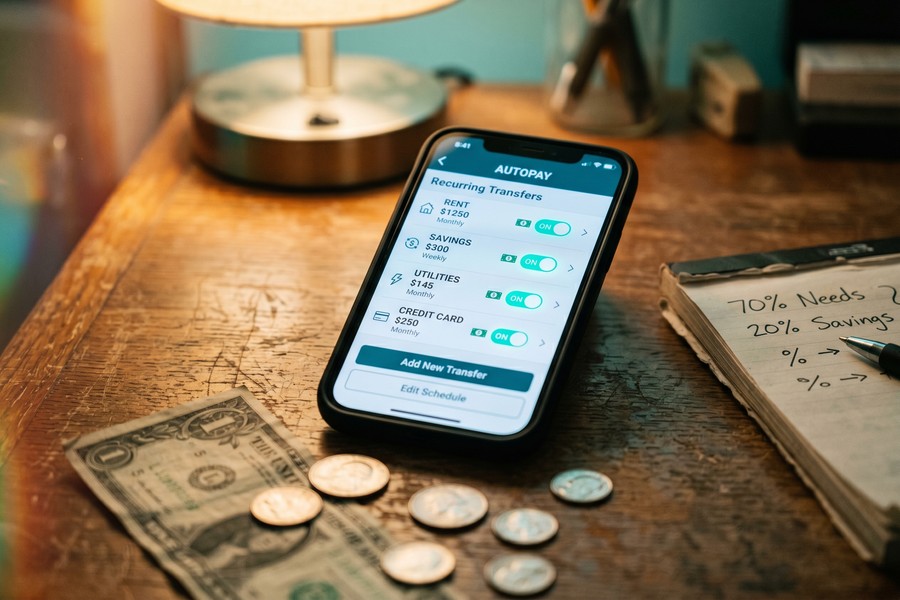
How to Automate Surge Payments
Automation matters here because high-income months often coincide with high-workload months, the least convenient time to manually manage finances. Set up an automatic transfer rule: any balance in your income buffer above your 3-month target threshold triggers an automatic transfer to your highest-priority debt.
Most online banks allow “overflow” or “sweep” rules that execute this automatically. Review the settings monthly, but the actual transfer should require no action on your part during a busy earning period. Automation converts good intentions into guaranteed results.
Protecting Your Progress During Lean Months
A debt payoff plan for variable earners must be just as explicit about lean months as about high-income months. The default behavior during a slow month, skipping payments, deferring to minimum payments without a plan, or adding new debt, can wipe out months of progress in a single pay period.
The most important rule for lean months: always pay minimums on all debts, no matter what. Missing a payment triggers late fees ($25–$40), potential penalty APR increases (often to 29.99%), and a credit score drop of 30–100 points. The cost of a missed payment far exceeds the temporary cash-flow relief.
The Lean Month Protocol
When your monthly income comes in below your floor (which will happen occasionally), activate the following sequence. First, draw from your income buffer to cover the gap between your actual income and your floor. Second, pay all minimums on time. Third, pause all discretionary spending categories immediately. Fourth, do not make any debt payments above the minimums, preserve cash.
This is not failure. This is the system working exactly as designed. Your buffer exists precisely to fund these situations. A lean month that is managed correctly using buffer funds costs you nothing in fees, penalties, or credit score damage.
“The variable-income worker who builds systems — rather than relying on willpower and motivation — will always outperform the salaried employee who intends to budget but never structures their money deliberately. Systems scale with your income; intentions don’t.”
Communicating With Creditors During Extended Slow Periods
If your income drops significantly for an extended period, say, three or more months, proactive communication with creditors is essential. Most major credit card issuers have hardship programs that temporarily reduce minimum payments, waive late fees, or lower interest rates for borrowers experiencing financial difficulty.
These programs are rarely advertised, but a single phone call can produce meaningful relief. Hardship programs typically last 6–12 months. They may temporarily close your account to new charges, but they protect your payment history, the single largest factor in your credit score at 35% of the FICO calculation.
Tools and Automation for Variable Earners
Managing three separate accounts (checking, income buffer, tax reserve), tracking variable income, and executing surge payments manually is mentally exhausting. The right tools reduce friction and ensure the system runs consistently even when life gets busy.
For income tracking, apps like Harvest, Wave, or QuickBooks Self-Employed automatically log income as it arrives and categorize it by client or platform. This makes your income floor calculation a 5-minute task at the end of each month rather than a multi-hour spreadsheet exercise.
Budgeting Apps Built for Variable Income
Standard budgeting apps like Mint or traditional YNAB configurations assume fixed monthly income. For variable earners, YNAB’s “age your money” framework actually works well in combination with a floor-based approach, it encourages spending last month’s income this month, which naturally smooths variability. Copilot Money and Monarch Money both handle variable income with more sophistication than legacy apps.
The feature to look for in any budgeting app for variable earners: the ability to set income targets as a range rather than a fixed number, and the ability to roll over unspent “debt payment” allocations from month to month rather than resetting them to zero.
Users of YNAB (You Need A Budget) report saving an average of $600 in their first two months and more than $6,000 in their first year, according to the company’s internal user surveys. Variable-income users report even larger initial savings gains due to improved cash-flow awareness.
Automating Tax Transfers
The simplest tax automation solution: set up a recurring percentage transfer to your tax reserve account every time a deposit hits your checking account. Most banks allow “triggered” automatic transfers based on incoming deposits. Set the rule to transfer 27% of any deposit over $200 to your tax reserve account. This removes the decision from your hands entirely and ensures tax money is never accidentally spent.
Pair this with quarterly calendar reminders for estimated tax due dates: April 15, June 17, September 16, and January 15. Missing quarterly payments is one of the most common and preventable financial mistakes among self-employed workers.
Building Credit While You Pay Down Debt
Paying off debt and building credit are not opposing goals, they are deeply complementary. A stronger credit score reduces your interest rates on remaining debt, which directly accelerates your payoff timeline. Even a credit score improvement from 650 to 720 can reduce your credit card APR by 3–5 percentage points at refinancing.
For anyone paying down variable-income debt, the two credit factors most within your control are payment history (35% of FICO score) and credit utilization (30% of FICO score). Paying all minimums on time builds the former. Paying down balances, particularly getting any card below 30% utilization, rapidly improves the latter. You can learn more about the specific score ranges that unlock better rates in our guide to what a good credit score means and what you can do with it.
Credit Utilization Strategy During Payoff
Credit utilization is calculated both per card and across all cards. If you have a $5,000 credit limit and a $4,000 balance, your per-card utilization is 80%, which significantly suppresses your credit score. Paying that balance down to $1,500 (30%) can add 20–40 points to your FICO score within 30–60 days of the balance reporting.
During lean months when you cannot make surge payments, consider at least making a small payment, even $50–$100 above the minimum, specifically on your highest-utilization card. The credit score improvement from reducing utilization below 30% often opens access to balance transfer cards with 0% promotional APR, which can be a powerful debt consolidation tool for variable earners.
Opening new credit cards to consolidate balances can temporarily lower your credit score by 5–15 points due to hard inquiries. If you are planning to apply for an apartment lease or auto loan within the next 6 months, time your balance transfer applications carefully to avoid score drops at critical moments.
The Long Game: Building Financial Stability After Debt
Once high-interest debt is eliminated, the monthly cash flow that was going to debt payments does not disappear, it gets redirected. For those who successfully pay off debt, the next priorities are a full 3–6 month emergency fund, retirement contributions, and investment accounts. Understanding your options around IRA contribution limits for 2026 can help you maximize tax-advantaged savings once debt is cleared.
The floor-and-surge system that you built for debt repayment works equally well for wealth building. Surge payments simply redirect from debt payoff to investment accounts. The infrastructure you built is permanent, not just a debt repayment tool, but a lifelong financial operating system for variable income.

Real-World Example: Marcus, Freelance Video Editor in Austin, TX
Marcus is a 31-year-old freelance video editor who earns between $2,400 and $8,200 per month depending on client projects. When he first sought help with his finances in early 2023, he carried $18,700 in total debt: $9,200 on a Visa card at 26.99% APR, $5,500 on a Mastercard at 22.49% APR, and $4,000 on a personal loan at 14% APR. He was making minimum payments totaling $420 per month and watched his balances barely move. His tax situation was a mess, he owed the IRS $3,200 from the prior year and had no system for quarterly payments.
Marcus adopted the floor-and-surge system in March 2023. He calculated his income floor at $3,100/month based on his three lowest-earning months. He opened a high-yield savings account earning 4.6% APY as his income buffer, targeting a $6,200 balance (two months of floor income). He set up automatic 27% tax transfers from every deposit. In April 2023, a $6,800 income month, his buffer hit its target, his tax reserve was funded, and he sent a $1,650 surge payment to the Visa card. In May, a slower month at $3,400, he paid minimums only and drew $200 from the buffer. By August 2023, the $9,200 Visa balance was reduced to $4,100. His credit score climbed from 638 to 694.
By March 2024, exactly 12 months after starting, Marcus had eliminated the Visa card entirely and paid the Mastercard down to $1,800. His total debt had dropped from $18,700 to $7,300, a reduction of $11,400 in one year. He paid approximately $2,100 in interest over that period. Under his previous minimum-payment approach, he would have paid roughly $5,800 in interest and barely dented the principal. The system saved him an estimated $3,700 in interest and shaved approximately 4–5 years off his payoff timeline.
Today, Marcus is on track to be completely debt-free by Q3 2025. His income buffer sits at $8,400 (above his 3-month target), his tax reserve is fully funded each quarter, and he has begun directing $300 per month into a Roth IRA. He still has months where income drops to $2,600, but the system absorbs those dips without a single missed payment or new charge on his credit cards.
Your Action Plan
-
Calculate Your Income Floor This Week
Pull your last 12 months of net income records, bank deposits, 1099s, or platform payment histories. Identify your three lowest-earning months and calculate their average. This number becomes your conservative monthly income baseline for all budgeting purposes. If you have less than 12 months of gig work history, use your lowest 3 months available and add a 10% downward adjustment as a safety margin.
-
Open Three Dedicated Accounts
Set up a checking account for daily expenses, a high-yield savings account as your income buffer (targeting 2–3 months of essential expenses), and a second savings account exclusively for tax reserves. Keep the buffer and tax accounts at a different institution than your checking to reduce temptation. Label each account explicitly, “Income Buffer,” “Tax Reserve”, so the purpose is always clear.
-
Set Up Automated Tax Transfers
Configure your bank to automatically transfer 27% of every incoming deposit to your tax reserve account. If your bank does not support percentage-based transfers, calculate the amount manually each time you receive payment and transfer it the same day. Do not wait until the end of the month. Tax money that sits in your checking account will be spent.
-
List All Debts and Rank by APR
Create a complete debt inventory: creditor name, current balance, interest rate, minimum monthly payment, and payoff date at current payment rate. Rank them from highest to lowest APR, this is your debt avalanche order. If you carry multiple credit cards, start with the highest APR card and do not split extra payments between multiple debts. Concentration wins.
-
Commit to a Minimum Payment Never-Miss Rule
Set all minimum debt payments to autopay from your checking account on their due dates. Your floor-based budget guarantees enough checking account funds to cover minimums every month without manual decision-making. The never-miss rule protects your credit score, avoids late fees, and prevents penalty APR rate increases, all of which directly support your paying off debt with irregular income goals.
-
Execute Your First Surge Payment
Once your income buffer reaches its 3-month target, every additional dollar above your floor allocation is a surge candidate. In your next high-income month, calculate your surplus (income minus floor amount, minus tax reserve, minus buffer top-up), and send that entire amount as an additional principal payment to your highest-APR debt. Make this payment within the first week of the billing cycle for maximum interest savings.
-
Review and Adjust Every 90 Days
Every three months, recalculate your income floor using the most recent 12 months of data. Reassess your buffer target as your essential expenses change. Review your debt balances and confirm you are still targeting the highest-APR balance. If a card has been paid off, redirect those minimum payments immediately to the next card, this is the debt avalanche momentum effect.
-
Plan for Post-Debt Cash Flow Now
Decide today what happens to your monthly cash flow after your highest-APR debt is eliminated. Write it down. The moment a debt is paid off is psychologically significant, without a plan, that cash flow disappears into lifestyle spending within 60 days. Common redirects include: increasing the income buffer to 4–5 months, opening a Roth IRA for tax-free retirement savings, or accelerating the next debt on your list.
Frequently Asked Questions
How do I start paying off debt with irregular income if I have no savings cushion?
Build a minimal income buffer before making any extra debt payments. Even $1,000–$1,500 in a dedicated savings account creates enough cushion to avoid missing a debt payment during a slow month. Suspend all extra debt payments temporarily and direct every surplus dollar into your buffer account until it reaches one month of essential expenses. Once that floor is established, you can resume the floor-and-surge system safely.
Should I pay off debt or build an emergency fund first as a gig worker?
Build a minimal buffer of $1,500–$2,000 first, then attack high-interest debt aggressively, then build a full emergency fund. The income buffer (2–3 months of expenses) partially replaces an emergency fund by smoothing income volatility. A full 3–6 month emergency fund is a post-debt goal. Learn more about building a six-month emergency fund step by step.
What happens if I have a terrible month and can’t even cover minimum payments?
First, draw from your income buffer. If the buffer is exhausted, contact your creditors immediately and ask about hardship programs. Most major issuers can temporarily reduce minimum payments or suspend interest charges for verified hardship situations. As a last resort, credit counseling agencies accredited by the NFCC offer debt management plans that can reduce interest rates to 6–10% and consolidate payments into one manageable monthly amount.
Is balance transfer to a 0% APR card a good strategy for gig workers?
It can be an excellent strategy, but it requires careful execution. A 0% balance transfer eliminates interest for 12–21 months, allowing 100% of your payment to reduce principal. For a variable-income earner with good credit (680+), transferring $5,000 from a 26% APR card to a 0% promotional card can save $1,300+ in interest over 12 months. The risk: if you cannot pay off the full transferred balance before the promotional period ends, the deferred interest (at the card’s standard rate of 20–29%) may be charged retroactively, depending on the card terms.
How do I handle months where I earn significantly more than expected?
Activate your surge payment system immediately. Fill your tax reserve first (27% of the income above your floor). Top up your income buffer if it has been depleted. Then send every remaining dollar to your highest-APR debt as a lump-sum extra payment. Do not wait until the end of the month, make the payment the same week the income arrives. Early-in-cycle payments reduce average daily balance and save additional interest.
Can I negotiate my interest rates directly with credit card companies?
Yes, and this is one of the most underused debt reduction strategies available. Call the customer service number on the back of your card and ask to speak with a retention specialist. State that you have been a good customer and are considering transferring your balance to a competitor offering a lower rate. Creditors have authority to reduce APRs temporarily or permanently. Success rates are highest for cardholders who have been with the issuer for 2+ years and have a history of on-time payments. A 3–5 percentage point reduction on a $6,000 balance saves $180–$300 per year.
What is the best debt payoff method for someone with five or more debts?
With five or more debts, strict debt avalanche (highest APR first) is almost always the mathematically superior approach. However, if managing five minimum payments creates confusion or risk of missed payments, consolidating multiple smaller balances first using a personal loan can simplify your payment structure. The goal is to reduce the number of active accounts to 2–3, all with clear payoff timelines.
How do gig workers handle debt repayment during tax season?
Tax season (January–April) is the highest financial stress period for most self-employed workers. If you have followed the Tax-First Framework, your tax reserve account covers your April 15 liability with no disruption to debt payments. If you find yourself short on tax reserves, prioritize the IRS payment, tax debt accrues interest and penalties faster than almost any consumer debt. The IRS installment agreement option allows you to pay tax debt over time at a relatively low penalty rate if a lump-sum payment is not possible.
Will paying off debt hurt my credit score?
Paying off revolving debt (credit cards) almost always improves your credit score by reducing utilization. Paying off installment debt (student loans, personal loans) may cause a small temporary dip of 5–15 points because it reduces your credit mix, but this effect is typically short-lived and outweighed by the improvement in your overall financial picture. Closing paid-off credit cards can hurt your score by increasing utilization on remaining cards, so keep paid-off cards open with a zero balance when possible.
How does irregular income affect my ability to qualify for debt consolidation loans?
Lenders evaluate self-employment income differently than W-2 income. Most require 2 years of tax returns, and they calculate qualifying income based on your average net profit, not gross receipts. A strong credit score (680+) and a consistent 2-year income history significantly improve your approval odds. If you are in your first year of gig work, a creditworthy co-signer or a secured personal loan using savings as collateral may be alternatives. Demonstrating consistent quarterly tax payments also signals financial responsibility to lenders reviewing your application.
Sources
- Bureau of Labor Statistics, Contingent and Alternative Employment Arrangements
- Federal Reserve, Report on the Economic Well-Being of U.S. Households
- JPMorgan Chase Institute, Weathering Volatility 2.0
- IRS, Estimated Taxes for Self-Employed Individuals
- IRS, Topic 554: Self-Employment Tax
- myFICO, What’s in Your Credit Score
- National Foundation for Credit Counseling, Debt Management Plan Overview
- Federal Reserve, Consumer Credit Statistical Release (G.19)