Fact-checked by the Prime Rate editorial team
Quick Answer
Common prime rate falling mistakes include locking into new fixed-rate debt too soon, ignoring existing variable-rate balances, and failing to refinance strategically. The U.S. prime rate sits at 7.50%, and borrowers who move without a plan risk leaving thousands of dollars on the table or locking in rates that age poorly.
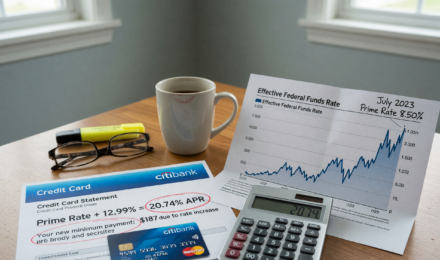
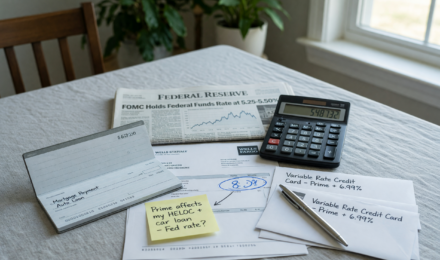
Avoiding prime rate falling mistakes starts with understanding how the prime rate moves and what it actually controls. The Federal Reserve’s benchmark federal funds rate has been the subject of intense debate, with markets pricing in multiple potential cuts, and the U.S. prime rate, which typically runs 3 percentage points above the federal funds rate target, is expected to follow. Every time the prime rate drops, borrowers have a window to act, but most either move too fast, too slow, or not at all.
A falling rate environment looks like a gift, but it creates real financial traps. Variable-rate debt like credit cards and home equity lines of credit (HELOCs) will reprice lower automatically, but that does not mean you should sit on your hands. Fixed-rate products like personal loans and mortgages require active decisions. Miss the timing, and you could end up paying a rate that was once competitive but is now well above the market.
This guide is for borrowers who carry any form of variable or fixed-rate debt, credit cards, HELOCs, personal loans, auto loans, or mortgages, and want to move deliberately when rates fall. By the end, you will know the five most expensive mistakes to avoid and the specific steps to take instead.
Key Takeaways
- The U.S. prime rate is currently 7.50%, and CME FedWatch data shows markets pricing in at least two quarter-point cuts by December 2025.
- Credit card APRs averaged 21.59% as of Q1 2025, according to Federal Reserve consumer credit data, making high-rate card balances one of the most expensive forms of debt to carry into a falling rate environment.
- Refinancing a $30,000 personal loan from 12% to 8% APR over 5 years saves approximately $3,600 in interest, a calculation confirmed by standard amortization modeling.
- HELOC balances reprice within 30–60 days of a prime rate change, per Consumer Financial Protection Bureau (CFPB) guidance on variable-rate credit products.
- Only 1 in 4 borrowers actively renegotiates or refinances within 12 months of a rate drop, according to research cited by the Urban Institute’s housing finance research.
- Locking into a fixed-rate loan at today’s rates while the prime rate is still falling could cost borrowers 0.50%–1.00% more than waiting for the market to stabilize, a meaningful difference on balances above $50,000.
In This Guide
- Mistake 1: Why Are Borrowers Locking Into Fixed Rates Too Soon When the Prime Rate Is Falling?
- Mistake 2: Should I Pay Down Variable-Rate Debt When Interest Rates Drop?
- Mistake 3: How Do I Know When to Refinance During a Rate-Cutting Cycle?
- Mistake 4: Is It Smart to Open a HELOC When the Prime Rate Is Falling?
- Mistake 5: What Happens to My High-Yield Savings Account When the Prime Rate Falls?
- Frequently Asked Questions
Mistake 1: Why Are Borrowers Locking Into Fixed Rates Too Soon When the Prime Rate Is Falling?
Locking into a fixed-rate loan at the start of a rate-cutting cycle is one of the most common and costly prime rate falling mistakes. When the Federal Reserve signals a downward shift, rates do not drop all at once. They fall in stages, typically through multiple quarter-point cuts spread over 6 to 18 months.
How to Avoid This Mistake
Before committing to any fixed-rate product, a personal loan, auto loan, or home equity loan, check where the prime rate is in the cutting cycle. The Federal Reserve’s FOMC meeting calendar shows scheduled decision dates. Two or more cuts still expected? Waiting even 60 to 90 days could mean a meaningfully lower fixed rate.
Use a loan comparison tool like Bankrate or NerdWallet to model the real-dollar impact of waiting. On a $25,000 personal loan, a single 0.25% rate reduction saves roughly $300 over 5 years, and two cuts double that saving.
What to Watch Out For
Patience carries its own risk. Your personal financial situation could change while you wait: a credit score drop or a period of income instability may mean you no longer qualify for the lower rate when it arrives. Balance the potential savings against that real possibility.
Lenders set fixed rates based on market expectations, not just the current prime rate. A lender may already price in anticipated cuts, so waiting does not always guarantee a lower fixed rate. Always compare actual offers, not projected ones.
Avoid choosing a variable-rate product simply because it looks cheaper today. Rates that feel manageable at a cycle low can climb sharply in the next tightening cycle, and refinancing out of a variable product is not always straightforward.

Mistake 2: Should I Pay Down Variable-Rate Debt When Interest Rates Drop?
Yes, but not for the reason most borrowers assume. When the prime rate falls, variable-rate debt like credit cards and HELOCs will cost you less each month. That monthly savings is real, but borrowers who pocket the difference instead of redirecting it toward principal miss a powerful payoff opportunity.
How to Use a Rate Drop Strategically
Calculate how much your monthly interest charge drops after each rate cut. A $15,000 credit card balance at 22% APR dropping to 21.75% after a 0.25% prime rate cut reduces your monthly interest by roughly $3.13. That sounds small, but redirecting that amount toward extra principal every single month accelerates payoff and cuts total interest paid. Multiply the effect across two or three consecutive cuts and the savings become substantial.
The smarter move: use the avalanche method to attack the highest-rate variable debt first. For a deeper breakdown of debt payoff strategies that pair well with this approach, see our guide on paying off debt using the snowball vs. avalanche method.
What to Watch Out For
Variable-rate credit card APRs rarely fall as fast as the prime rate drops. Card issuers are quick to raise rates when the prime rate rises but slower to pass along decreases. According to CFPB consumer credit data, the average credit card rate lags behind prime rate changes by 30 to 60 days. Do not assume your rate dropped the day the Fed announces a cut.
The average U.S. credit card APR reached 21.59% in early 2025, according to Federal Reserve G.19 data, the highest sustained level in over 30 years. Even a full 1% prime rate decline would leave the average cardholder paying over 20% annually on revolving balances.
Carrying a significant credit card balance? A falling rate environment is also an ideal time to consider a balance transfer. Learn more about how to pay off credit card debt step by step, including when a transfer makes more sense than simply paying down the existing balance.
Mistake 3: How Do I Know When to Refinance During a Rate-Cutting Cycle?
Refinancing at the right time is one of the highest-value moves a borrower can make, and missing the window is among the most damaging prime rate falling mistakes. The ideal refinancing moment is not when the prime rate is at its peak, nor when it has fully bottomed out. It is when the rate drop is large enough to cover refinancing costs and still generate net savings.
The Break-Even Calculation You Need
The standard rule: refinancing makes financial sense when the new rate is at least 0.75% to 1.00% lower than your current rate and you plan to stay in the loan long enough to recoup closing costs. For a mortgage, closing costs typically run 2% to 5% of the loan value, according to CFPB mortgage closing cost guidance. Divide total closing costs by your monthly savings to find your break-even month.
For example: refinancing a $300,000 mortgage that costs $6,000 and saves $200 per month puts your break-even at 30 months. Stay in the home beyond that, and refinancing is worth it.
“Borrowers often wait for the ‘perfect’ rate before refinancing, but that bottom is only visible in hindsight. A disciplined break-even analysis beats market timing almost every time.”
What to Watch Out For
Refinancing resets your loan term. Eight years into a 30-year mortgage and refinancing into a new 30-year loan extends total repayment by eight years. Even at a lower rate, total interest paid can increase substantially. Always model both the monthly payment reduction and the long-term total interest impact before committing, those two numbers can tell very different stories.
Understanding how the prime rate specifically affects your mortgage and home equity products will sharpen your refinancing decisions. Our guide on how the prime rate affects your mortgage and home equity loan walks through the mechanics in detail.

| Loan Type | Rate Drop Needed to Refinance | Typical Closing Costs | Average Break-Even (Months) |
|---|---|---|---|
| 30-Year Mortgage | 0.75% or more | 2%–5% of loan balance | 24–36 months |
| Personal Loan | 1.00% or more | 1%–6% origination fee | 6–12 months |
| Auto Loan | 1.50% or more | $0–$500 title/admin fees | 3–8 months |
| HELOC | N/A, variable adjusts automatically | $0–$750 annual fee | Immediate savings |
| Student Loan (Private) | 1.00% or more | $0–$500 | 6–18 months |
Holding a high-rate personal loan? A falling prime rate cycle is also a good time to check whether your credit score has improved since the original loan was issued. A stronger credit profile combined with lower prevailing rates can compound your refinancing savings significantly. Check your credit score range and what it qualifies you for before applying.
Mistake 4: Is It Smart to Open a HELOC When the Prime Rate Is Falling?
Opening a home equity line of credit (HELOC) during a falling rate environment can be smart, but only if you understand that a HELOC’s rate is variable and tied directly to the prime rate. Treating a falling-rate HELOC as permanently cheap debt is where borrowers get into trouble.
How HELOCs Work With the Prime Rate
A HELOC’s APR is typically set at prime rate plus a margin, often prime + 0.5% to prime + 2%. At the current prime rate of 7.50%, a typical HELOC might carry an APR of 8.00% to 9.50%. When the prime rate falls, your HELOC rate drops automatically, usually within one billing cycle.
This makes HELOCs genuinely useful during a rate-cutting cycle, especially for home improvement projects or consolidating higher-rate debt. For more on how prime rate changes ripple through home equity products, read our detailed breakdown of how the prime rate affects your mortgage and HELOC.
What to Watch Out For
The same mechanism that lowers your HELOC rate when rates fall will raise it when rates rise again. Borrowers who open large HELOCs at a cycle low and then fail to pay down the balance before the next tightening cycle can face sharp payment increases. A $50,000 HELOC balance at 8% costs roughly $333 per month in interest only. At 10%, that climbs to $417 per month, a 25% increase with no additional borrowing.
HELOCs typically have a draw period of 5–10 years followed by a repayment period of 10–20 years. During the repayment period, you can no longer draw funds, and monthly payments increase significantly. Opening a HELOC near the end of a rate-cutting cycle means your repayment period could begin during the next rate-rising cycle.
One strategic alternative: use a HELOC for a specific, time-limited purpose, like a home renovation with a defined budget, rather than as an open-ended credit facility. Pair HELOC drawdowns with a concrete payoff plan, such as the monthly budget framework that allocates fixed amounts to debt repayment each cycle.
Research on HELOC borrower behavior is consistent on one point: using a line of credit to consolidate debt without addressing the spending patterns that created that debt tends to leave borrowers worse off. A HELOC is a tool with a real cost, and that cost can rise without warning.
Mistake 5: What Happens to My High-Yield Savings Account When the Prime Rate Falls?
When the prime rate falls, high-yield savings accounts (HYSAs) and money market accounts reprice lower, sometimes quickly and sometimes dramatically. Borrowers who focus entirely on their debt in a rate-cutting environment often overlook this: falling rates also erode returns on their savings.
How Savings Accounts React to Rate Cuts
Online high-yield savings accounts are typically among the first deposit products to reprice after a Fed rate cut. During the 2019 rate-cutting cycle, top HYSA rates dropped from roughly 2.40% APY to 1.70% APY within three months of the first cut. During the 2020 emergency cuts, yields fell below 0.50% APY within weeks.
Holding a significant emergency fund or short-term savings in a HYSA right now? A falling prime rate environment is the right time to consider locking in a portion at a fixed rate. Certificates of Deposit (CDs) allow you to preserve today’s yield for a defined term. Our guide to the best CD rates for 2026 shows current offerings and how to compare them.
What to Watch Out For
Do not lock all your liquid savings into a CD without maintaining a separate emergency fund. A standard CD carries early withdrawal penalties, typically 3 to 6 months of interest, which can wipe out the yield advantage if you need the funds unexpectedly. Liquidity is not optional.
A CD ladder strategy, splitting savings across CDs with staggered maturity dates, offers a middle path between liquidity and yield protection. Our breakdown of what a CD ladder is and how to build one explains the mechanics step by step.

Money market accounts often offer slightly better rates than HYSAs and may include check-writing privileges. Comparison shopping for a place to park savings during a rate-cutting cycle should include current offers at the top money market accounts before making a move.
There is also a secondary savings risk worth naming: inflation. A falling prime rate often signals slowing economic growth, but inflation does not always cooperate. Your savings yield can turn negative in real terms even if the nominal APY looks acceptable. Compare your savings APY against the current Consumer Price Index (CPI) to know where your purchasing power actually stands.
Frequently Asked Questions
How quickly does the prime rate fall after the Fed cuts rates?
Almost immediately, typically within 24 to 48 hours of a Federal Open Market Committee (FOMC) decision. U.S. commercial banks set the prime rate at the federal funds rate plus 3 percentage points, and most major banks update simultaneously. Variable-rate loan products tied to the prime rate then adjust on their next billing or statement cycle, which typically means 30 to 60 days before you see a lower payment.
Does a falling prime rate automatically lower my credit card APR?
Yes, but not instantly and not by the full amount. Most credit cards carry variable APRs tied directly to the prime rate, so a 0.25% prime rate cut should eventually reduce your card’s APR by 0.25%. Your card issuer controls when the change appears on your statement, and the new rate typically applies to balances carried after the adjustment date, not retroactively. Check your cardholder agreement for the exact timeline. For a full breakdown, read our guide on how the prime rate affects credit card interest rates.
Should I refinance my mortgage now or wait for more rate cuts?
Run the break-even math first. Refinancing today generates a clear benefit when it saves at least 0.75% on your current rate and recovers closing costs within 24 months. Attempting to time the absolute bottom of a rate cycle is notoriously difficult, even professional traders fail consistently. Use your specific loan balance, closing cost estimate, and expected monthly savings to make the call, not market speculation.
What happens to my personal loan rate when the prime rate falls?
Fixed-rate personal loans are unaffected by a prime rate decline, your rate is locked for the life of the loan. Variable-rate personal loans (less common) will adjust according to the margin in your loan agreement. Either way, a falling prime rate is a reasonable prompt to check whether refinancing into a new loan at today’s lower prevailing rates makes financial sense. Learn more about how the prime rate affects personal loan rates.
Is it a mistake to open a new credit card when the prime rate is falling?
Not inherently, but timing and purpose matter. A 0% introductory APR balance transfer card can be highly effective for paying down existing high-rate debt before the promotional period ends. Opening a new card to increase spending capacity during a period of economic uncertainty is a different calculation entirely, especially if rates eventually rise again and your variable APR climbs with them.
How do I protect my savings when interest rates start dropping?
Lock in a portion of your savings in a fixed-rate product, such as a Certificate of Deposit (CD), before rates fall further. Top 12-month CD rates were still above 4.50% APY in mid-2025, offering meaningful yield protection against future cuts. Keep 3 to 6 months of living expenses in a liquid account and ladder the rest into CDs with staggered maturities. Our ranked list of the best high-yield savings accounts for 2026 can help you identify current top rates.
What are the biggest prime rate falling mistakes borrowers make with HELOCs?
Drawing heavily during a rate-cutting cycle because payments feel manageable, and then being unprepared when the prime rate rises again and payments climb, is the most common error. Using a HELOC as an emergency fund substitute ranks close behind. Lenders can freeze or reduce a HELOC during economic downturns, precisely when you need the credit most. Always maintain a separate cash emergency fund regardless of your HELOC availability.
Should I pay off debt or invest when the prime rate is falling?
The decision turns on the spread between your debt’s interest rate and your expected investment return. Variable-rate debt above 8% APR is expensive enough that paying it down likely outperforms most risk-adjusted investment returns. Below 5% APR, investing in diversified index funds or contributing to a tax-advantaged account like an IRA often wins over the long term. Debt in the 5% to 8% range is genuinely a judgment call, splitting the difference and doing both simultaneously is a reasonable hedge.
Can I negotiate a lower interest rate on my existing loans when the prime rate falls?
Yes, and this is one of the most underused strategies in a falling rate environment. Call your lender and reference the current prime rate decline as a basis for requesting a rate adjustment, especially on personal loans or HELOCs. Lenders have more flexibility than most borrowers realize, particularly for accounts in good standing. A single phone call has been shown to successfully lower credit card APRs approximately 69% of the time, according to a survey by CreditCards.com.
What prime rate falling mistakes should I avoid with my auto loan?
Refinancing too early in the loan term is the most common auto loan error in a falling rate cycle. Auto loans are front-loaded with interest, meaning you pay more interest in the early months. Refinancing in the first 12 months resets this amortization and may result in more total interest paid even at a lower rate. Wait until you have paid down at least 20% to 30% of the original balance before refinancing, and confirm that your vehicle’s current market value exceeds the remaining loan balance to avoid being underwater.
Sources
- Federal Reserve, Selected Interest Rates (H.15 Release)
- Federal Reserve, Consumer Credit (G.19 Release)
- Federal Reserve, FOMC Meeting Calendar 2025
- Consumer Financial Protection Bureau, What Is a HELOC?
- Consumer Financial Protection Bureau, Mortgage Closing Costs Explained
- Consumer Financial Protection Bureau, Consumer Credit Card Trends
- U.S. Bureau of Labor Statistics, Consumer Price Index (CPI)
- Bankrate, Mortgage Refinance Break-Even Calculator