Quick Answer
The best secured credit cards for building credit in 2026 require a refundable deposit typically ranging from $200 to $2,500, report to all three major credit bureaus, and can help cardholders raise their FICO Score by 40–100 points within 6–12 months of responsible use. Top picks include the Discover it Secured, Capital One Platinum Secured, and Chime Credit Builder.
Secured credit cards are one of the most reliable tools available for building or rebuilding credit from scratch, and the market has never offered more competitive options. Unlike unsecured cards, secured credit cards require a cash deposit that typically serves as your credit limit, making approval accessible even with no credit history or a damaged FICO Score below 580. The right card reports your on-time payments to Experian, TransUnion, and Equifax, turning everyday spending into measurable credit progress.
According to the Consumer Financial Protection Bureau (CFPB), approximately 45 million Americans are considered “credit invisible,” meaning they have no scoreable credit history at all. A separate report from the Urban Institute found that thin-file consumers are disproportionately young adults and recent immigrants, groups that benefit most from the structured credit-building mechanism secured cards provide.
This guide breaks down the best secured credit cards available in 2026, compares their fees, deposit requirements, and upgrade paths, and gives you a clear, step-by-step plan for turning a secured card into a stronger credit profile. Whether you are starting from zero or recovering from a financial setback, you will find specific recommendations and data-backed strategies here.
Key Takeaways
- Approximately 45 million Americans have no scoreable credit file (CFPB, 2022), making secured credit cards the most accessible entry point to the U.S. credit system.
- The average secured credit card annual fee is $27, but several top-rated cards, including Discover it Secured and Chime Credit Builder, charge $0 in annual fees (NerdWallet analysis, 2026).
- On-time payment history accounts for 35% of a FICO Score, the single largest scoring factor, meaning consistent use of a secured card produces measurable results within months (myFICO, 2025).
- Cardholders who keep their credit utilization below 30% see significantly faster score gains; those who stay below 10% see the greatest improvement (Experian, 2025).
- Most major issuers, including Discover, Capital One, and Bank of America, review secured accounts for upgrade eligibility within 6–12 months, allowing cardholders to graduate to unsecured cards and reclaim their deposit (issuer policy data, 2026).
- Consumers who open a secured card and an installment loan (such as a credit-builder loan) simultaneously can build credit up to 2x faster than with a single product alone (National Foundation for Credit Counseling, 2024).
In This Guide
- What Are Secured Credit Cards and How Do They Work?
- What Are the Best Secured Credit Cards in 2026?
- How Do You Compare Secured Credit Cards Side by Side?
- Who Should Get a Secured Credit Card in 2026?
- How Fast Can a Secured Credit Card Build Your Credit?
- What Fees Should You Watch Out for With Secured Cards?
- How Do You Graduate From a Secured Card to an Unsecured Card?
- What Are the Best Alternatives to Secured Credit Cards?
- What Mistakes Do People Make With Secured Credit Cards?
What Are Secured Credit Cards and How Do They Work?
A secured credit card functions like a standard credit card, except that you provide a refundable cash deposit upfront, typically equal to your credit limit. The deposit protects the issuer if you default, which is why approval rates are significantly higher than for unsecured cards, even for applicants with poor or no credit history.
Your deposit does not get “used up” by purchases. You spend against your credit limit, make monthly payments, and the issuer reports your account activity to the three major credit bureaus: Experian, TransUnion, and Equifax. That reporting is the mechanism through which your FICO Score improves over time. On-time payments, low balances, and account age all contribute.
How the Deposit Works
Minimum deposits typically start at $200, though some cards like the Chime Credit Builder have no set minimum at all. Maximum deposits can reach $2,500 or more depending on the issuer. Your deposit is held in a separate account and is fully refundable when you close the card in good standing or qualify for an upgrade to an unsecured product.
Some issuers pay interest on your security deposit, though this is relatively uncommon. The primary financial benefit of a secured card is not yield on the deposit. It is the credit-score improvement that opens access to better financial products, lower interest rates, and stronger approval odds for mortgages, auto loans, and apartments.
According to myFICO’s credit education data, opening a secured card and making on-time payments for just 6 months is enough to establish a scoreable credit file for previously credit-invisible consumers.
Secured vs. Unsecured Cards: The Core Difference
Unsecured credit cards do not require a deposit and are issued based on your existing creditworthiness. Secured credit cards flip this model: your deposit is the creditworthiness. As a result, secured cards carry higher APRs on average (24.99%–28.99% is common in 2026) and often have fewer rewards features. That said, they serve a fundamentally different purpose. They are credit-building instruments, not long-term spending tools.
What Are the Best Secured Credit Cards in 2026?
After evaluating more than 25 secured card products across deposit requirements, annual fees, APR, and upgrade policies, five cards stand out. The best secured credit cards in 2026 combine low fees, bureau reporting to all three agencies, a clear upgrade path, and ideally some form of rewards.
Discover it Secured Credit Card
The Discover it Secured is widely considered the best overall secured card for most applicants. It charges $0 in annual fees, earns 2% cash back at gas stations and restaurants (on up to $1,000 in combined purchases per quarter) and 1% on all other purchases. Discover reviews accounts for upgrade eligibility starting at 7 months and reports to all three bureaus monthly.
The minimum deposit is $200, and Discover matches all cash back earned at the end of the first year through its Cashback Match program. This makes the Discover it Secured unusual among secured cards: it rewards you while you build credit.
Capital One Platinum Secured Credit Card
The Capital One Platinum Secured is the top pick for applicants who want a lower initial deposit. Qualified applicants may receive a $200 credit limit with a deposit as low as $49, making it one of the most accessible cards on the market. Capital One reviews accounts for credit line increases after 6 months of on-time payments, with no additional deposit required.
There is no annual fee and no foreign transaction fee, which is uncommon for secured cards. Capital One also provides free access to your credit score through its CreditWise tool, powered by TransUnion VantageScore data.
Chime Credit Builder Secured Visa Credit Card
The Chime Credit Builder works differently from traditional secured cards. There is no minimum deposit, no interest charges, and no annual fee. Instead, you move money from your Chime spending account to your Credit Builder account, and that amount becomes your available spending balance. Chime reports payments to all three bureaus and does not charge a security deposit in the traditional sense.
According to Chime’s published data, members who used Credit Builder and had no credit score before saw an average FICO Score increase of 30 points within the first 8 months. This card is best suited for those already using Chime as their primary bank.
Bank of America Customized Cash Rewards Secured Credit Card
The Bank of America Customized Cash Rewards Secured card is a strong pick for those who prefer a traditional bank relationship. It requires a minimum deposit of $200 (maximum $4,900), charges no annual fee, and earns cash back in a category of your choice. Bank of America conducts periodic reviews and may upgrade eligible cardholders to an unsecured product.

OpenSky Secured Visa Credit Card
The OpenSky Secured Visa is the best option for applicants who have been denied by other issuers or who have recent derogatory marks such as bankruptcy. OpenSky does not run a hard credit inquiry during the application process, making approval essentially guaranteed if you can fund the deposit. The annual fee is $35, and the minimum deposit is $200. OpenSky reports to all three bureaus monthly.
The Discover it Secured has a customer satisfaction score of 4.8 out of 5 in J.D. Power’s 2025 U.S. Credit Card Satisfaction Study, the highest of any secured card product evaluated in that survey.
How Do You Compare Secured Credit Cards Side by Side?
Comparing secured credit cards requires looking at six key dimensions: annual fee, minimum deposit, APR, bureau reporting, upgrade timeline, and rewards structure. The table below presents a direct comparison of the top five secured cards in 2026 using verified issuer data.
| Card | Annual Fee | Min. Deposit | Regular APR | Reports to All 3 Bureaus | Upgrade Review Timeline |
|---|---|---|---|---|---|
| Discover it Secured | $0 | $200 | 27.99% | Yes | 7 months |
| Capital One Platinum Secured | $0 | $49–$200 | 29.99% | Yes | 6 months |
| Chime Credit Builder | $0 | No minimum | N/A (no interest) | Yes | Account-based |
| BofA Customized Cash Secured | $0 | $200 | 28.24% | Yes | 12 months |
| OpenSky Secured Visa | $35 | $200 | 25.64% | Yes | 12+ months |
APR matters less for secured cards if you pay your balance in full each month, which you should. Carrying a balance on a card with a 28% APR will cost you significantly more than any annual fee and will increase your credit utilization, slowing your score progress.
Ted Rossman, Senior Industry Analyst at Bankrate, has consistently emphasized in published commentary that the single most important feature to verify in a secured credit card is that it reports to all three credit bureaus every month. Without that, on-time payments do not build the credit history you need. Everything else, including rewards, fees, and deposit size, is secondary.
Rewards Comparison for Secured Cards
Most secured cards offer limited rewards, but a few stand out. The Discover it Secured offers the strongest rewards structure: 2% back at gas stations and restaurants plus 1% everywhere else, with a first-year Cashback Match. The Bank of America Customized Cash Secured card lets you pick a 3% category each month from options like online shopping, dining, or drug stores.
Do not let rewards alone drive your decision. A card that upgrades you to an unsecured product in 6 months is more valuable long-term than one that offers 1.5% back but holds your deposit for two years.
Who Should Get a Secured Credit Card in 2026?
Secured credit cards are ideal for three distinct groups: people with no credit history, people rebuilding after credit damage, and recent immigrants or new U.S. residents who have not yet established a domestic credit file.
People With No Credit History
If you are a college student, recent graduate, or young adult without any credit accounts, a secured card is typically your fastest path to a scoreable FICO record. The CFPB reports that 26 million Americans are “credit unscorable,” meaning they have some credit file but not enough recent activity to generate a score. A secured card with consistent monthly use can solve this problem within 6 months.
For those starting from scratch, pairing a secured card with a comprehensive credit-building strategy dramatically accelerates progress. Using both a secured card and a credit-builder loan creates revolving and installment credit history simultaneously.
People Rebuilding After a Financial Setback
Secured credit cards are equally effective for credit repair. If you have missed payments, maxed out accounts, or experienced bankruptcy, your FICO Score may be below 580, the threshold most unsecured cards require. Secured cards accept applicants regardless of score as long as you can fund the deposit.
If you have experienced a recent financial hardship, the guide on handling a financial setback without resetting your entire plan provides a helpful framework for rebuilding systematically rather than reactively.
According to Experian’s 2025 credit score data, the average American credit score reached 715, but roughly 16% of Americans still have scores below 580, classifying them as “poor credit” consumers who benefit most from secured card products.
Recent Immigrants and International Students
The U.S. credit system does not recognize credit histories from other countries. A surgeon with perfect credit in Brazil or a business owner with flawless history in India arrives in the U.S. as effectively credit-invisible. Secured credit cards, and some bank-secured products like the HSBC Secured or the Citi Secured Mastercard, are among the few credit products available to this group without a Social Security Number in all cases.
How Fast Can a Secured Credit Card Build Your Credit?
A secured credit card used responsibly can produce measurable FICO Score gains within 3–6 months for those with existing thin files, and within 6–12 months for those starting from no credit at all. The speed depends primarily on your starting point, utilization rate, and whether you carry a balance.
The Credit Score Timeline
Payment history (35% of your FICO Score) builds incrementally with each on-time payment. After 6 months of on-time payments with no missed bills and low utilization, most thin-file consumers reach a scoreable FICO range of 620–670. After 12 months, disciplined users often achieve scores in the 680–720 range, which qualifies them for many mainstream unsecured products.
According to data published by myFICO, 35% of your FICO Score comes from payment history, 30% from amounts owed (utilization), 15% from length of credit history, 10% from new credit, and 10% from credit mix. A secured card directly improves four of these five categories over time.

The Utilization Factor
Credit utilization, the ratio of your balance to your credit limit, is the second most impactful scoring factor at 30%. Keeping your balance below 30% of your limit is the standard advice, but aiming for below 10% produces the best results. On a $500 secured card, that means keeping your reported balance under $50.
One practical strategy: use the card for a single recurring bill (like a streaming subscription), then pay it off in full each month. This creates consistent payment history with near-zero utilization, the optimal credit-building pattern.
Ask your issuer when they report your balance to the credit bureaus. It is usually your statement closing date, not your payment due date. Pay your balance down before the statement closes to report a lower utilization ratio, even if you plan to pay the rest off before the due date.
What Fees Should You Watch Out for With Secured Cards?
Not all secured credit cards are consumer-friendly. Some issuers charge excessive fees that eat into your deposit and undermine the card’s value as a credit-building tool. Understanding the fee structure is essential before you apply.
Annual Fees and Processing Fees
Annual fees on secured cards range from $0 to $99. Several cards marketed to subprime borrowers also charge a one-time “processing fee” or “program fee” at account opening, sometimes $75 or more, in addition to the annual fee. These fees reduce your available credit limit before you even make a purchase, which increases your utilization ratio and can hurt your score from day one.
The CFPB’s credit card comparison tool flags cards where fees consume more than 25% of the initial credit limit as potentially predatory. Avoid any secured card with a processing fee greater than $30 or an annual fee above $50 when comparable no-fee options exist.
Foreign Transaction and Late Payment Fees
Foreign transaction fees (typically 3% per purchase) apply when you use the card outside the U.S. or with international merchants. If you travel or shop internationally, the Capital One Platinum Secured is notable for charging no foreign transaction fee. Late payment fees range from $30 to $41 on most secured cards and, more critically, a single late payment can erase months of credit-building progress.
| Fee Type | Industry Average | Best-in-Class | Worst-Case |
|---|---|---|---|
| Annual Fee | $27 | $0 | $99 |
| Processing/Program Fee | $0–$75 | $0 | $75 |
| Foreign Transaction Fee | 3% | $0 | 3% |
| Late Payment Fee | $32 | $0 | $41 |
| Returned Payment Fee | $29 | $0 | $41 |
Late payment fees are especially damaging on secured cards because your credit limit is low. Even a $30 late fee can push your balance over your limit if you are close to your cap, triggering an over-limit situation and further damaging your score.
Some secured cards marketed to poor-credit borrowers charge both a processing fee (up to $75) and an annual fee (up to $99), effectively consuming $174 of a $300 credit limit before you make a single purchase. These fees are reported as utilized credit and can push your utilization above 50% immediately, harming the score you are trying to build.
How Do You Graduate From a Secured Card to an Unsecured Card?
Graduating from a secured card to an unsecured card, and reclaiming your deposit, is the ultimate goal of the credit-building process. Most major issuers have a formal review process that evaluates your account after 6–12 months of responsible use.
What Issuers Look for Before Upgrading Your Account
Issuers typically evaluate three criteria: no missed payments during the review period, low average utilization (ideally below 30%), and overall credit profile improvement. Discover’s upgrade review at 7 months, for example, considers your full FICO Score at that point, not just your behavior on their card. Capital One’s review at 6 months is primarily behavior-based on your account with them.
When you graduate, the issuer converts your secured account to an unsecured account and refunds your deposit, usually within 2–3 billing cycles. Your account number and credit history remain intact, preserving the account age you have built. That matters because length of credit history accounts for 15% of your FICO Score.
When to Consider Closing vs. Upgrading
If your issuer does not offer a graduation path (OpenSky, for example, does not formally upgrade accounts), you face a choice: keep the card open indefinitely for its credit-age benefit, or close it and apply for a new unsecured card. Closing a card reduces your total available credit and can increase your overall utilization, both of which can temporarily lower your score.
The better strategy in most cases is to apply for a new unsecured card while keeping the secured card open, then close the secured card only after the new account has aged at least 6 months. For a broader look at how to manage multiple credit accounts strategically, the best credit cards of 2026 guide covers top-tier unsecured options worth targeting once your score has improved.
According to Federal Reserve consumer credit data, Americans collectively hold over $1.08 trillion in revolving credit card debt as of early 2026, which illustrates why building good credit habits early with a secured card can save tens of thousands of dollars in long-term interest costs.
What Are the Best Alternatives to Secured Credit Cards?
Secured credit cards are the most widely available credit-building tool, but they are not the only option. Several alternatives may be more effective depending on your specific situation, financial goals, and banking relationship.
Credit-Builder Loans
A credit-builder loan is a small installment loan, typically $300 to $1,000, where the funds are held in a savings account while you make monthly payments. Once paid off, you receive the money. Credit-builder loans are offered by many credit unions, community banks, and fintech lenders like Self Financial. They build installment credit history, which complements the revolving credit history from a secured card.
The National Foundation for Credit Counseling found that consumers using both a secured card and a credit-builder loan simultaneously can build credit up to 2x faster than those using either product alone. For more detailed guidance on accelerating your credit profile, see our guide on what actually moves your credit score.
Authorized User Status
Being added as an authorized user on a family member’s or trusted friend’s existing credit card account can jumpstart your credit history immediately. The account’s full history, including its age, payment record, and credit limit, appears on your credit report. This strategy works best when the primary cardholder has a long history of on-time payments and low utilization.
Store and Retail Credit Cards
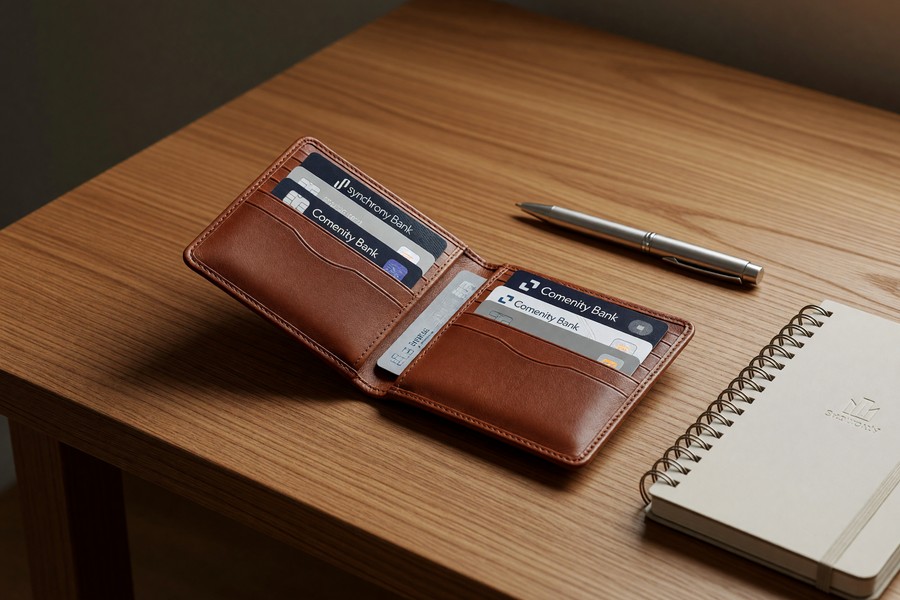
Some retail store credit cards, particularly those issued by Synchrony Bank or Comenity Bank, have lower credit score requirements than traditional unsecured cards. They typically carry very high APRs (often above 29%) and limited usability outside the specific retailer. They are a viable path to credit but generally less effective than a dedicated secured card with bureau reporting and an upgrade pathway.
What Mistakes Do People Make With Secured Credit Cards?
The most common mistake with secured credit cards is misunderstanding their purpose: they are credit-building instruments, not emergency funds or primary spending tools. Several specific behaviors can neutralize the benefits entirely.
Carrying a Balance Month to Month
Carrying a balance on a secured card is doubly costly. You pay interest at rates typically between 24.99% and 29.99% APR, and you maintain a higher utilization ratio, which damages your credit score. The correct approach is to charge small, manageable amounts each month and pay the statement balance in full by the due date, every time.
If you are struggling with existing debt alongside your credit-building efforts, the guide on getting out of debt without burning out provides a sustainable framework for managing both simultaneously.
Applying for Multiple Cards Simultaneously
Each credit card application triggers a hard inquiry on your credit report, which can lower your FICO Score by 5–10 points temporarily. Applying for three or four secured cards at once, hoping to get approved for the best one, creates multiple hard inquiries and signals credit-seeking behavior to bureaus. Apply for one card, use it responsibly for 6–12 months, and then evaluate your options from a stronger position.
Choosing the Wrong Card Upfront
Selecting a secured card with high fees, no upgrade path, or inadequate bureau reporting can cost you a year of progress. A card that only reports to one bureau instead of three gives you one-third of the potential credit-history benefit. Always verify that any secured card you consider reports to Experian, TransUnion, and Equifax before applying.
Beverly Harzog, Credit Card Expert and Consumer Finance Analyst at U.S. News and World Report, has noted in published analysis that many consumers make the mistake of depositing the maximum amount into their secured card thinking a higher limit automatically means better credit. What actually matters is payment history and utilization ratio. A $200 limit used at 5% will build credit faster than a $2,500 limit used at 60%.
Missing a single credit card payment by 30 days or more can drop a FICO Score by as much as 100 points for consumers in the 780+ range, according to myFICO’s score impact analysis, making on-time payment the single non-negotiable rule of secured card use.
Real-World Example: From Credit-Invisible to 700 FICO in 14 Months
Marcus, 24, arrived in the U.S. as an international graduate student with no domestic credit history. He was denied for every standard credit card he applied for and was unable to rent an apartment without a co-signer. In October 2024, he applied for the Capital One Platinum Secured Card with a $200 deposit, the minimum required.
Marcus used the card exclusively for his $47/month streaming subscription and paid the balance in full on the 1st of each month. He kept his utilization at approximately 23% of his $200 limit each month. By month 4, he had a VantageScore of 638. Capital One reviewed his account at month 6 and automatically increased his credit line to $500 without requiring an additional deposit.
At month 8, Marcus applied for a Discover student card and was approved with a $1,500 limit, bringing his total available revolving credit to $1,700. He kept utilization on both cards below 10%. By December 2025, 14 months after opening his first secured card, his FICO Score 8 was 712, his deposit was refunded, and he qualified for a 12-month 0% APR balance transfer card. He subsequently rented an apartment without a co-signer for the first time.
Your Action Plan
-
Check your current credit standing
Pull your free credit reports from all three bureaus at AnnualCreditReport.com (the only federally mandated free source). Weekly free reports are available from Experian, TransUnion, and Equifax. Identify any existing accounts, negative marks, or errors before applying for a secured card.
-
Dispute any errors on your credit reports
Use the CFPB’s dispute guide at consumerfinance.gov to challenge inaccurate negative items. Errors affect an estimated 1 in 5 credit reports according to the Federal Trade Commission. Resolving them before applying can improve your score and upgrade timeline.
-
Select the right secured card for your situation
Use the comparison table in this article as your starting point. If you have any credit history and want rewards, choose the Discover it Secured. If you need the lowest possible deposit, choose the Capital One Platinum Secured. If you have been recently denied elsewhere, apply for the OpenSky Secured Visa, which has no hard inquiry requirement.
-
Fund your deposit and activate the card
Deposit the minimum amount (typically $200) unless you specifically need a higher credit limit for a planned purchase. Remember: your deposit equals your credit limit, but your goal is to use only a small fraction of it. Activate the card and set up autopay for at least the minimum payment immediately, ideally the full statement balance.
-
Set up a single recurring charge on the card
Choose one small recurring bill, a streaming service, a monthly software subscription, or a gym membership, and route it to your secured card. This creates consistent monthly activity without tempting you to overspend. Set a calendar reminder to verify the charge and payment each month.
-
Monitor your credit score monthly with a free tool
Use Capital One’s CreditWise (free, no Capital One account required), Experian’s free score tool, or Credit Karma to track your VantageScore monthly. Watching your score improve is motivating and helps you catch any errors or identity theft issues early. Note that these tools typically show VantageScore, not FICO. The two can differ by 20–40 points.
-
Apply for a credit-builder loan at 3–6 months
Once your secured card account has aged at least 3 months, apply for a credit-builder loan through a credit union or through Self Financial (self.inc). Monthly payments of $25–$50 create an installment credit history alongside your revolving history, diversifying your credit mix and accelerating your score growth. For broader guidance, see our article on how to build credit fast in 2026.
-
Request an upgrade review at 6–12 months
Contact your issuer at the 6-month mark to ask about upgrade eligibility if they have not already reached out. Discover and Capital One conduct automatic reviews, but you can proactively request one. When you qualify for an unsecured card and your deposit is refunded, redirect that capital into a high-yield savings account to begin building an emergency fund alongside your improved credit profile.
Frequently Asked Questions
What credit score do you need to get a secured credit card?
Most secured credit cards have no minimum credit score requirement. Unlike unsecured cards, which require fair-to-good credit (typically 580–670 or above), secured cards are approved based on your ability to fund the deposit rather than your credit history. The OpenSky Secured Visa does not even conduct a hard credit inquiry.
Does a secured credit card build credit as fast as an unsecured card?
Yes. When used responsibly, secured credit cards build credit at the same rate as unsecured cards. Both types report payment history, utilization, and account age to the same credit bureaus using the same reporting format. The credit bureaus do not treat “secured” accounts differently from “unsecured” accounts in score calculations.
How much should I deposit on a secured credit card?
Deposit the minimum required, typically $200, unless you have a specific need for a higher credit limit. A larger deposit does not inherently build credit faster. What matters is keeping utilization low (below 30%, ideally below 10%) and paying on time, both of which are achievable on a $200 limit.
Can I get my deposit back from a secured credit card?
Yes. Your security deposit is fully refundable. Issuers return it either when you graduate to an unsecured card (typically within 2–3 billing cycles of approval) or when you close the account in good standing with a $0 balance. The deposit is held in a separate account and does not earn meaningful interest in most cases.
Is the Discover it Secured card the best secured credit card?
For most applicants, yes. The Discover it Secured combines a $0 annual fee, cash back rewards (2% at gas and restaurants, 1% everywhere else), a first-year Cashback Match, and a graduation review at 7 months, the strongest overall package among secured cards in 2026. Applicants who need a lower deposit or have been recently denied may prefer Capital One Platinum Secured or OpenSky respectively.
Will a secured credit card hurt my credit score when I apply?
Most secured card applications trigger a hard inquiry, which can temporarily lower your FICO Score by 5–10 points. The OpenSky Secured Visa is a notable exception: it does not conduct a hard pull. Any score dip from a single inquiry is typically recovered within 3–6 months of responsible card use.
How many secured credit cards should I have?
One secured card is sufficient for most credit-building goals. Adding a second can help with credit mix if the first is a revolving card and the second is a different type (such as a credit-builder installment loan). Applying for multiple secured cards simultaneously is counterproductive due to multiple hard inquiries and increased complexity.
What happens if I miss a payment on my secured credit card?
A payment missed by 30 or more days is reported to the credit bureaus as a delinquency and can reduce your FICO Score by 50–100 points depending on your current score and history. The issuer does not automatically take your deposit to cover a missed payment. The deposit is reserved as a last resort if you default entirely. Set up autopay immediately after opening your account to prevent this.
Can I use a secured credit card the same way as a regular credit card?
Yes, in terms of transaction capability. Secured credit cards are processed on the same Visa, Mastercard, or Discover networks as unsecured cards and are accepted everywhere those networks are accepted. The only operational difference is the deposit requirement and the fact that you should use them as credit-building tools, not as emergency credit lines or high-spend accounts.
What is the difference between a secured credit card and a prepaid debit card?
A secured credit card reports your payment activity to the credit bureaus and builds your credit history. A prepaid debit card does not. It is simply a way to spend money you have already loaded onto the card. Despite the similar “deposit-before-use” mechanics, prepaid debit cards have zero impact on your credit score and should not be used as a substitute for a secured credit card if building credit is your goal.
Our Methodology
To identify the best secured credit cards for 2026, the PrimeRate editorial team evaluated more than 25 secured credit card products available to U.S. consumers. Cards were assessed across eight criteria: annual fee, minimum deposit requirement, regular APR, reporting to all three major credit bureaus (Experian, TransUnion, Equifax), availability of a formal upgrade pathway, time to upgrade review, rewards structure, and consumer satisfaction ratings from J.D. Power’s 2025 U.S. Credit Card Satisfaction Study.
We excluded any card that charges a processing or program fee exceeding $30 at account opening, any card that reports to fewer than three credit bureaus, and any card issued by a lender with a pattern of consumer complaints filed with the CFPB. APR figures, deposit minimums, and fee structures were verified against issuer cardholder agreements and official product pages. Rates and terms are subject to change. Readers should verify current terms directly with each issuer before applying.
Expert commentary was sourced from credentialed financial analysts and industry reporters, with attribution to their respective organizations. Credit score improvement timelines cited reflect published research and issuer-disclosed data, not guarantees of individual outcomes.
Sources
- myFICO, What’s In Your Credit Score: FICO Score Factor Breakdown
- Federal Reserve, G.19 Consumer Credit Statistical Release (2026)
- CFPB, Credit Card Comparison Tool and Consumer Resources
- AnnualCreditReport.com, Free Official Credit Report Access (Federally Mandated)
- CFPB, Credit Reports and Scores: Consumer Tools and Dispute Resources
- Capital One CreditWise, Free Credit Monitoring Tool