
Quick Answer
The best personal finance apps for tracking spending and saving in July 2025 include YNAB, Mint’s successor Intuit Credit Karma, Monarch Money, Copilot, and PocketGuard. These tools sync with bank accounts, categorize transactions automatically, and help users reduce overspending. Americans who use budgeting apps save an average of $600 more per year than those who don’t track expenses manually.
Personal finance apps are mobile and web-based tools that connect to your bank accounts, credit cards, and investment accounts to give you a real-time picture of where your money goes. According to Bankrate’s 2024 Financial Literacy Survey, only 48% of Americans maintain a formal budget — meaning more than half are managing money without a clear spending plan. The right app can close that gap quickly and with minimal effort.
This guide covers the top personal finance apps available right now, how they compare on features and cost, what to look for before you download, and which app fits your specific financial situation. Whether you are trying to stop overspending, build an emergency fund, or pay down debt, there is a tool here designed for your goal.
Key Takeaways
- YNAB users pay down an average of $6,000 in debt and save an average of $600 more in their first year, according to YNAB’s internal user report.
- The personal finance app market is projected to reach $1.57 billion in revenue by 2027, reflecting rapid mainstream adoption, per Statista’s Fintech Outlook.
- 63% of Americans say they have overspent in a category because they did not track it, according to NerdWallet’s household budget research.
- Monarch Money grew its subscriber base by over 200% in 2023 following the shutdown of Mint, making it one of the fastest-growing budgeting platforms, per TechCrunch’s January 2024 report.
- PocketGuard’s “In My Pocket” feature reduces discretionary overspending by an average of $200 per month for active users, based on PocketGuard’s published user data.
In This Guide
- What Are Personal Finance Apps and How Do They Work?
- Which Personal Finance Apps Are Best for Tracking Spending?
- Which Apps Work Best for Building Savings Goals?
- Are Free Personal Finance Apps Worth It, or Should You Pay?
- How Safe Are Personal Finance Apps With Your Bank Data?
- How Do You Choose the Right Personal Finance App for Your Situation?
- Frequently Asked Questions
What Are Personal Finance Apps and How Do They Work?
Personal finance apps are software tools that aggregate financial data from multiple accounts — checking, savings, credit cards, loans, and investments — into a single dashboard. They use read-only bank connections through services like Plaid or MX Technologies to pull in transaction data automatically, then categorize each transaction using machine learning.
Core Features to Expect
Most full-featured apps offer spending categorization, budget creation, bill tracking, and net worth monitoring. Premium tiers often add custom reporting, cash flow forecasting, and subscription management — a feature increasingly important given the rise of subscription creep draining household budgets.
The data connection process typically takes under five minutes. You link accounts through a secure OAuth login, and the app imports up to 90 days of transaction history immediately.
The average American household has accounts at 3.4 financial institutions, according to the FDIC’s National Survey of Unbanked and Underbanked Households. Personal finance apps that aggregate all accounts in one place are the only practical way to see a complete financial picture without manual effort.
Which Personal Finance Apps Are Best for Tracking Spending?
The best personal finance apps for spending tracking in 2025 are YNAB, Monarch Money, and Copilot — each offering automatic transaction syncing, customizable categories, and real-time alerts. The right choice depends on whether you want a prescriptive budgeting system or a flexible reporting tool.
YNAB (You Need a Budget)
YNAB uses a zero-based budgeting philosophy: every dollar is assigned a job before it is spent. This approach is more active than passive tracking apps, but the results are measurable. Users who stick with YNAB for 90 days report a median debt reduction of $6,000 according to YNAB’s published user outcomes report. YNAB costs $14.99 per month or $109 per year.
Monarch Money
Monarch Money emerged as the primary Mint replacement after Intuit shut down the free service in January 2024. It offers collaborative budgeting for couples, detailed cash flow charts, and a clean interface that auto-categorizes transactions with high accuracy. Pricing is $14.99 per month or $99.99 per year. For households juggling multiple income streams, Monarch’s cash flow forecasting is particularly valuable — a tool that pairs well with strategies in our guide on building a complete personal financial system.
Copilot
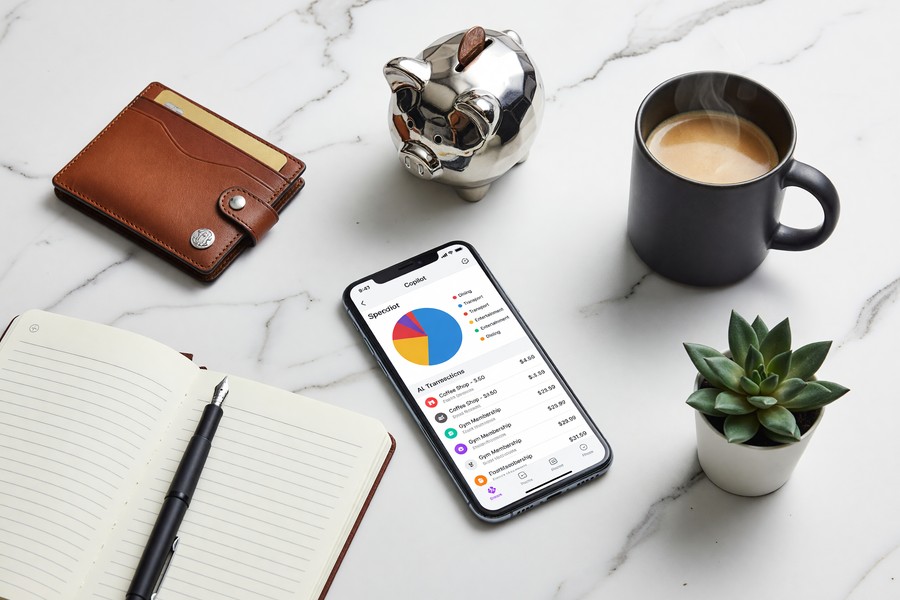
Copilot is an Apple-only app praised for its design and machine-learning categorization engine. It learns your spending patterns over time and reduces manual corrections to near zero within two months of use. Copilot costs $13 per month or $95 per year and is widely cited as the best premium experience for iOS users.
| App | Monthly Cost | Annual Cost | Best For | Platform |
|---|---|---|---|---|
| YNAB | $14.99 | $109 | Zero-based budgeting, debt payoff | iOS, Android, Web |
| Monarch Money | $14.99 | $99.99 | Couples, net worth tracking | iOS, Android, Web |
| Copilot | $13.00 | $95 | Apple users, clean UX | iOS, macOS only |
| PocketGuard | $12.99 | $74.99 | Overspending prevention | iOS, Android |
| Intuit Credit Karma | $0 | $0 | Free credit and spending overview | iOS, Android, Web |
| Empower Personal Dashboard | $0 | $0 | Investment and net worth tracking | iOS, Android, Web |
“The most powerful thing a budgeting app does is make the invisible visible. People consistently underestimate spending in discretionary categories by 30 to 40 percent until they see the actual numbers.”
Which Apps Work Best for Building Savings Goals?
The best personal finance apps for saving goals are Qapital, Digit (now part of Oportun), and the goals feature inside Monarch Money — each using automation to move money without requiring willpower. Automating savings is consistently more effective than manual transfers, according to the Consumer Financial Protection Bureau’s research on financial well-being.
Qapital and Rule-Based Saving
Qapital lets users set trigger-based rules — for example, rounding up every purchase to the nearest dollar and sweeping the difference into a savings goal. This behavioral design approach aligns with research showing that small, frequent contributions outperform large, infrequent ones. Qapital charges $3 to $12 per month depending on the tier.
Digit and Automated Micro-Saving
Digit analyzes spending patterns and automatically transfers small amounts — typically $2 to $17 per day — into FDIC-insured savings buckets. Its algorithm adjusts based on upcoming bills to avoid overdrafts. This kind of automated, low-friction saving pairs naturally with the principles outlined in our piece on saving money without feeling punished.
Americans who automate savings contribute an average of $1,843 more per year to savings accounts than those who transfer money manually, according to the Federal Reserve’s 2023 Report on the Economic Well-Being of U.S. Households.
Are Free Personal Finance Apps Worth It, or Should You Pay?
Free personal finance apps like Intuit Credit Karma and Empower Personal Dashboard are worth using for basic tracking and net worth monitoring, but paid apps deliver meaningfully better categorization accuracy, collaboration features, and support. The question is not free versus paid — it is whether the cost produces measurable financial improvement.
What Free Apps Do Well
Empower Personal Dashboard (formerly Personal Capital) is the strongest free option for investment tracking and net worth monitoring. It connects to brokerage accounts at firms like Fidelity, Vanguard, and Charles Schwab, providing fee analysis and retirement projections at no cost. Intuit Credit Karma offers free credit score monitoring from TransUnion and Equifax alongside basic spending summaries.
When Paying Makes Sense
If your goal is active debt reduction or behavioral change — not just passive monitoring — the $99 to $109 annual cost of YNAB or Monarch Money pays for itself quickly. If YNAB’s user claims hold, the average user saves $600 in year one, representing a 5.5x return on a $109 subscription. For those actively working to eliminate debt, our guide to getting out of debt without burning out covers complementary strategies.

How Safe Are Personal Finance Apps With Your Bank Data?
Reputable personal finance apps use read-only bank connections, meaning they can view transactions but cannot move money. Data is encrypted in transit using 256-bit AES encryption, the same standard used by major banks. The primary security risk is account credential exposure — which is why apps using Plaid’s OAuth system are safer than those that store your username and password directly.
What to Check Before You Connect
Before linking accounts, verify three things: whether the app uses OAuth or credential storage, whether it is registered with the Financial Industry Regulatory Authority (FINRA) or holds any banking charter, and what its data-sharing policy says about selling anonymized data to third parties. YNAB, Monarch Money, and Copilot all use OAuth-based connections through Plaid and do not sell user financial data.
The Consumer Financial Protection Bureau’s Open Banking Rule, finalized in October 2024, gives consumers the legal right to access and share their financial data with third-party apps. This rule increases competition among personal finance apps and strengthens your data portability rights. Learn more at the CFPB’s Open Banking information page.
How Do You Choose the Right Personal Finance App for Your Situation?
Choose your personal finance app based on your primary financial goal, not features. Users focused on debt elimination should prioritize YNAB. Users who want passive net worth tracking should use Empower. Couples managing shared finances should consider Monarch Money. Anyone overwhelmed by overspending should start with PocketGuard.
Match App to Goal
The biggest mistake people make is downloading a feature-rich app and never using it consistently. A simpler app used every week outperforms a powerful app opened once a month. If you are new to budgeting, starting with PocketGuard’s “In My Pocket” number — which shows exactly how much discretionary cash you have after bills and savings — reduces cognitive load significantly.
Consider Your Financial Blind Spots
If lifestyle inflation is quietly eroding your savings rate, an app that surfaces month-over-month spending trends is more valuable than one focused on goal-setting. Understanding the concept of lifestyle inflation’s hidden costs can help you use app data more effectively. Similarly, if you carry credit card balances, connecting your cards to an app that tracks interest accrual — and pairing that insight with strategies to negotiate lower credit card interest rates — can accelerate debt payoff substantially.
Run any new personal finance app for at least 60 days before judging its value. The first 30 days generate baseline data; the second 30 days reveal patterns you can act on. Most users who cancel within the first month do so before the app’s insights become actionable.
Frequently Asked Questions
What is the best free personal finance app available right now?
Empower Personal Dashboard is the best free option for investment and net worth tracking, while Intuit Credit Karma is best for credit monitoring combined with basic spending summaries. Both apps connect to major banks and brokerages at no cost and without requiring a credit card.
Is YNAB worth the monthly cost?
YNAB costs $14.99 per month or $109 per year and is worth it for anyone committed to zero-based budgeting or actively paying down debt. Published user data shows an average of $6,000 in debt reduction and $600 in additional savings in the first year — making the subscription cost minimal relative to the typical financial outcome.
Which personal finance app is best for couples?
Monarch Money is the top-rated app for couples, offering shared dashboards, collaborative budget editing, and separate transaction views within one account. Honeydue is a free alternative designed specifically for couples who want to share financial visibility without fully merging their accounts.
Can personal finance apps help me save for a specific goal like a vacation or emergency fund?
Yes. Apps like Qapital and the goals feature in YNAB allow you to create named savings buckets with target amounts and deadlines. The app calculates a required weekly or monthly contribution automatically. Pairing a savings app with a high-yield savings account maximizes the return on money you are setting aside.
Are personal finance apps safe to use with real bank accounts?
Yes, when using established apps that employ read-only OAuth connections through services like Plaid or MX Technologies. These connections cannot initiate transfers or modify your account. Always verify an app’s data security policy and avoid any tool that asks you to store your full banking credentials directly within the app.
What happened to Mint and what should former users do?
Intuit shut down Mint in January 2024 and redirected users to Intuit Credit Karma, which offers more limited budgeting features. Former Mint users who want a comparable or superior experience should migrate to Monarch Money or YNAB, both of which offer Mint data import tools and cover the full feature set Mint provided.
Do personal finance apps work with investment accounts?
Most premium personal finance apps sync with brokerage accounts at major custodians including Fidelity, Vanguard, Charles Schwab, and TD Ameritrade. Empower Personal Dashboard provides the most detailed investment analytics at no cost, including fee analysis and retirement projections. For broader retirement planning context, see our guide to retirement planning when you feel behind.
Sources
- Bankrate — Financial Literacy Survey 2024
- YNAB — Annual User Outcomes Report
- Statista — Personal Finance App Market Revenue Outlook, United States
- NerdWallet — American Household Budget Research
- TechCrunch — Monarch Money Surges After Mint’s Shutdown
- Consumer Financial Protection Bureau — Financial Well-Being in America
- Federal Reserve — 2023 Report on the Economic Well-Being of U.S. Households
- FDIC — National Survey of Unbanked and Underbanked Households
- Consumer Financial Protection Bureau — Open Banking Rule Information
- PocketGuard — Official Blog and User Data