
Fact-checked by the Prime Rate editorial team
Quick Answer
Medicare costs in retirement are significant and often underestimated. In 2026, the standard Part B premium is $202.90/month, but a retired couple can realistically spend $12,850 per year out of pocket on healthcare even with full Medicare coverage, according to Fidelity. Planning ahead means budgeting for premiums, deductibles, drug costs, and the coverage gaps Medicare never fills.
Medicare costs in retirement catch many people off guard. The program covers roughly two-thirds of your total healthcare expenses, leaving a substantial share for you to fund through premiums, cost-sharing, and out-of-pocket spending on services Medicare simply does not include. For 2026, the Centers for Medicare & Medicaid Services (CMS) set the standard Part B monthly premium at $202.90, up $17.90 from 2025, with higher earners paying considerably more through income-related surcharges.
Understanding exactly what you will owe matters because the numbers compound over a retirement that could last 20 to 30 years. This guide breaks down every major cost component for 2026, compares your coverage options, explains how income affects your premiums, and gives you a realistic savings target to work toward.
Key Takeaways
- The standard Medicare Part B premium in 2026 is $202.90/month, a $17.90 increase from 2025, though the 2.8% Social Security COLA offsets this increase for most average-benefit recipients (CMS, 2026).
- Medicare beneficiaries spent an average of $6,459 out of pocket on healthcare in 2023, a figure that rises sharply with chronic illness or frequent hospitalization (KFF, 2023).
- High-income retirees face IRMAA surcharges that push the Part B monthly premium as high as $689.90 for individuals with modified adjusted gross income above $500,000 (CMS, 2026).
- A 65-year-old couple retiring today will need an estimated $318,000 in savings to have a 90% probability of covering post-retirement medical expenses, according to EBRI projections.
- The average monthly premium across all Medicare Advantage plans in 2026 is $14.00, far below a Medigap Plan G premium but subject to network restrictions and variable cost-sharing (CMS, 2026).
In This Guide
- What Medicare Covers, and the Gaps That Can Surprise Retirees
- 2026 Medicare Premiums and Deductibles at a Glance
- How IRMAA Can Double or Triple Your Medicare Bill
- Medigap vs. Medicare Advantage: Which Supplement Fits Your Budget?
- Beyond Premiums: Realistic Out-of-Pocket and Drug Costs
- How Much Should You Actually Budget for Healthcare in Retirement?
- Actionable Steps to Keep Medicare Costs Under Control
What Medicare Covers, and the Gaps That Can Surprise Retirees
Medicare is four programs layered together, and knowing what each part does and does not cover is the only way to estimate your true exposure. Part A covers inpatient hospital care, skilled nursing facility stays, and hospice. Part B covers outpatient services, doctor visits, preventive care, and durable medical equipment. Part D covers prescription drugs through private plans. Part C (Medicare Advantage) bundles A, B, and usually D through a private insurer.
The Gaps Medicare Leaves Open
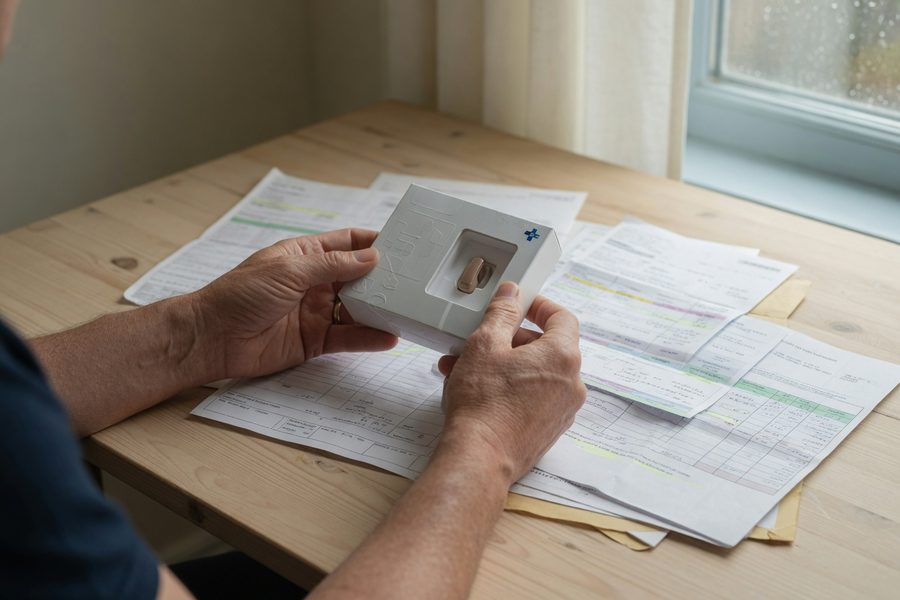
Original Medicare pays nothing for routine dental care, eyeglasses, hearing aids, or most long-term care services. These are not minor omissions. A single set of hearing aids can run $2,000 to $7,000 out of pocket, and dental work, fillings, crowns, implants, is entirely on you unless you purchase a separate rider or enroll in a Medicare Advantage plan that includes limited dental benefits. Long-term care is the largest single gap: Medicare covers skilled nursing only after a qualifying hospital stay and only for a limited window, not the custodial care most people associate with a nursing home.
Healthcare is consistently the retirement expense most people fail to plan for adequately. Many retirees assume Medicare will cover the bulk of their costs, but because the program only pays roughly two-thirds of total healthcare expenses, the remaining third falls directly on the beneficiary through premiums, deductibles, and uncovered services.
Even within covered services, Original Medicare leaves you with coinsurance, deductibles, and no annual out-of-pocket maximum. Without a supplement, a long hospital stay could cost thousands. That structural exposure is exactly why most financial planners recommend adding either a Medigap policy or a Medicare Advantage plan on top of basic coverage.
2026 Medicare Premiums and Deductibles at a Glance
The headline number for 2026 is $202.90 per month for Part B, but that is only the starting point. Below is a full picture of what CMS has set for the year.
| Coverage Component | 2026 Amount | Notes |
|---|---|---|
| Part A Premium | $0 for most; up to $565/month | Free if 40+ quarters of Medicare taxes paid; $311 or $565 otherwise |
| Part A Hospital Deductible | $1,736 per benefit period | Applies each new benefit period, not annually |
| Part B Premium (standard) | $202.90/month | Higher earners pay IRMAA surcharges |
| Part B Annual Deductible | $283 | Paid once per calendar year before Part B pays 80% |
| Part B IRMAA (top tier) | $689.90/month | For individual MAGI above $500,000 |
| Medicare Advantage Avg. Premium | $14.00/month | Varies widely by plan and county |
The $17.90 increase in the Part B premium from 2025 sounds alarming, but most average Social Security recipients actually come out ahead: the 2.8% COLA applied to a $1,927 average benefit adds roughly $54 to monthly payments, more than covering the premium hike. High earners in upper IRMAA brackets see no such offset, since their surcharges grow independently of COLA adjustments.
A married couple each paying the standard Part B premium will spend $4,869.60 per year on Part B premiums alone in 2026 ($202.90 × 2 × 12), before adding Part D, Medigap, deductibles, or any cost-sharing.
How IRMAA Can Double or Triple Your Medicare Bill
IRMAA, the Income-Related Monthly Adjustment Amount, is the single most misunderstood cost driver for higher-income retirees. If your modified adjusted gross income (MAGI) crosses a threshold, CMS adds a surcharge on top of the standard Part B and Part D premiums. The calculation is based on your tax return from two years prior, so 2026 premiums are determined by your 2024 MAGI.
2026 IRMAA Brackets for Individual Filers
The five IRMAA tiers for 2026 illustrate how sharply costs can escalate. An individual with MAGI between $106,000 and $133,000 pays $289.00/month for Part B, already nearly $1,000 more per year than the standard rate. At the top tier (MAGI above $500,000), that figure climbs to $689.90/month, more than triple the baseline. Married couples filing jointly face the same brackets but with thresholds roughly doubled.
The two-year lookback creates a timing trap many retirees fall into. A large Roth conversion, the sale of a rental property, or a required minimum distribution from a traditional IRA can all push MAGI across a threshold in a single year, triggering a surcharge two years later. One well-timed strategy: use Qualified Charitable Distributions (QCDs), which allow IRA owners aged 70½ or older to transfer up to $108,000 directly to a charity in 2026 without the distribution counting toward MAGI. That can keep income below an IRMAA cliff.
If a major life event, retirement, divorce, or the death of a spouse, caused your income to drop since the two-year lookback period, you can file Form SSA-44 with the Social Security Administration to request a reduction in your IRMAA surcharge based on current-year income.
Retirees who plan Roth conversions while managing the tax tradeoffs between account types should model IRMAA exposure explicitly in their conversion strategy. A conversion that pushes MAGI $1 over a bracket threshold can cost $1,000 or more in added Part B premiums over the following year.
Medigap vs. Medicare Advantage: Which Supplement Fits Your Budget?
Choosing between Medigap (Medicare Supplement Insurance) and Medicare Advantage is the most consequential healthcare decision most new Medicare enrollees make, and the right answer depends heavily on your health status, geographic flexibility, and income.
Medigap Plan G: Predictable Costs, Higher Premiums
Medigap Plan G is currently the most popular supplement for new enrollees (Plan F is closed to those who became eligible after January 1, 2020). Plan G covers everything Original Medicare leaves unpaid except the $283 Part B deductible: hospital coinsurance, excess charges, foreign travel emergencies, and more. Monthly premiums for Plan G vary by age, sex, and location, but a 65-year-old in a mid-tier market can expect to pay roughly $100 to $175 per month. Combined with the $202.90 Part B premium and a Part D plan, total monthly spending runs $350 to $430, but your out-of-pocket exposure beyond that is close to zero for covered services.
Medicare Advantage: Low Premiums, Different Trade-offs
The average 2026 Medicare Advantage premium is just $14.00/month, often including Part D coverage and sometimes dental or vision. That looks attractive next to Medigap’s sticker price. The trade-offs are real, though: network restrictions mean you cannot always see the specialist or hospital of your choice, prior authorizations can delay care, and annual out-of-pocket maximums, which can reach $8,850 or more in-network, expose you to significant costs if you have a serious illness. People in good health who stay in one geographic area often do well with Advantage. Those with complex conditions or who travel frequently often prefer the flexibility of Original Medicare plus Medigap.

Beyond Premiums: Realistic Out-of-Pocket and Drug Costs
Premiums are the predictable part. The harder number to pin down is what you will actually spend when you use the healthcare system. Medicare beneficiaries averaged $6,459 in out-of-pocket spending in 2023, according to KFF’s analysis of Medicare affordability. That figure includes premiums, cost-sharing, and services not covered by Medicare.
Drug Costs Under Medicare Part D
The Inflation Reduction Act capped Medicare Part D out-of-pocket drug costs at $2,000 annually starting in 2025, a meaningful protection for enrollees with expensive specialty medications. Still, reaching that cap is possible for people on multiple brand-name drugs. Part D premiums vary widely by plan, from under $10 to over $100 per month depending on the formulary and your zip code. Choosing a plan that covers your specific medications at the lowest tier saves more money than chasing the lowest headline premium.
Chronic conditions compound everything. A retiree managing diabetes, heart disease, and hypertension will consistently spend toward the top of the out-of-pocket range, not the median. Building a healthcare budget around the average is reasonable for planning purposes, but stress-testing with a higher-cost scenario is prudent.
Use Medicare’s Plan Finder tool at Medicare.gov each fall during open enrollment to re-evaluate your Part D plan. Drug formularies and premiums change annually, and your current plan may no longer be the best fit for your prescriptions. Switching takes about 15 minutes and can save hundreds of dollars per year.
How Much Should You Actually Budget for Healthcare in Retirement?
Two widely cited benchmarks give retirees a starting framework: Fidelity estimates a 65-year-old couple will spend roughly $12,850 per year on healthcare costs net of Medicare coverage. EBRI projects that the same couple needs approximately $318,000 in total savings, women around $197,000, men around $166,000 individually, to have a 90% probability of covering post-retirement medical expenses throughout their lives.
A Worked Example: Annual Costs for a Married Couple
Consider a married couple at age 65, both enrolling in Original Medicare with Medigap Plan G and a mid-range Part D plan, with household MAGI around $150,000 (below the 2026 IRMAA threshold for joint filers). Their baseline annual costs would look like this:
- Part B premiums: $202.90 × 2 × 12 = $4,869.60
- Medigap Plan G premiums (est. $140/month each): $140 × 2 × 12 = $3,360
- Part D premiums (est. $40/month each): $40 × 2 × 12 = $960
- Part B deductibles: $283 × 2 = $566
- Estimated remaining out-of-pocket: ~$1,200 (dental, vision, copays)
Total: roughly $10,955 per year, consistent with Fidelity’s estimate once higher-cost years are averaged in. Add five to six percent annual healthcare inflation over a 20-year retirement and the cumulative figure grows substantially. At five percent inflation, $11,000 in year one becomes over $29,000 by year 20.
That projection is why maximizing retirement account contributions before you reach 65 matters so much. The earlier you build the savings base, the less jarring healthcare expenses become in retirement cash flow.
Actionable Steps to Keep Medicare Costs Under Control
Four levers move the needle on Medicare costs more than any others: HSA contributions before retirement, enrollment timing, income management, and supplement selection.
Health Savings Accounts: The Pre-Retirement Tool
If you have a High-Deductible Health Plan (HDHP) before Medicare enrollment, a Health Savings Account (HSA) is the most tax-efficient vehicle available for healthcare savings. Contributions are tax-deductible, growth is tax-free, and withdrawals for qualified medical expenses, including Medicare premiums, deductibles, and long-term care insurance premiums, are also tax-free. The 2026 contribution limit is $4,300 for individual coverage and $8,550 for family coverage, with a $1,000 catch-up contribution allowed at age 55. You must stop contributing the month you enroll in any part of Medicare, so front-loading in the years before enrollment matters.
Enrollment Timing and Penalties
Missing your initial enrollment window carries a permanent price. Late enrollment in Part B adds a 10% premium penalty for every 12-month period you were eligible but did not enroll (with exceptions for those covered by employer insurance). On a $202.90 base premium, a two-year delay adds roughly $40.58 per month permanently. Part D carries its own late enrollment penalty: 1% of the national base beneficiary premium for each month without creditable drug coverage.
Long-term care insurance is worth considering as a separate line item in retirement planning. Because Medicare only covers skilled nursing for a limited window after a qualifying hospital stay, a prolonged need for custodial care, whether in a facility or at home, falls almost entirely outside Medicare’s scope. Premiums for long-term care policies have risen significantly over the past decade, and coverage purchased in your mid-50s typically costs far less than waiting until you are closer to 65.
State Medicare Savings Programs are also worth checking. Low-income enrollees may qualify for programs that pay Part B premiums, deductibles, and coinsurance on their behalf. USA.gov’s Medicare resource page lists eligibility requirements and how to apply in your state.
Finally, coordinate with a spouse who has employer coverage. If one partner is still working and covered by an employer plan, the other may be able to delay Medicare enrollment without penalty, keeping combined premium costs lower in early retirement. A realistic monthly budget built before retirement should model both scenarios to see which timing works best for your household.
Medicare Savings Programs helped over 9 million low-income beneficiaries with their Medicare costs in recent years, yet millions more eligible retirees never apply. Eligibility is based on income and assets, and limits are higher than many people expect.
One honest caveat: no planning strategy eliminates healthcare cost risk entirely. A major illness, a long nursing home stay, or a cognitive decline requiring years of custodial care can exhaust even well-funded accounts. Incorporating the full range of tax-advantaged savings options before retirement is the most reliable foundation.
Frequently Asked Questions
How much does Medicare cost per month in retirement?
The standard Part B premium is $202.90/month in 2026, but most retirees also pay Part D premiums, a Medigap supplement or Medicare Advantage plan premium, and share costs when they use care. A typical retiree couple spending on all these components can realistically expect total monthly Medicare-related costs of $600 to $900, depending on health status and supplement choice.
Does Medicare cover everything in retirement?
No. Medicare covers roughly two-thirds of total healthcare costs. It does not cover routine dental care, eyeglasses, most hearing aids, or long-term custodial care. Even within covered services, Original Medicare has no out-of-pocket maximum, leaving you exposed to unlimited cost-sharing without a supplement.
What is IRMAA and who has to pay it?
IRMAA is an income-related surcharge added to Medicare Part B and Part D premiums for higher earners. In 2026, it applies to individuals with MAGI above $106,000 and married couples above $212,000. The surcharge is calculated on your tax return from two years prior and can add hundreds of dollars per month to your Medicare costs.
Is Medicare Advantage cheaper than Original Medicare with a supplement?
Usually cheaper on premiums: the average Medicare Advantage plan costs $14.00/month in 2026, versus $100-plus for Medigap Plan G. However, Advantage plans carry network restrictions, prior authorization requirements, and higher potential out-of-pocket costs if you become seriously ill. The right choice depends on your health, where you live, and how much cost predictability matters to you.
How much should I save specifically for healthcare in retirement?
EBRI estimates a 65-year-old couple needs roughly $318,000 for a 90% probability of covering post-retirement medical expenses throughout retirement. Fidelity’s annual estimate of $12,850 per couple is a useful budgeting anchor, but healthcare inflation of five to six percent per year means the number grows significantly over a long retirement. Building dedicated savings in an HSA or separate earmarked account is the most tax-efficient approach.
Sources
- Centers for Medicare & Medicaid Services, 2026 Medicare Parts B Premiums and Deductibles Fact Sheet
- Medicare.gov, What Medicare Costs
- Medicare.gov, 2026 Medicare Costs Official Publication
- Centers for Medicare & Medicaid Services, Medicare Advantage and Part D Remain Stable for 2026
- KFF, Key Facts About Health Care Affordability for People with Medicare
- USA.gov, Medicare Enrollment, Costs, and Savings Programs
- Merrill Lynch, Healthcare in Retirement: Ben Storey, Bank of America
- IRS Publication 969, Health Savings Accounts and Other Tax-Favored Health Plans
{“@context”:”https://schema.org”,”@graph”:[{“@type”:”Organization”,”@id”:”https://primerate.com/#organization”,”name”:”Prime Rate”,”url”:”https://primerate.com”},{“@type”:”Person”,”@id”:”https://primerate.com/#person-daniel-tran”,”name”:”Daniel Tran”,”description”:”Daniel Tran is a CPA and former Wall Street analyst who now dedicates his expertise to helping everyday investors understand wealth-building strategies. With an MBA from NYU Stern and over 15 years in financial services, Daniel specializes in long-term investment planning and retirement readiness. He has been featured in MarketWatch and The Wall Street Journal.”,”knowsAbout”:[“Personal Finance”]},{“@type”:”Article”,”headline”:”How Much Medicare Actually Costs in Retirement and How to Plan for It”,”datePublished”:”2026-06-30″,”dateModified”:”2026-06-30″,”publisher”:{“@id”:”https://primerate.com/#organization”},”mainEntityOfPage”:{“@type”:”WebPage”,”@id”:”https://primerate.com/medicare-costs-retirement-planning”},”inLanguage”:”en”,”author”:{“@id”:”https://primerate.com/#person-daniel-tran”}},{“@type”:”FAQPage”,”mainEntity”:[{“@type”:”Question”,”name”:”How much does Medicare cost per month in retirement?”,”acceptedAnswer”:{“@type”:”Answer”,”text”:”The standard Part B premium is $202.90/month in 2026, but most retirees also pay Part D premiums, a Medigap supplement or Medicare Advantage plan premium, and share costs when they use care. A typical retiree couple spending on all these components can realistically expect total monthly Medicare-related costs of $600 to $900, depending on health status and supplement choice.”}},{“@type”:”Question”,”name”:”Does Medicare cover everything in retirement?”,”acceptedAnswer”:{“@type”:”Answer”,”text”:”No. Medicare covers roughly two-thirds of total healthcare costs. It does not cover routine dental care, eyeglasses, most hearing aids, or long-term custodial care. Even within covered services, Original Medicare has no out-of-pocket maximum, leaving you exposed to unlimited cost-sharing without a supplement.”}},{“@type”:”Question”,”name”:”What is IRMAA and who has to pay it?”,”acceptedAnswer”:{“@type”:”Answer”,”text”:”IRMAA is an income-related surcharge added to Medicare Part B and Part D premiums for higher earners. In 2026, it applies to individuals with MAGI above $106,000 and married couples above $212,000. The surcharge is calculated on your tax return from two years prior and can add hundreds of dollars per month to your Medicare costs.”}},{“@type”:”Question”,”name”:”Is Medicare Advantage cheaper than Original Medicare with a supplement?”,”acceptedAnswer”:{“@type”:”Answer”,”text”:”Usually cheaper on premiums: the average Medicare Advantage plan costs $14.00/month in 2026, versus $100-plus for Medigap Plan G. However, Advantage plans carry network restrictions, prior authorization requirements, and higher potential out-of-pocket costs if you become seriously ill. The right choice depends on your health, where you live, and how much cost predictability matters to you.”}},{“@type”:”Question”,”name”:”How much should I save specifically for healthcare in retirement?”,”acceptedAnswer”:{“@type”:”Answer”,”text”:”EBRI estimates a 65-year-old couple needs roughly $318,000 for a 90% probability of covering post-retirement medical expenses throughout retirement. Fidelity’s annual estimate of $12,850 per couple is a useful budgeting anchor, but healthcare inflation of five to six percent per year means the number grows significantly over a long retirement. Building dedicated savings in an HSA or separate earmarked account is the most tax-efficient approach.”}}]}]}