Fact-checked by the Prime Rate editorial team
Quick Answer
To invest $50,000 wisely in July 2025, allocate roughly 20% to an emergency fund and debt payoff, 30% to tax-advantaged retirement accounts, and the remaining 50% across index funds, real estate investment trusts, and high-yield cash. A diversified, low-cost approach can generate an average annual return of 7–10% over a 10-year horizon.
Knowing how to invest 50000 dollars is one of the most consequential financial decisions you can make. A lump sum of this size is large enough to meaningfully accelerate wealth-building, yet small enough that a single misstep — like overconcentrating in one asset or ignoring tax drag — can erase years of progress. According to the Federal Reserve’s 2023 Survey of Consumer Finances, the median American family holds just $8,000 in financial assets, making $50,000 a genuine wealth-building springboard.
With interest rates still elevated and equity valuations stretched in mid-2025, allocation sequencing matters more than ever. Getting the order of operations right — before picking a single ticker — is the real edge.
What Should You Do Before Investing the $50,000?
Before placing a single dollar in the market, address high-interest debt and establish a liquid safety net. These two steps protect your investment capital from being undone by interest costs or forced liquidation.
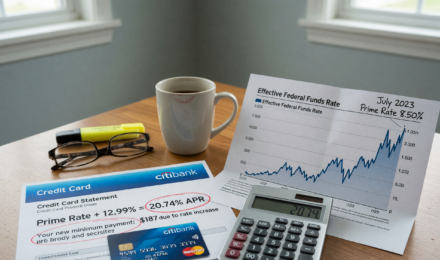
If you carry credit card balances averaging over 21% APR according to the Federal Reserve’s most recent consumer credit data, paying them down first delivers a guaranteed, risk-free return that no index fund can reliably beat. For guidance on the fastest payoff methods, see our breakdown of the snowball vs. avalanche debt payoff strategies.
Building Your Emergency Buffer
Set aside three to six months of essential expenses — roughly $10,000 to $15,000 for most households — in a liquid account before investing the remainder. High-yield savings accounts currently pay 4.50–5.00% APY, so this money is not idle. For top options, compare the best high-yield savings accounts ranked for 2026. Only after these foundations are in place should you move capital into markets.
Key Takeaway: Paying off debt above 10% APR before investing delivers a guaranteed return no brokerage account can match. Per Federal Reserve data, average credit card rates now exceed 21% — eliminating that liability is the highest-returning first move with any lump sum.
How Should You Use Tax-Advantaged Accounts When Learning How to Invest 50000?
Max out every available tax-advantaged account first. The IRS tax deferral or tax-free compounding these accounts provide is the single most powerful wealth-multiplier available to individual investors — and it is legally guaranteed.
For 2025, the 401(k) employee contribution limit is $23,500, and the IRA contribution limit is $7,000 (or $8,000 if you are 50 or older), according to IRS Retirement Topics. If your employer offers a match, contribute enough to capture every dollar of it before directing funds elsewhere — that match is an instant 50–100% return on contributed dollars. Learn how to maximize that benefit in our guide on how a 401(k) employer match works.
Roth vs. Traditional: Choosing the Right Wrapper
If your income is below the Roth IRA phase-out threshold ($150,000 single / $236,000 married filing jointly for 2025), a Roth IRA is typically the superior vehicle for money you will not touch for decades. Tax-free growth on $7,000 per year compounded at 8% for 30 years produces roughly $850,000 tax-free. See our full comparison in Roth IRA vs. Traditional IRA: Which Is Better for Your Tax Situation? to choose the right account type for your bracket.
Key Takeaway: Maxing a 401(k) ($23,500) and Roth IRA ($7,000) before touching taxable accounts can shelter up to $30,500 of your $50,000 from current or future taxes, per IRS 2025 contribution limits.
How Should You Allocate the Remaining Capital in the Market?
After tax-advantaged accounts are funded, deploy remaining capital across a diversified mix of low-cost index funds, real estate investment trusts (REITs), and short-duration fixed income. Diversification across asset classes reduces volatility without proportionally reducing long-term returns.
The core equity position should anchor in broad-market index funds. Vanguard, Fidelity, and Schwab all offer total market index funds with expense ratios below 0.05%. According to S&P Global’s SPIVA Scorecard, over 85% of actively managed large-cap funds underperform the S&P 500 over any 15-year period — making passive index investing the evidence-based default. For a beginner-friendly breakdown, see our guide to the best index funds for beginners.
| Asset Class | Suggested Allocation | Expected Annual Return (Historical) |
|---|---|---|
| U.S. Total Market Index Fund | 40% | 9–10% |
| International Index Fund | 15% | 6–8% |
| REITs | 10% | 7–9% |
| U.S. Bond Index Fund | 15% | 3–5% |
| High-Yield Savings / CDs | 20% | 4–5% |
The Role of Fixed Income in 2025
With the Federal Reserve holding its benchmark rate in the 4.25–4.50% range as of mid-2025, short-duration bonds and CDs offer meaningful yields with low risk. A CD ladder — staggering maturities from 3 to 24 months — captures these rates while preserving liquidity. Learn exactly how to build one in our guide on what a CD ladder is and how to build one.
“The biggest mistake investors make with a lump sum is waiting for the ‘right time.’ Decades of data show that time in the market consistently beats timing the market — even investing at a peak outperforms holding cash over a 10-year horizon in the majority of historical scenarios.”
Key Takeaway: A portfolio weighted 40% U.S. index funds, 15% international, 10% REITs, and 35% bonds/cash balances growth and stability. Per S&P SPIVA data, passive index funds outperform 85%+ of active managers over 15 years, making low-cost indexing the core strategy.
Should You Invest $50,000 All at Once or Dollar-Cost Average?
Lump-sum investing outperforms dollar-cost averaging (DCA) approximately two-thirds of the time, according to research from Vanguard. The logic is simple: markets trend upward over time, so cash sitting on the sidelines forgoes expected gains.
However, DCA is the psychologically superior choice for investors who fear buying at a peak. Spreading $50,000 over 6 to 12 months reduces the emotional risk of a sharp early drawdown derailing your plan. Vanguard’s research found that even in scenarios where lump-sum investing underperformed, the gap was typically under 1.5% annualized — a manageable tradeoff for investors who need behavioral guardrails.
A practical hybrid: invest $25,000 immediately into your target allocation and deploy the remaining $25,000 in equal monthly tranches over six months. This approach captures most of the lump-sum advantage while reducing regret risk.
Key Takeaway: Lump-sum investing beats DCA in about 68% of historical rolling periods according to Vanguard analysis. For investors who need behavioral protection, a 6-month DCA schedule limits the performance gap to roughly 1.5% — a reasonable cost for emotional discipline.
How Do You Manage and Grow the Portfolio After the Initial Investment?
Knowing how to invest 50000 is only half the equation — maintaining that portfolio over time is what converts a one-time deposit into generational wealth. The two most important ongoing actions are rebalancing and tax-loss harvesting.
Rebalance annually or whenever any asset class drifts more than 5 percentage points from its target weight. This systematically forces you to sell high and buy low. Tax-loss harvesting — selling depreciated positions to offset capital gains — can add 0.5–1.5% in after-tax returns annually, according to research from Vanguard’s Investment Strategy Group.
Keeping Costs Under Control
Every 1% in annual fees costs roughly $28,000 on a $50,000 portfolio over 20 years at a 7% gross return — the difference between $193,000 and $165,000. Stick to funds with expense ratios below 0.10% and avoid advisor fees exceeding 0.25% for a simple, passive portfolio. As your balance grows, revisit your IRA contribution limits annually to ensure you are fully utilizing tax-advantaged space each year.
Key Takeaway: Annual rebalancing and expense ratio discipline are the two highest-leverage ongoing actions. A 1% fee reduction on a $50,000 portfolio compounded over 20 years at 7% preserves approximately $28,000 in additional wealth — more than most investors earn from active stock picking.
Frequently Asked Questions
What is the safest way to invest $50,000?
The safest approach is splitting the funds between FDIC-insured high-yield savings accounts, short-term CDs, and U.S. Treasury securities — all of which carry essentially zero default risk. Current yields range from 4.00–5.00% APY, providing meaningful returns without market exposure. This strategy is best suited for funds needed within three to five years.
How long will it take $50,000 to grow to $100,000?
At a 7% average annual return — the inflation-adjusted historical average of the S&P 500 — $50,000 doubles in approximately 10.3 years using the Rule of 72. At a 10% nominal return, it doubles in roughly 7.2 years. Minimizing fees and taxes shortens that timeline further.
Should I pay off my mortgage before investing $50,000?
Generally, no — if your mortgage rate is below 6%, the expected long-term market return exceeds your guaranteed interest savings. However, if your mortgage rate exceeds 7%, the calculation becomes closer, and personal risk tolerance should be the deciding factor. There is no one-size-fits-all answer, but most financial planners favor investing over paying down a sub-6% mortgage.
Is it better to invest $50,000 in real estate or the stock market?
With $50,000, the stock market typically offers superior liquidity, lower transaction costs, and better diversification than direct real estate, which often requires six figures for a down payment. REITs provide real estate exposure with full liquidity and no landlord obligations, making them the practical real estate vehicle for this capital level. Direct real estate becomes more viable at higher capital levels.
How do I invest $50,000 to generate passive income?
A dividend-focused allocation — combining dividend index funds (like those tracking the S&P 500 Dividend Aristocrats), REITs, and high-yield savings — can generate 3–5% annually in passive income, or $1,500–$2,500 per year on $50,000. This approach sacrifices some total return for cash flow, which suits investors who need current income over growth. Reinvesting dividends accelerates compounding substantially when income is not needed immediately.
What is the best account type for investing a $50,000 lump sum?
Start with tax-advantaged accounts: a 401(k) up to the employer match, then a Roth or Traditional IRA up to the $7,000 annual limit. Invest remaining funds in a taxable brokerage account, prioritizing tax-efficient index ETFs to minimize annual distributions. This sequencing maximizes after-tax compounding, which is the primary driver of long-term wealth accumulation.
Sources
- Federal Reserve — 2023 Survey of Consumer Finances
- IRS — Retirement Topics: Contribution Limits 2025
- Federal Reserve — Consumer Credit Statistical Release (G.19)
- S&P Global — SPIVA U.S. Scorecard
- Vanguard — Dollar-Cost Averaging vs. Lump-Sum Investing
- U.S. Securities and Exchange Commission — How Fees and Expenses Affect Your Investment Portfolio
- IRS — 401(k) Contribution Limit Increases to $23,500 for 2025