Quick Answer
The best personal loans for 2026 come from LightStream (lowest rates, starting at 7.49%), SoFi (best for no-fee consolidation), Upstart (best for thin or fair credit), and Avant (fastest funding for fair-credit borrowers). To get the lowest rate, prequalify with at least three lenders using soft pulls, apply within a 14-day window, and enroll in autopay for an additional 0.25%–0.50% rate reduction.
Americans currently hold over $245 billion in outstanding personal loan balances, according to the Federal Reserve, a figure that has grown more than 40% since 2020. The average borrower pays an APR of 12.33% on a personal loan, yet the lowest rates available in 2026 sit closer to 7.49% for well-qualified applicants. That gap on a $15,000 loan over 48 months translates to roughly $1,400 in extra interest. Meanwhile, predatory lenders and opaque fee structures continue to trap borrowers who simply did not know what to compare.
This guide cuts through all of it. You will find a lender-by-lender breakdown of the top personal loan providers for 2026, a comparison of rates and fees across credit tiers, a step-by-step action plan for getting approved fast, and hard data to help you borrow smarter. Whether you need funds in 24 hours or want the absolute lowest rate available, you will leave this page knowing exactly where to apply and why.
Key Takeaways
- The lowest personal loan APRs in 2026 start at 7.49% for borrowers with credit scores above 720, compared to a national average of 12.33%.
- Top lenders now offer same-day or next-business-day funding on loans up to $50,000, some deposit funds within 4 hours of approval.
- Borrowers who prequalify with at least 3 lenders save an average of 1.5 percentage points on their final rate, worth $900+ on a $20,000 loan.
- Origination fees range from 0% (SoFi, LightStream) to 12% of the loan amount (some marketplace lenders), making fee comparison as important as rate comparison.
- Debt consolidation is the #1 use case for personal loans in 2026, accounting for 42% of all applications, per TransUnion data.
- Applicants with a co-signer or joint borrower can qualify for rates 2–4 percentage points lower than solo applicants with identical income.
In This Guide
- How Personal Loans Work in 2026
- Best Personal Loan Lenders: Top Picks Compared
- Rates by Credit Score: What to Expect
- Fees and Hidden Costs to Watch
- Fastest Approval and Funding Options
- Best Personal Loans by Use Case
- How to Qualify and Strengthen Your Application
- Avoiding Predatory Lenders and Bad Deals
- Personal Loans vs. Alternative Financing
How Personal Loans Work in 2026
A personal loan is an unsecured, fixed-rate installment product. You borrow a lump sum, repay it in equal monthly installments over a set term (usually 24–84 months), and pay a fixed APR that does not change with the market. Unlike credit cards, the rate is locked the moment you accept the offer.
Because personal loans are unsecured, lenders rely heavily on your credit score, debt-to-income (DTI) ratio, and employment history to set your rate. There is no collateral at risk, but that also means lenders price in more risk, which is why APRs are higher than, say, a home equity loan.
The Basic Loan Mechanics
Loan amounts typically range from $1,000 to $100,000 depending on the lender. Repayment terms span 12 to 84 months. A longer term lowers your monthly payment but increases total interest paid, a $10,000 loan at 10% costs $1,616 in interest over 36 months but $2,748 over 72 months.
Most lenders use a soft credit pull for prequalification (no score impact), then a hard pull only when you formally apply. This means you can, and should, shop multiple lenders before committing.
How the 2026 Rate Environment Affects You
The Federal Reserve’s rate decisions ripple directly into personal loan pricing. After a series of cuts in late 2024 and 2025, benchmark rates have stabilized, giving lenders room to price competitively. According to Bankrate’s 2026 personal loan rate tracker, average APRs have dropped approximately 0.8 percentage points from their 2023 peak.
Fintech platforms and online lenders have become the most competitive segment. They carry lower overhead than traditional banks, pass some of those savings to borrowers, and have invested heavily in automated underwriting that allows faster decisions.
Online lenders now originate more than 49% of all personal loans in the U.S., surpassing banks and credit unions for the first time, according to TransUnion’s 2025 Industry Insights Report.
Best Personal Loan Lenders: Top Picks Compared
We evaluated more than 30 lenders across six criteria: APR range, loan amounts, funding speed, fees, minimum credit score requirements, and customer satisfaction scores. The following represent the best personal loans available in 2026 across different borrower profiles.
Top Lenders at a Glance
| Lender | APR Range | Loan Amount | Min. Credit Score | Origination Fee | Funding Speed |
|---|---|---|---|---|---|
| LightStream | 7.49%–25.99% | $5,000–$100,000 | 660 | None | Same day |
| SoFi | 8.99%–29.99% | $5,000–$100,000 | 650 | None | 1–3 business days |
| Discover | 7.99%–24.99% | $2,500–$40,000 | 660 | None | Next business day |
| Upstart | 9.46%–35.99% | $1,000–$50,000 | 300 | 0%–12% | 1 business day |
| Marcus by Goldman Sachs | 8.99%–28.99% | $3,500–$40,000 | 660 | None | 1–4 business days |
| Avant | 9.95%–35.99% | $2,000–$35,000 | 580 | Up to 9.99% | Next business day |
LightStream: Best for Excellent Credit
LightStream consistently offers the lowest APRs in the market, starting at just 7.49% for well-qualified borrowers. It charges zero fees, including no origination fee, no prepayment penalty, and no late fees. Same-day funding is available for applications approved before 2:30 PM ET.
The catch: LightStream requires strong credit (660+ minimum, but best rates need 720+) and a solid income history. It does not offer a prequalification option with a soft pull, which means applying triggers a hard inquiry immediately.
Upstart: Best for Thin or Fair Credit
Upstart uses an AI-driven underwriting model that considers more than 1,500 data points beyond your credit score, including education, job history, and income trajectory. This makes it one of the best personal loan options for borrowers with limited credit history or scores as low as 300.
The trade-off is cost. Upstart’s origination fee can reach 12%, and APRs for lower-credit borrowers can hit 35.99%. Always calculate the total loan cost including fees before accepting.
Upstart reports that its AI model approves 27% more applicants than traditional credit-score-only models, and at 16% lower average APRs for those approved borrowers, per the company’s 2024 Annual Report.
For borrowers working on rebuilding their profiles, our guide on how to build credit fast in 2026 offers proven strategies that can improve your score before you apply, potentially saving hundreds in interest.
Rates by Credit Score: What to Expect
Your credit score is the single biggest variable in the rate you receive. Lenders segment borrowers into risk tiers, and the difference between a “good” and “excellent” credit profile can be 5–8 percentage points, worth thousands of dollars over a loan’s life.
Rate Tiers by Credit Band
| Credit Score Range | Credit Tier | Typical APR Range | Monthly Payment on $15,000 / 48 mo. |
|---|---|---|---|
| 750–850 | Excellent | 7.49%–11.00% | $364–$389 |
| 700–749 | Good | 11.00%–17.00% | $389–$430 |
| 650–699 | Fair | 17.00%–24.00% | $430–$481 |
| 580–649 | Poor | 24.00%–32.00% | $481–$542 |
| Below 580 | Very Poor | 32.00%–35.99% | $542–$568 |
The data above makes clear why improving your credit score before borrowing pays off. Moving from a 650 to a 720 score before applying for a $15,000 loan could save you $67 per month, or $3,216 over a 48-month term.
Debt-to-Income Ratio Matters Too
Most lenders cap approval at a debt-to-income (DTI) ratio of 40–45%. DTI is calculated by dividing your total monthly debt payments by your gross monthly income. If you earn $5,000/month and owe $1,800 in monthly debt obligations, your DTI is 36%, within the acceptable range for most lenders.
Reducing your DTI before applying, by paying down revolving balances or increasing income, can shift you from a “fair” approval to a “preferred” rate tier at many institutions.
Lenders are equally concerned about cash flow as they are about credit scores. According to Bankrate Senior Industry Analyst Ted Rossman, a 720 score paired with a 48% DTI will typically yield a worse offer than a 690 score with a 28% DTI at most major institutions, a dynamic borrowers routinely overlook.
Fees and Hidden Costs to Watch
The advertised APR is only part of the story. Fees can dramatically increase the true cost of a personal loan, and some lenders bury them in fine print designed to be skipped.
Origination Fees: The Biggest Variable
An origination fee is charged upfront, typically deducted directly from your loan proceeds. On a $20,000 loan with a 6% origination fee, you receive only $18,800, but make payments on the full $20,000. This effectively raises your APR even if the interest rate looks competitive.
LightStream, SoFi, Discover, and Marcus charge no origination fees. Upstart and Avant can charge up to 12% and 9.99% respectively. Always request the APR inclusive of fees, not just the stated interest rate.
Other Fees That Add Up
| Fee Type | Typical Range | Lenders That Charge It | How to Avoid |
|---|---|---|---|
| Origination Fee | 0%–12% | Upstart, Avant, Prosper | Choose SoFi, LightStream, Marcus |
| Late Payment Fee | $15–$39 per occurrence | Most lenders | Set up autopay |
| Prepayment Penalty | 1%–5% of remaining balance | Some credit unions, banks | Ask before signing |
| Check Processing Fee | $5–$15 | Avant, some banks | Pay via ACH/autopay |
| Returned Payment Fee | $15–$25 | Most lenders | Maintain sufficient balance |
Some lenders advertise a low rate of “starting at X%” but only offer that rate to the top 10% of applicants. The FTC requires lenders to disclose the APR, but “representative APR” shown in ads may not reflect what you actually qualify for, always prequalify first.
Autopay Discounts
A 0.25%–0.50% APR reduction for enrolling in automatic payment is standard across most lenders. On a $25,000 loan over 60 months, a 0.25% discount saves roughly $185. It is one of the easiest rate reductions available, simply agree to have your payment drafted automatically.
Fastest Approval and Funding Options
Sometimes you need money this week, not next month. The fastest personal loan lenders have refined underwriting to the point where some applications are decided in minutes and funded the same day.
Same-Day and Next-Day Lenders
LightStream is the gold standard for speed among prime borrowers, funding loans the same day for applications approved before 2:30 PM ET. Avant promises next-business-day funding for most approved applicants, making it the fastest option for fair-credit borrowers.
Marketplace lender LendingClub typically funds within 1–3 business days, while traditional banks like Wells Fargo may take 5–7 business days, a significant disadvantage in urgent situations.
What Slows Down Approval
The biggest delays come from incomplete applications and income verification holdups. Having these documents ready before you apply cuts average approval time by 48–72 hours:
- Two most recent pay stubs or 1099s
- Last two years of federal tax returns (for self-employed borrowers)
- Government-issued photo ID
- Bank account information for direct deposit
- Social Security number for credit check authorization
Apply early in the week. Loans approved on Friday afternoon may not be funded until Monday or Tuesday. Applying Monday through Wednesday maximizes your chance of same-week funding regardless of the lender you choose.

Best Personal Loans by Use Case
The best personal loans for your situation depend heavily on what you are using the funds for. Lenders often specialize, and some explicitly restrict certain uses. Matching your use case to the right lender can improve both your rate and your approval odds.
Debt Consolidation
Debt consolidation is the most common reason Americans take out personal loans, representing 42% of all applications in 2025 per TransUnion. The math is compelling: if you carry $12,000 in credit card debt at 22% APR, consolidating into a personal loan at 12% APR saves $1,200 per year in interest.
SoFi and Marcus are top picks for consolidation. Both offer direct creditor payment options, they send checks directly to your credit card companies, reducing the temptation to spend the proceeds elsewhere. Our deep-dive on debt consolidation loans in 2026 covers the qualification process and best lenders in full detail.
Home Improvement
LightStream offers a dedicated home improvement loan product with the lowest rates in the category, starting at 7.49%, and no appraisal required. Loans up to $100,000 are available, which covers most major renovation projects. For a detailed comparison of home improvement financing options, see our best home improvement loans for 2026 guide.
Medical Expenses and Emergency Costs
For urgent needs, Avant and Upstart are the most accessible options because they accept lower credit scores. Avant’s next-day funding timeline makes it particularly useful for medical bills with tight payment windows. Be cautious about healthcare financing plans offered directly by hospitals, they often carry deferred interest traps that personal loans avoid entirely.
According to a 2024 Kaiser Family Foundation survey, 41% of U.S. adults currently carry medical debt, and personal loans are the #2 method used to pay it off, behind only payment plans with providers.
Major Purchases and Life Events
Wedding loans, moving loans, and vacation loans are all technically personal loans with a specific marketing label. Approach these with caution: only borrow for discretionary spending if the monthly payment fits comfortably within your budget at your current income. A $20,000 wedding loan at 14% over 60 months costs $465/month and $7,900 in total interest.
How to Qualify and Strengthen Your Application
Getting approved is one thing. Getting approved at the lowest possible rate is another challenge entirely. Lenders evaluate a constellation of factors, and small improvements in each can meaningfully shift your final offer.
The Qualification Criteria Lenders Use
| Factor | What Lenders Look For | How to Improve It |
|---|---|---|
| Credit Score | 660+ preferred, 720+ for best rates | Pay down revolving balances, dispute errors |
| DTI Ratio | Below 40% preferred | Pay off small debts before applying |
| Income Stability | 2+ years at same employer preferred | Delay application if recently changed jobs |
| Credit History Length | Longer is better | Keep old accounts open, even unused |
| Payment History | No late payments in past 24 months | Set all accounts to autopay |
Adding a Co-Borrower
Adding a co-borrower, someone who shares equal responsibility for the loan, can dramatically improve your rate. If your co-borrower has a higher credit score or lower DTI, lenders may use a blended or best-of assessment, opening lower rate tiers. Some lenders, including SoFi and LightStream, explicitly support joint applications.
The downside: the loan appears on both borrowers’ credit reports and affects both borrowers’ DTI calculations. Only co-borrow with someone who fully understands and accepts that responsibility.
Rate shopping within a compressed window is one of the most overlooked cost-saving strategies available. According to Bankrate Chief Financial Analyst Greg McBride, CFA, all hard inquiries submitted within a 14-day period are treated as a single inquiry by FICO scoring models, which means getting four or five competing offers carries essentially no credit cost.
Improving Your Profile Before You Apply
If you have 60–90 days before you need the funds, a targeted effort can move your score meaningfully. Paying down credit card balances to below 30% utilization is the single fastest credit score lever available, utilization accounts for 30% of your FICO score per FICO’s official scoring breakdown.
Disputing errors on your credit report is also worth doing before applying. The Consumer Financial Protection Bureau reports that 1 in 5 Americans has an error on at least one of their three credit reports, and some of those errors are score-damaging.
Avoiding Predatory Lenders and Bad Deals
Not every lender advertising “fast cash” or “bad credit welcome” is operating in your interest. Predatory personal loan products can carry APRs exceeding 100% when fees are folded in, legally, because installment loans are exempt from state usury caps in some jurisdictions.
Red Flags to Recognize
Any lender that guarantees approval before reviewing your application is a warning sign. Legitimate lenders cannot approve you without evaluating your creditworthiness, “guaranteed” loans almost always come with obscene fees or collateral requirements buried in the agreement.
Watch out for prepayment penalties that make it expensive to pay off your loan early. A penalty of 3%–5% of the remaining balance on a $20,000 loan can cost $600–$1,000 if you try to refinance into a lower rate. Always confirm a lender has no prepayment penalty before signing.
Payday loan companies and rent-to-own financing products are sometimes marketed as personal loans. They are not, effective APRs on payday loans average 391% nationally per the Center for Responsible Lending. Never use a payday product to handle an expense a personal loan can cover.
How to Verify a Legitimate Lender
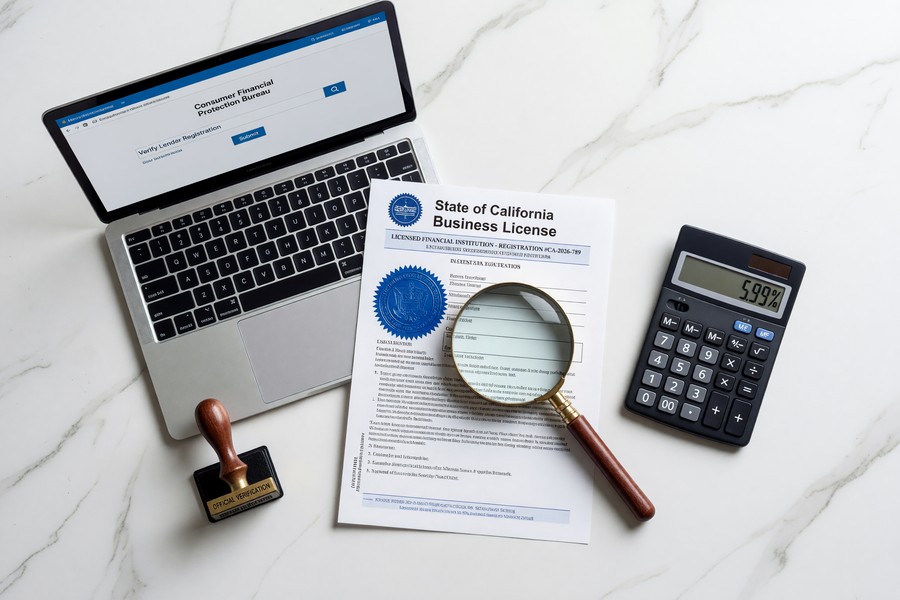
Check that any lender you consider is registered and licensed in your state. The CFPB Consumer Complaint Database lets you search by company name to see complaint volume and resolution history, a useful screening tool before you hand over your Social Security number.
Also look for FDIC or NCUA membership (for banks and credit unions), or confirm fintech lenders partner with FDIC-insured banks. This is often disclosed in the footer of the lender’s website.
Personal Loans vs. Alternative Financing
A personal loan is often the best tool for the job, but not always. Understanding how it compares to alternatives helps you make the right call for your specific situation.
Personal Loan vs. Credit Card
Credit cards offer revolving credit and flexibility, but average APRs now sit above 21%, nearly double what a well-qualified borrower pays on a personal loan. For any expense you cannot pay off within one or two billing cycles, a personal loan almost always costs less. However, a 0% intro APR credit card can beat a personal loan if you can realistically pay off the balance within the promotional window (typically 12–21 months).
If you are weighing credit card options alongside personal loans, our comparison of best credit cards for 2026 covers the top rewards and balance-transfer products currently available.
Personal Loan vs. HELOC
A Home Equity Line of Credit (HELOC) typically offers lower rates (currently 8%–10% for well-qualified homeowners) because your home serves as collateral. But it puts your home at risk, requires an appraisal, and takes 2–6 weeks to close. For homeowners with significant equity and non-urgent needs, a HELOC can beat personal loan rates. For everyone else, the simplicity and speed of a personal loan wins.
Personal Loan vs. Buy Now, Pay Later
Buy Now, Pay Later (BNPL) products are tempting for smaller purchases, but they fragment your debt and can create cascading payment problems. For purchases under $1,000 that you can pay off in four installments, BNPL can be interest-free. For anything larger, a personal loan provides better structure and often lower total cost. Read our full analysis of whether Buy Now Pay Later is a smart tool or long-term risk before deciding.
Borrowers who use personal loans to consolidate high-rate credit card debt reduce their average monthly interest expense by $187, according to a 2024 LendingTree analysis of 50,000 consolidation loan applications.
Credit unions offer some of the best personal loan rates available, averaging 10.76% APR versus 11.48% at banks, per the National Credit Union Administration’s Q4 2024 data. Membership is often easier to obtain than most people assume.
The personal loan market in 2026 is more competitive than it has been in a decade, according to LendingTree Chief Credit Analyst Matt Schulz. Borrowers with solid credit are genuinely in a position to negotiate or walk away from offers that do not meet their needs, a dynamic that simply was not true in 2022 or 2023.
Borrowers who compare rates from at least three lenders receive an average final APR that is 1.5 percentage points lower than those who accept the first offer, equivalent to $1,080 in savings on a $20,000 loan over 48 months.

Real-World Example: How Sarah Saved $4,200 by Shopping Three Lenders
Sarah, a 34-year-old marketing manager in Denver, carried $18,500 across three credit cards, a 22.99% Visa, a 24.49% store card, and an 18.99% travel card. Her minimum payments totaled $555/month, but barely touched the principal. She explored personal loans for consolidation after reading that she could potentially cut her rate in half.
Her first stop was her bank, which offered a 5-year personal loan at 16.5% APR with a $200 origination fee. Monthly payment: $453. Total cost over 60 months: $27,180, an improvement, but not dramatic. On the advice of a colleague, she prequalified with SoFi and LightStream using soft pulls. SoFi came back at 11.24% with no fees. LightStream offered 10.49% with no fees and same-day funding.
She accepted LightStream’s offer. At 10.49% over 60 months, her new monthly payment was $398–$157 less than her combined minimum card payments. Over 60 months, she paid $23,880 total. Compared to staying on her credit cards (projected total payoff cost of approximately $28,100 at minimums + a bit extra), she saved approximately $4,200. The entire prequalification and application process took 45 minutes.
The critical move: Sarah prequalified with three lenders instead of accepting the first offer. That discipline, 45 extra minutes of shopping, was worth $4,200. She also enrolled in autopay immediately, securing an additional 0.25% rate discount that reduced her total interest by another $148.
Your Action Plan
-
Check Your Credit Score Before Doing Anything Else
Pull your free credit reports from AnnualCreditReport.com and your FICO score from your bank or credit card issuer. Know your starting point. If your score is below 660, spend 30–60 days paying down balances and disputing errors before applying, the rate improvement will justify the wait.
-
Define Your Exact Borrowing Need
Determine the precise loan amount, not a rough estimate. Over-borrowing inflates your monthly payment and total interest; under-borrowing means a second application and another hard inquiry. Include any origination fees in your calculation, if the lender charges 5%, you may need to borrow $10,527 to net $10,000 in proceeds.
-
Calculate Your Debt-to-Income Ratio
Add up all your current monthly debt obligations (minimum payments on cards, car loan, student loans, rent/mortgage) and divide by your gross monthly income. If your DTI exceeds 40%, pay down the smallest existing balance first before applying, this improves both your DTI and your score simultaneously.
-
Prequalify With at Least Three Lenders
Use soft-pull prequalification tools at SoFi, Marcus, LendingClub, and at least one other lender that fits your profile. Do all prequalifications within a 14-day window. Compare the full APR (including fees), monthly payment, total cost, and term length, not just the interest rate headline.
-
Read the Full Loan Agreement Before Signing
Look specifically for origination fees, prepayment penalties, late fees, and any clause about rate changes. Legitimate lenders offer fixed rates, if the agreement references variable rate provisions on what was marketed as a fixed product, walk away. Also confirm the funding timeline matches your need.
-
Set Up Autopay Immediately Upon Funding
Most lenders provide a 0.25%–0.50% rate discount for autopay enrollment. More importantly, autopay protects your credit score by eliminating the risk of a missed payment, which can trigger late fees and a score drop of 60–110 points on the first occurrence.
-
Monitor Your Loan and Refinance If Rates Drop
Personal loan refinancing is legal and straightforward. If your credit score improves significantly (e.g., from 680 to 740) or market rates drop by 2+ percentage points, recalculate whether refinancing makes economic sense after accounting for any fees. If you are managing multiple debts, also revisit our resource on getting out of debt without burning out for a sustainable repayment framework.
-
Build a Financial Buffer to Avoid Future High-Rate Borrowing
The best personal loan is often the one you do not need. Once your loan is active, redirect a portion of the monthly savings (versus your previous debt payments) into an emergency fund. Three to six months of expenses in reserve eliminates the need for high-urgency borrowing, which almost always comes with worse terms.
Frequently Asked Questions
What credit score do I need for the best personal loan rates?
Most lenders reserve their lowest rates, typically below 10% APR, for borrowers with credit scores of 720 or higher. You can qualify for reasonable rates (10%–17%) with scores in the 660–720 range. Scores below 620 will either result in denial at prime lenders or very high rates at subprime lenders.
If your score is below the threshold you need, focus on reducing credit utilization and eliminating any derogatory marks before applying. Even a 20-point improvement can shift you into a lower rate tier and save hundreds per year.
How much can I borrow with a personal loan?
Personal loan amounts at most lenders run from $1,000 to $50,000. Some lenders, including LightStream and SoFi, go up to $100,000 for well-qualified borrowers. Your maximum loan amount is limited by both the lender’s product ceiling and your ability to repay, as evidenced by your income and DTI ratio.
How fast can I get funded?
The fastest lenders (LightStream, Avant) can fund a loan the same day or next business day. Most online lenders take 1–3 business days. Traditional banks typically take 5–7 business days. Having all required documents ready before applying is the single biggest factor in speeding up your timeline.
Will applying for a personal loan hurt my credit score?
A formal application triggers a hard inquiry, which typically reduces your score by 5–10 points temporarily. However, if you prequalify using soft pulls first (as most online lenders offer), there is no score impact until you formally apply. Rate shopping within a 14-day window counts as a single inquiry under FICO models, so applying to multiple lenders simultaneously causes minimal harm.
Are personal loans better than credit cards for large purchases?
For purchases over $3,000 that you cannot pay off within 12–15 months, personal loans are almost always cheaper. The average credit card APR is above 21% in 2026, while personal loan rates for good-credit borrowers start well below that. Personal loans also give you a defined payoff date, which many borrowers find helps with accountability.
The exception is a 0% intro APR credit card offer. If you can realistically pay off the balance before the promotional period ends, that is technically the cheapest option. If there is any doubt about payoff timing, a personal loan is the safer choice.
Can I get a personal loan if I am self-employed?
Yes, but documentation requirements are higher. Most lenders want two years of filed tax returns, year-to-date profit and loss statements, and three to six months of bank statements showing consistent income. Lenders typically use your net income (after business deductions) rather than gross revenue, which can significantly lower your qualifying income figure. Some lenders, including SoFi and LightStream, have specifically simplified their self-employed applications.
What happens if I miss a payment?
A payment more than 30 days late is reported to the credit bureaus and can drop your score by 60–110 points. Most lenders also charge a late fee of $15–$39. Some lenders offer hardship programs that allow you to defer one or two payments during financial difficulty, contact your lender proactively before you miss a payment, not after.
Can I use a personal loan to pay off student loans?
Technically yes, but it is rarely advisable. Federal student loans carry income-driven repayment protections, deferment options, and potential forgiveness programs that personal loans do not offer. Refinancing federal student debt into a personal loan permanently forfeits those protections. For private student loans without those protections, comparison shopping may reveal a personal loan that offers a lower rate, but verify carefully.
Is it better to get a personal loan from a bank or an online lender?
Online lenders typically offer faster approval, lower fees, and more competitive rates than traditional banks, particularly for borrowers with good but not exceptional credit. Traditional banks offer relationship discounts (typically 0.25%–0.50% off for existing customers) and may be preferable if you value in-person service. Credit unions often beat both categories on rate but require membership eligibility.
What is the difference between a personal loan and a personal line of credit?
A personal loan gives you a fixed lump sum upfront, with a set repayment schedule and a locked interest rate. A personal line of credit works more like a credit card, you draw funds as needed up to a limit, and interest accrues only on what you borrow. Lines of credit often carry variable rates, which can rise over time. For one-time, defined expenses, a personal loan is generally more predictable and often cheaper. For ongoing or variable needs, a line of credit offers more flexibility.
How do I know if a personal loan is a good deal for my situation?
Calculate the total cost of the loan, monthly payment multiplied by the number of payments, plus any upfront origination fees. Compare that total to what you would pay under your current arrangement (e.g., carrying a credit card balance at the minimum payment). If the personal loan’s total cost is meaningfully lower, it is likely a good deal. Also factor in whether the monthly payment fits your current budget without stress, borrowing at a great rate you cannot service is worse than not borrowing at all. For a broader perspective on managing debt decisions, our guide to handling a financial setback without resetting your plan offers useful framing.