Fact-checked by the Prime Rate editorial team
Quick Answer
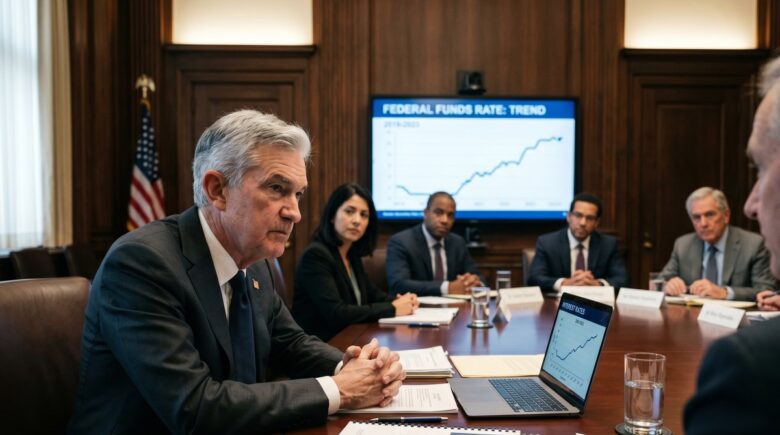
The prime rate changes when the Federal Reserve’s Federal Open Market Committee (FOMC) adjusts its federal funds rate target. Most U.S. banks then raise or lower their prime rate by the same amount, typically keeping it exactly 3 percentage points above the federal funds rate. The FOMC meets 8 times per year on a fixed schedule.
Understanding what triggers a prime rate change starts with one institution: the Federal Reserve. According to the Board of Governors of the Federal Reserve System, the Fed has no direct role in setting the prime rate, but the majority of the largest 25 U.S. banks consistently peg their prime rate at exactly 3 percentage points above the FOMC’s target federal funds rate. When the FOMC moves that target, the prime rate follows, often within 24 hours.
For borrowers carrying variable-rate debt, home equity lines of credit, or small business loans tied directly to the prime rate, understanding this chain reaction has real dollar consequences.
Key Takeaways
- The prime rate is set by major commercial banks at exactly 3 percentage points above the federal funds rate target, as tracked by the Fed’s H.15 statistical release.
- The FOMC holds 8 scheduled two-day meetings per year and releases its rate decision at 2:00 p.m. ET on the final day, per the Fed’s official FOMC calendar.
- Each 25-basis-point prime rate change adds or subtracts roughly $25 per year per $10,000 of variable-rate debt.
- The FOMC targets 2% long-run inflation as its primary benchmark, using the PCE price index as its preferred measure, per the Federal Reserve Bank of St. Louis FRED.
- Most major banks announce an updated prime rate on the same day as the FOMC policy statement, with variable-rate products adjusting within one to two billing cycles.
- The FOMC can act outside its scheduled meetings in genuine emergencies, as it did in March 2020 when it cut rates by 50 basis points in an unscheduled action in response to the COVID-19 economic shock.
How the FOMC Actually Decides to Move Rates
The Federal Open Market Committee is the 12-member body inside the Federal Reserve responsible for setting monetary policy, and its votes are the single event that sets the prime rate mechanism in motion. The Committee evaluates a wide range of economic indicators before casting a vote: the Consumer Price Index, the Personal Consumption Expenditures price index, the unemployment rate, GDP growth, and global financial conditions all feed into the deliberation.
No single data point automatically forces a rate change. The FOMC weighs the cumulative picture. If inflation is running persistently above its 2% long-run target, the Committee typically tightens policy by raising the federal funds rate. If the labor market is softening or growth is stalling, it considers cuts. The decision is a judgment call, not a formula.
The Committee’s own public communications make clear that rate decisions hinge on ongoing data assessment rather than preset triggers. As stated in FOMC policy communications from the Federal Reserve Bank of New York, in considering the extent and timing of additional adjustments to the target range for the federal funds rate, the Committee carefully assesses incoming data, the evolving outlook, and the balance of risks.
Key Takeaway: The FOMC’s rate decision hinges on cumulative economic data, not a single trigger. The Committee targets 2% inflation as its benchmark and adjusts the federal funds rate based on the combined outlook for prices, employment, and growth.
The FOMC Meeting Timeline: From Data to Decision
The FOMC follows a precise, public calendar, and every step of the process has a defined timeline that borrowers and investors can track in advance. According to the Fed’s official FOMC meeting calendar, the Committee holds eight regularly scheduled two-day meetings per year. Most meetings run Tuesday through Wednesday.
What Happens on Meeting Day
On the second day of each scheduled meeting, Committee members cast their votes. The policy statement is released at 2:00 p.m. Eastern Time, announcing whether the target range for the federal funds rate has been raised, lowered, or held steady. At 2:30 p.m. ET, the Fed Chair holds a press conference to explain the decision and field questions from reporters.
Three weeks after the meeting concludes, the Fed releases the full meeting minutes. These minutes often move markets because they reveal how divided or unified the Committee was and what economic conditions would prompt a future change.
Between Meetings: Emergency Actions
The FOMC can also act between its scheduled meetings in genuine emergencies. These unscheduled moves are rare but consequential. The Committee cut rates by 50 basis points in an emergency action in March 2020 in response to the COVID-19 economic shock, then followed with another emergency cut just days later. Such moves are announced via press release rather than through the standard meeting process.
Key Takeaway: The FOMC releases its rate decision at 2:00 p.m. ET on the second day of each of its 8 scheduled annual meetings. Meeting minutes follow 3 weeks later and often reveal the conditions that would trigger the next move.
How the Prime Rate Is Set After the Fed Acts
Once the FOMC announces a change to the federal funds rate, the transmission to the prime rate is nearly automatic. The Federal Reserve’s H.15 statistical release tracks the prime rate posted by the majority of the top 25 U.S.-chartered commercial banks, and that rate has historically stayed locked at federal funds rate plus 3.00 percentage points.
The largest banks, including JPMorgan Chase, Bank of America, and Wells Fargo, typically announce their updated prime rate on the same day as the FOMC decision, sometimes within hours. Smaller banks follow quickly. The result is a de facto national prime rate even though no law mandates the precise spread.
This consistency matters for borrowers. Home equity lines of credit, many small business loans, and most variable-rate personal loans are priced as prime plus a margin. A 25-basis-point FOMC cut translates directly into a 0.25 percentage point reduction in borrowing costs for any loan indexed to prime. To understand exactly how this flows into specific products, see our breakdown of how the prime rate affects your credit card interest rates and our deeper look at how the prime rate affects your mortgage and home equity loan.
| FOMC Action | Federal Funds Rate Change | Typical Prime Rate Result |
|---|---|---|
| Rate Hike (Standard) | +25 basis points | Prime rises 0.25% |
| Rate Hike (Aggressive) | +75 basis points | Prime rises 0.75% |
| Rate Cut (Standard) | -25 basis points | Prime falls 0.25% |
| Rate Cut (Emergency) | -50 basis points | Prime falls 0.50% |
| No Action (Hold) | 0 basis points | Prime unchanged |
Key Takeaway: The prime rate is set by major commercial banks at exactly 3 percentage points above the federal funds rate target, as tracked by the Fed’s H.15 release. Every FOMC rate move produces an equal, same-day shift in what borrowers pay on prime-indexed loans.
Which Economic Indicators Signal an Upcoming Change
Experienced market watchers rarely wait for the FOMC announcement to find out what triggered a prime rate change. The data that drives the decision is public, reported monthly, and widely tracked. Knowing which numbers the Committee prioritizes gives borrowers and savers a real-time read on where rates are heading.
As Heather Long, Chief Economist at Navy Federal Credit Union, explained: “Adjusting interest rates is the Federal Reserve’s main tool to pump up the economy or slow it down.” The indicators below are what the Fed watches to decide which direction to push.
- CPI and PCE inflation data: The Fed’s preferred gauge is the Personal Consumption Expenditures price index. Persistent readings above 2% build the case for rate increases.
- Nonfarm payrolls and unemployment rate: A labor market with unemployment below roughly 4% and strong monthly job gains signals an economy that may be overheating.
- GDP growth: Two consecutive quarters of negative GDP growth historically signal recession risk and tend to push the FOMC toward cuts.
- Federal funds futures: The CME FedWatch Tool aggregates market bets on the FOMC’s next move and is widely cited by analysts as a real-time probability tracker.
If you hold a variable-rate savings product or CD, rate signals matter for your yield as well. Our CD rates forecast for 2026 and the article on what happens to your savings when the prime rate rises explain both sides of the rate equation.
Key Takeaway: The Fed watches PCE inflation against its 2% target, monthly jobs data, and GDP growth when sizing up rate moves. Tools like the CME FedWatch Tool translate incoming data into real-time probability estimates for the next FOMC decision.
What a Rate Change Means for Everyday Borrowers
A prime rate change is not an abstract monetary policy event. It shows up in household budgets within a billing cycle. The most direct exposure sits in variable-rate products: credit cards, home equity lines of credit (HELOCs), and adjustable-rate mortgages all carry rates tied either to the prime rate or to the federal funds rate itself.
Credit card APRs are the most immediate pressure point. Most variable credit card rates are expressed as prime plus a fixed margin, so a 25-basis-point hike adds roughly $25 per year in interest on every $10,000 of revolving balance. After the aggressive rate-hiking cycle of 2022 and 2023, the average credit card APR had climbed significantly, leaving millions of cardholders paying materially more than they were just a few years prior.
The impact runs in both directions. When the FOMC cuts rates, borrowers with variable-rate loans see their interest charges drop within one to two billing cycles. Savers, however, see yields on high-yield savings accounts and money market accounts compress. That trade-off is why timing matters for both debt payoff strategy and savings allocation.
For borrowers managing existing variable-rate debt, pairing an understanding of Fed timing with a structured payoff plan (such as the approach described in our guide to paying off credit card debt) can meaningfully reduce total interest paid.
Key Takeaway: Each 25-basis-point prime rate change adds or subtracts roughly $25 per year per $10,000 of variable-rate debt. Borrowers with prime-indexed personal loans or HELOCs feel the shift within one to two billing cycles of the FOMC decision.
Frequently Asked Questions
What triggers a prime rate change in the United States?
The prime rate changes when the Federal Reserve’s FOMC votes to adjust its target range for the federal funds rate. Major banks then independently set their own prime rates, but virtually all maintain a spread of exactly 3 percentage points above the federal funds target, so any FOMC move produces an equivalent shift in the prime rate.
How many times per year can the Fed change the prime rate?
The FOMC holds 8 scheduled meetings per year, and each one is an opportunity to raise, cut, or hold the federal funds rate. In addition, the Committee can act in unscheduled emergency meetings. In practice, changes do not happen at every meeting; the Fed often holds rates steady for several consecutive meetings.
How quickly does the prime rate change after a Fed decision?
Most major banks announce a new prime rate on the same day as the FOMC policy statement, which is released at 2:00 p.m. Eastern Time on the final day of each meeting. The change takes effect for most variable-rate products within one to two billing cycles.
Does the Fed directly set the prime rate?
No. The Federal Reserve has no direct authority to set the prime rate. Individual banks set their own prime rates independently. However, because the largest U.S. banks uniformly peg their prime rate at 3 percentage points above the federal funds target, the Fed’s decisions effectively determine the prime rate in practice.
What economic data does the Fed look at before changing rates?
The FOMC primarily monitors the PCE inflation index against its 2% long-run target, the monthly nonfarm payrolls report, the unemployment rate, and GDP growth trends. It also considers global financial conditions, credit market stress, and forward-looking indicators like business investment surveys.
How does a prime rate cut affect my savings account?
When the FOMC cuts rates, banks typically reduce the APY on variable savings products, including high-yield savings accounts and money market accounts, within weeks of the decision. A 25-basis-point cut will generally reduce yields by a similar margin. Fixed-rate products like CDs lock in the rate at the time of opening, making them a hedge against falling rates.
Sources
- Board of Governors of the Federal Reserve System, Credit FAQ: Prime Rate
- Board of Governors of the Federal Reserve System, H.15 Selected Interest Rates
- Board of Governors of the Federal Reserve System, FOMC Meeting Calendars and Information
- Federal Reserve Bank of St. Louis FRED, Federal Funds Effective Rate
- Board of Governors of the Federal Reserve System, 2025–2026 FOMC Meeting Schedule Press Release
- Federal Reserve Bank of New York, John C. Williams Speech, December 2025
- Navy Federal Credit Union, What Happens When the Fed Cuts Interest Rates