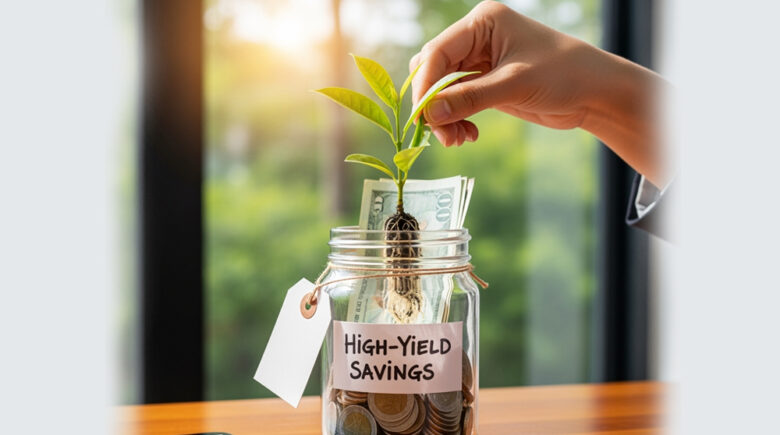
If you stashed cash in a high-yield savings account (HYSA) during the rate boom of 2023–2024, you enjoyed returns that felt almost too good to be true. But now, in 2026, the landscape looks different. Interest rates have shifted. Fintech players keep multiplying. And inflation still nibbles at your purchasing power. So the big question remains: are high-yield savings accounts still worth your attention? Let’s break it down.
High-Yield Savings in 2026: Still a Smart Move?
The Rate Reality Check
Let’s address the elephant in the room. Rates have come down. The Federal Reserve began cutting its benchmark rate in late 2024, and that trend continued into 2025. By early 2026, many top HYSAs offer APYs hovering around 3.5%–4.25%, according to NerdWallet. That’s noticeably lower than the 5%+ peaks we saw two years ago.
Still, context matters here. Traditional savings accounts at big banks continue to offer a measly 0.01%–0.50% APY. That gap is enormous. A high-yield account earning 4% on $10,000 generates roughly $400 annually. A traditional account at 0.10% earns just $10. The math speaks for itself.
So yes, the golden era of 5%+ returns may have faded. But HYSAs still dramatically outperform their traditional counterparts. For your emergency fund or short-term savings goals, they remain one of the simplest, lowest-risk tools available. Don’t let rate nostalgia cloud your judgment.
Who Benefits Most Right Now?
Millennials juggling multiple financial priorities stand to gain the most. Think about it. You might be saving for a home down payment. You might be building a six-month emergency cushion. Or maybe you’re parking cash while deciding on your next investment move. HYSAs serve all these purposes well.
The beauty of a HYSA lies in its flexibility. Your money stays liquid. You earn a competitive return. And FDIC insurance protects up to $250,000 per depositor, per institution. That safety net matters, especially during periods of economic uncertainty.
Freelancers and gig workers also benefit enormously. If your income fluctuates month to month, keeping three to six months of expenses in a HYSA provides stability. You earn passive income on money you’d otherwise leave idle. That’s a straightforward win.
When a HYSA Isn’t Enough
Here’s where honesty counts. A HYSA won’t build long-term wealth on its own. If inflation runs at 3% and your HYSA earns 4%, your real return is just 1%. That barely moves the needle over decades. For retirement savings and long-term goals, you still need investments like index funds or ETFs.
Think of a HYSA as one layer in a broader financial strategy. As it handles short-term needs. It protects your emergency fund. And it gives you optionality. But it shouldn’t replace your 401(k) contributions or brokerage account.
The smartest approach? Use a HYSA for money you’ll need within one to three years. Invest everything else. This balanced strategy lets you capture safety and growth simultaneously. Financial planners across the board echo this advice.
How Fintech and Rate Shifts Impact Your Savings
The Fintech Factor
Fintech companies have completely reshaped the savings landscape. Platforms like Marcus by Goldman Sachs, Ally Bank, and SoFi aggressively compete for your deposits. They keep overhead low by operating primarily online. Those savings get passed to you through higher APYs.
In 2026, this competition has only intensified. Newer entrants now bundle HYSAs with budgeting tools, automated savings features, and even cashback rewards. SoFi, for instance, offers checking and savings in one account with APY boosts for direct deposit members. These perks add real value beyond the interest rate alone.
The fintech revolution also means switching accounts takes minutes, not days. If your current bank drops its rate, you can move your money quickly. This portability empowers consumers. It forces banks to stay competitive or lose deposits. You hold the leverage now.
Regulatory and Security Considerations
Digital banking raises legitimate questions about data privacy and security. As more consumers store sensitive financial information online, the stakes grow higher. The Consumer Financial Protection Bureau (CFPB) has expanded its oversight of fintech firms in recent years. That’s a positive development for everyday savers.
Look for accounts that offer two-factor authentication and encryption. Confirm that your chosen institution carries FDIC or NCUA insurance. Don’t assume every flashy fintech app protects your deposits. A few minutes of research can prevent major headaches down the road.
Regulatory changes in 2025 also introduced clearer disclosure requirements for online banks. Institutions must now prominently display rate change policies and fee structures. This transparency helps you compare options more effectively. It’s a consumer-friendly shift worth appreciating.
Making the Most of Your HYSA in 2026
Maximizing your HYSA requires a proactive mindset. Here are practical steps to stay ahead:
- Rate-shop quarterly. APYs fluctuate. Set a calendar reminder to compare rates across platforms like Bankrate or NerdWallet every few months.
- Automate your savings. Set up recurring transfers from checking to your HYSA. Even $50 per week adds up to $2,600 annually—before interest.
Beyond rate-shopping, consider account features holistically. Does the bank offer sub-accounts or “buckets” for different goals? Can you access your money without transfer delays? These details affect your daily experience more than a 0.10% rate difference.
Finally, stay informed about Fed policy announcements. Rate decisions directly influence HYSA returns. Following financial news from sources like Yahoo Finance or BBC Business helps you anticipate changes. Knowledge translates into better timing and smarter decisions.
High-yield savings accounts in 2026 aren’t the headline-grabbing opportunity they were in 2023. But they absolutely still deserve a spot in your financial toolkit. They protect your emergency fund, offer meaningful returns over traditional banks, and provide unmatched liquidity. Pair them with a solid investment strategy, stay alert to rate changes, and leverage fintech competition to your advantage. Your savings won’t grow themselves—but with the right approach, they’ll work harder than you might expect.
References
- NerdWallet. “Best High-Yield Savings Accounts.” https://www.nerdwallet.com/best/banking/high-yield-online-savings-accounts
- Yahoo Finance. “Federal Reserve Interest Rate Decisions and Impact on Savings.” https://finance.yahoo.com
- Consumer Financial Protection Bureau. “What You Should Know About Online Banking.” https://www.consumerfinance.gov
If you stashed cash in a high-yield savings account (HYSA) during the rate boom of 2023–2024, you enjoyed returns that felt almost too good to be true. But now, in 2026, the landscape looks different. Interest rates have shifted. Fintech players keep multiplying. And inflation still nibbles at your purchasing power. So the big question remains: are high-yield savings accounts still worth your attention? Let’s break it down.
High-Yield Savings in 2026: Still a Smart Move?
The Rate Reality Check
Let’s address the elephant in the room. Rates have come down. The Federal Reserve began cutting its benchmark rate in late 2024, and that trend continued into 2025. By early 2026, many top HYSAs offer APYs hovering around 3.5%–4.25%, according to NerdWallet. That’s noticeably lower than the 5%+ peaks we saw two years ago.
Still, context matters here. Traditional savings accounts at big banks continue to offer a measly 0.01%–0.50% APY. That gap is enormous. A high-yield account earning 4% on $10,000 generates roughly $400 annually. A traditional account at 0.10% earns just $10. The math speaks for itself.
So yes, the golden era of 5%+ returns may have faded. But HYSAs still dramatically outperform their traditional counterparts. For your emergency fund or short-term savings goals, they remain one of the simplest, lowest-risk tools available. Don’t let rate nostalgia cloud your judgment.
Who Benefits Most Right Now?
Millennials juggling multiple financial priorities stand to gain the most. Think about it. You might be saving for a home down payment. You might be building a six-month emergency cushion. Or maybe you’re parking cash while deciding on your next investment move. HYSAs serve all these purposes well.
The beauty of a HYSA lies in its flexibility. Your money stays liquid. You earn a competitive return. And FDIC insurance protects up to $250,000 per depositor, per institution. That safety net matters, especially during periods of economic uncertainty.
Freelancers and gig workers also benefit enormously. If your income fluctuates month to month, keeping three to six months of expenses in a HYSA provides stability. You earn passive income on money you’d otherwise leave idle. That’s a straightforward win.
When a HYSA Isn’t Enough
Here’s where honesty counts. A HYSA won’t build long-term wealth on its own. If inflation runs at 3% and your HYSA earns 4%, your real return is just 1%. That barely moves the needle over decades. For retirement savings and long-term goals, you still need investments like index funds or ETFs.
Think of a HYSA as one layer in a broader financial strategy. As it handles short-term needs. It protects your emergency fund. And it gives you optionality. But it shouldn’t replace your 401(k) contributions or brokerage account.
The smartest approach? Use a HYSA for money you’ll need within one to three years. Invest everything else. This balanced strategy lets you capture safety and growth simultaneously. Financial planners across the board echo this advice.
How Fintech and Rate Shifts Impact Your Savings
The Fintech Factor
Fintech companies have completely reshaped the savings landscape. Platforms like Marcus by Goldman Sachs, Ally Bank, and SoFi aggressively compete for your deposits. They keep overhead low by operating primarily online. Those savings get passed to you through higher APYs.
In 2026, this competition has only intensified. Newer entrants now bundle HYSAs with budgeting tools, automated savings features, and even cashback rewards. SoFi, for instance, offers checking and savings in one account with APY boosts for direct deposit members. These perks add real value beyond the interest rate alone.
The fintech revolution also means switching accounts takes minutes, not days. If your current bank drops its rate, you can move your money quickly. This portability empowers consumers. It forces banks to stay competitive or lose deposits. You hold the leverage now.
Regulatory and Security Considerations
Digital banking raises legitimate questions about data privacy and security. As more consumers store sensitive financial information online, the stakes grow higher. The Consumer Financial Protection Bureau (CFPB) has expanded its oversight of fintech firms in recent years. That’s a positive development for everyday savers.
Look for accounts that offer two-factor authentication and encryption. Confirm that your chosen institution carries FDIC or NCUA insurance. Don’t assume every flashy fintech app protects your deposits. A few minutes of research can prevent major headaches down the road.
Regulatory changes in 2025 also introduced clearer disclosure requirements for online banks. Institutions must now prominently display rate change policies and fee structures. This transparency helps you compare options more effectively. It’s a consumer-friendly shift worth appreciating.
Making the Most of Your HYSA in 2026
Maximizing your HYSA requires a proactive mindset. Here are practical steps to stay ahead:
- Rate-shop quarterly. APYs fluctuate. Set a calendar reminder to compare rates across platforms like Bankrate or NerdWallet every few months.
- Automate your savings. Set up recurring transfers from checking to your HYSA. Even $50 per week adds up to $2,600 annually—before interest.
Beyond rate-shopping, consider account features holistically. Does the bank offer sub-accounts or “buckets” for different goals? Can you access your money without transfer delays? These details affect your daily experience more than a 0.10% rate difference.
Finally, stay informed about Fed policy announcements. Rate decisions directly influence HYSA returns. Following financial news from sources like Yahoo Finance or BBC Business helps you anticipate changes. Knowledge translates into better timing and smarter decisions.
High-yield savings accounts in 2026 aren’t the headline-grabbing opportunity they were in 2023. But they absolutely still deserve a spot in your financial toolkit. They protect your emergency fund, offer meaningful returns over traditional banks, and provide unmatched liquidity. Pair them with a solid investment strategy, stay alert to rate changes, and leverage fintech competition to your advantage. Your savings won’t grow themselves—but with the right approach, they’ll work harder than you might expect.
References
- NerdWallet. “Best High-Yield Savings Accounts.” https://www.nerdwallet.com/best/banking/high-yield-online-savings-accounts
- Yahoo Finance. “Federal Reserve Interest Rate Decisions and Impact on Savings.” https://finance.yahoo.com
- Consumer Financial Protection Bureau. “What You Should Know About Online Banking.” https://www.consumerfinance.gov











: Passing null to parameter #1 ($string) of type string is deprecated in <b>/var/www/primerate.com/public/wp-content/themes/modo/single.php</b> on line <b>128</b><br />
' ,'https://primerate.com/wp-content/uploads/2026/02/High-Yield-Savings-Accounts.jpg'))