
Fact-checked by the Prime Rate editorial team
Quick Answer
To set a realistic grocery budget by household size, start with USDA benchmarks: a single adult spends roughly $314–$567 per month, while a family of four averages $975–$1,337 per month on a moderate plan as of July 2025. Build your target by auditing current spending, applying a per-person baseline, then trimming with meal planning and store-brand swaps.
Setting a realistic grocery budget household target starts with knowing what comparable households actually spend — and the USDA’s monthly food cost reports give you the clearest benchmark available. As of July 2025, the USDA’s Cost of Food reports show that a single adult eating on a “moderate-cost” plan spends between $314 and $567 per month depending on age and gender, while a family of four on the same plan averages close to $975 to $1,337 per month. Knowing those numbers gives you the anchor you need before you build a spending plan.
Grocery inflation has cooled from its 2022 peak, but food-at-home prices are still running higher than pre-pandemic levels. According to the Bureau of Labor Statistics Consumer Price Index, grocery prices rose roughly 1.2% year-over-year as of early 2025 — a slowdown from the 11.4% spike in 2022, but enough to keep household food budgets under pressure. That means a budget you set two years ago may already be out of date.
This guide is for anyone who wants a data-backed starting point — whether you are a single renter trying to cut spending, a couple merging finances, or a family of five wondering if their monthly grocery bill is normal. By the end, you will have a per-household target, a practical reduction strategy, and the tools to track your progress.
Key Takeaways
- The USDA’s moderate-cost food plan for a family of four runs $975–$1,337 per month as of 2025, according to USDA Food Plans data.
- A single adult on the USDA thrifty plan can eat for as little as $228–$262 per month, based on USDA Cost of Food reports.
- Grocery prices rose 1.2% year-over-year in early 2025 — still above long-term norms — according to the Bureau of Labor Statistics.
- The average American household spends roughly $475 per month on groceries, or about 8% of total household income, per BLS Consumer Expenditure Survey data.
- Meal planning can reduce a household’s food waste by up to 30%, according to research cited by the USDA’s food waste initiative — translating directly into lower monthly spending.
- Switching to store-brand products saves shoppers an average of 20–25% per item compared to name brands, based on Consumer Reports store-brand analysis.
In This Guide
- What is a realistic grocery budget by household size?
- How do I figure out what I am actually spending on groceries right now?
- How do I set a monthly grocery budget that fits my household?
- How do I actually stay under my grocery budget every month?
- How do I track grocery spending and adjust when I go over budget?
- Frequently Asked Questions
Step 1: What Is a Realistic Grocery Budget by Household Size?
The most reliable starting point for any grocery budget household comparison is the USDA’s monthly Cost of Food report, which breaks down spending into four tiers: thrifty, low-cost, moderate-cost, and liberal. These tiers reflect real market prices and are updated monthly, making them the gold standard for household food budgeting.
USDA Benchmarks by Household Size (Moderate-Cost Plan, 2025)
Here is a summary of the USDA’s moderate-cost plan estimates for common household configurations. These figures assume all meals are prepared at home and do not include restaurant spending.
- Single adult (19–50 years): $314–$403 per month
- Couple (both 19–50): $580–$740 per month
- Family of three (couple + toddler): $740–$950 per month
- Family of four (couple + two school-age children): $975–$1,337 per month
- Family of five (couple + three children, mixed ages): $1,100–$1,500 per month
These ranges are wide because age and gender affect caloric needs. Teenage boys, for example, cost significantly more to feed than toddlers. According to USDA Food Plans cost reports, a male teenager on the moderate plan adds roughly $325–$380 per month to a household food budget.
What to Watch Out For
USDA figures assume efficient shopping and home cooking — no takeout, minimal food waste. If your household eats out even twice a week or wastes produce regularly, your real food spending will run higher than these benchmarks. Treat USDA numbers as a floor, not a ceiling.
The average U.S. household spends $475 per month on groceries — about 8% of total income — according to the Bureau of Labor Statistics Consumer Expenditure Survey. Households in higher cost-of-living metro areas can spend 15–25% more for the same basket of goods.
| Household Size | Thrifty Plan ($/mo) | Low-Cost Plan ($/mo) | Moderate Plan ($/mo) | Liberal Plan ($/mo) |
|---|---|---|---|---|
| 1 Adult (19–50) | $228–$262 | $298–$330 | $314–$403 | $444–$567 |
| 2 Adults (19–50) | $430–$500 | $550–$650 | $580–$740 | $820–$1,000 |
| Family of 3 | $540–$640 | $700–$820 | $740–$950 | $1,050–$1,200 |
| Family of 4 | $700–$850 | $850–$1,000 | $975–$1,337 | $1,350–$1,600 |
| Family of 5 | $850–$1,050 | $1,050–$1,250 | $1,100–$1,500 | $1,600–$1,900 |
Sources: USDA Cost of Food reports, adjusted for 2025 pricing. Ranges reflect male/female and age-group variations within each household type.
Step 2: How Do I Figure Out What I Am Actually Spending on Groceries Right Now?
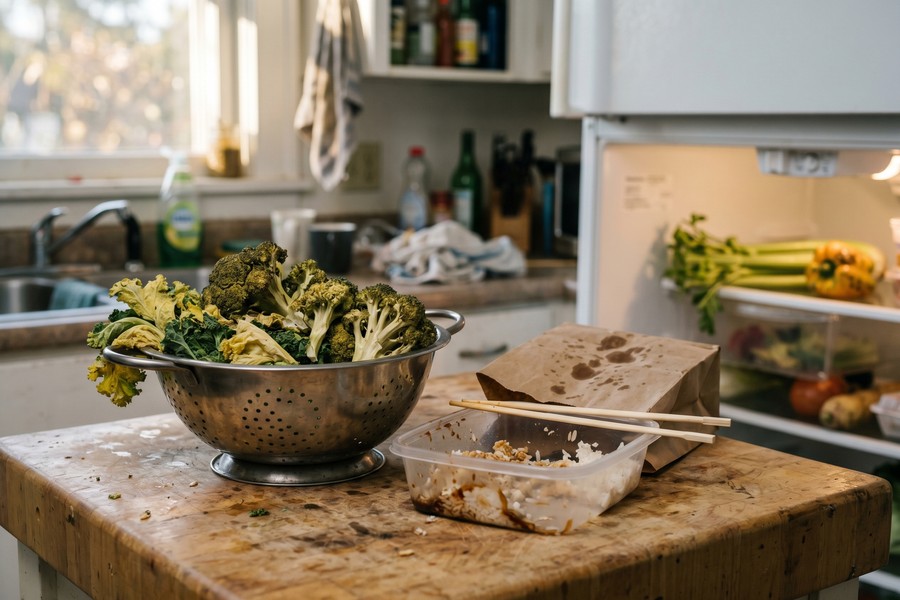
Before you can set a target, you need an honest baseline — and most households underestimate their grocery spending by 15–20% because they forget small, frequent stops. An accurate audit takes about 20 minutes and requires only two tools: your bank or credit card statements and a simple spreadsheet.
How to Do This
Pull the last three months of bank and credit card statements. Search for every transaction at grocery stores, warehouse clubs like Costco or Sam’s Club, discount grocers like Aldi or Lidl, and convenience stores where you buy food. Add the totals and divide by three for a monthly average.
Also include cash purchases, which are easy to miss. If you pay cash at farmers markets or small bodegas, estimate conservatively. Once you have a three-month average, compare it to the USDA benchmark for your household size above — that gap is what you are working to close.
For households that want to go deeper, apps like Mint (now integrated into Credit Karma), YNAB (You Need a Budget), or Copilot Money can auto-categorize grocery transactions and surface patterns you would not otherwise notice — like a spike in spending during the holidays or on weekends.
What to Watch Out For
Do not conflate restaurant spending with grocery spending. Many budgeters lump all food into one category, which obscures whether the problem is at the grocery store or the drive-through. Keep them separate from day one.
Run your audit before setting a budget number. Most people set targets based on what they think they spend, not what the data shows — and they end up with a budget that is impossible to hit because it ignores real spending patterns.
If you are working on building a complete household spending plan, our guide on how to create a monthly budget that actually works walks through a full zero-based budgeting framework that includes groceries alongside every other expense category.
Step 3: How Do I Set a Monthly Grocery Budget That Fits My Household?
Setting a grocery budget household target that you will actually stick to requires combining the USDA benchmark with your real audit number — and then choosing a realistic reduction goal rather than an aspirational one. Cutting spending by 10–15% is achievable in 30–60 days; cutting by 40% overnight usually leads to budget collapse within two weeks.
How to Do This
Use this three-step formula to set your target:
- Start with your three-month average from Step 2.
- Compare to the USDA moderate-cost benchmark for your household size (see table above). If you are within 10% of the USDA figure, you are already in a healthy range.
- Set a reduction target of 10–20% below your current average — not below the USDA benchmark — as your first milestone. Reach that target for two consecutive months before cutting further.
For example, a family of four currently spending $1,400 per month would set a first-phase target of $1,120–$1,260 (a 10–20% reduction), rather than jumping straight to the USDA thrifty plan minimum of $700.
The 50/30/20 budget framework allocates 50% of take-home pay to needs — and groceries fall under that category. If you want to see how groceries fit into a broader budget structure, the 50/30/20 budget rule guide explains how to proportion food spending within a full financial plan.
What to Watch Out For
Account for dietary restrictions, cultural foods, and health needs when setting a target. A household managing celiac disease, diabetes, or food allergies will spend more than the USDA average because specialty products cost more. Do not penalize your household for legitimate medical needs.
“Most families who struggle with food budgets don’t have a spending problem — they have a planning problem. When you don’t know what you’re cooking on Thursday, you end up making three unplanned grocery runs that week instead of one, and that’s where the budget bleeds out.”
Households that keep a written or digital grocery budget — even a rough one — spend an average of 12–18% less on food than those who shop without a plan, according to behavioral economics research published by the Journal of Consumer Research. Intention itself changes behavior at the store.
Step 4: How Do I Actually Stay Under My Grocery Budget Every Month?
Staying under a grocery budget household target consistently requires systems, not willpower. The households that reliably hit their food spending targets use a combination of meal planning, strategic store selection, and buying habits that reduce impulse purchases and food waste simultaneously.
How to Do This
These six strategies have the strongest evidence behind them for reducing grocery spending without sacrificing nutrition:
- Meal plan for seven days at a time. Write out every dinner — and ideally lunches — before your weekly shopping trip. This single habit eliminates the “what’s for dinner?” scramble that drives takeout spending.
- Shop with a written list and never deviate. Grocery stores are designed to encourage impulse buys. Shoppers who enter with a list spend 23% less per trip than those who shop without one, according to research cited by the USDA National Agricultural Library.
- Switch to store brands for shelf-stable and dairy items. Private-label products cost 20–25% less per unit than name brands, based on Consumer Reports analysis, with comparable or identical quality in most categories.
- Shop at discount grocers for staples. Stores like Aldi, Lidl, and WinCo Foods run 20–40% below traditional supermarket prices on comparable items for most shelf-stable and produce categories.
- Use a warehouse club for high-consumption staples. A Costco or Sam’s Club membership pays for itself if your household regularly uses bulk quantities of olive oil, chicken, cheese, or paper products. Calculate cost-per-unit before buying — not everything at a warehouse club is cheaper.
- Cook proteins in bulk and freeze portions. Buying chicken thighs or ground beef in family packs, cooking in bulk, and freezing individual portions can cut per-serving protein costs by up to 35% compared to buying pre-portioned fresh meat weekly.
What to Watch Out For
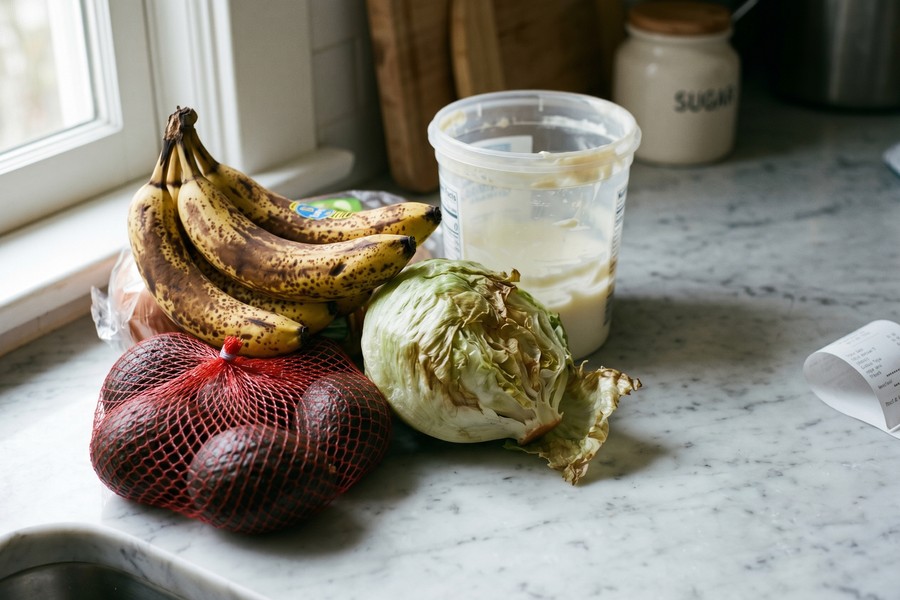
Buying in bulk only saves money if you actually use what you buy. Perishables bought in excess contribute to the $1,500 per year in food waste the average American household produces, according to the USDA’s food waste initiative. Track what you throw away for two weeks — it is often more motivating than any budget spreadsheet.
Coupon apps and loyalty programs can save money — but they can also trick you into buying items you would not otherwise purchase. Only clip coupons for products already on your list. Spending $4 on a discounted item you did not need is not a saving — it is a $4 loss.
Reducing grocery costs is one piece of the broader debt-payoff puzzle. If you are cutting grocery spending specifically to free up cash for debt repayment, our breakdown of the snowball vs. avalanche debt payoff methods can help you direct those savings strategically.
“The households I work with who make the biggest progress on food costs are the ones who commit to a two-week meal plan rotation. Once you’ve made a recipe four or five times, you get fast and efficient, and you stop wasting ingredients. The learning curve on cooking at home is real, but it pays off quickly.”
Step 5: How Do I Track Grocery Spending and Adjust When I Go Over Budget?
Tracking your grocery budget household performance consistently is what separates households that reach their targets from those who set budgets and abandon them by week three. The method matters less than the consistency — what counts is reviewing your spending at least once per week.
How to Do This
Choose one of these three tracking systems based on your household’s habits:
- The envelope method: Withdraw your monthly grocery budget in cash at the start of the month and keep it in a dedicated envelope. When the cash is gone, grocery shopping stops until the next month. This method is highly effective but requires planning around your shopping rhythm.
- A dedicated debit or credit card: Use one card exclusively for grocery purchases and review the balance weekly. This creates a clean data trail without the hassle of cash. If you use a rewards card, cards like the Blue Cash Preferred from American Express offer up to 6% cash back at U.S. supermarkets on up to $6,000 per year in spending.
- A budgeting app: Tools like YNAB, Monarch Money, or EveryDollar let you set a grocery category budget and send alerts when you approach the limit. YNAB in particular uses a zero-based budgeting methodology that many users find effective for food spending specifically.
When you go over budget in a given week, do not wait until the end of the month to adjust. Immediately reduce the remaining week’s meal plan to use what you already have in the pantry and freezer. Most households have three to five meals worth of food on hand at any given time — calling it a “pantry week” and shopping only for fresh produce can save $50–$150 in a single week.
What to Watch Out For
Budget overruns cluster around predictable events: holidays, birthdays, houseguests, and seasonal cooking. Build a “buffer fund” of 10–15% above your baseline monthly target in the months leading into November and December. Going over budget in December is not a failure — it is a planning gap from October.
Do a five-minute “fridge audit” every Sunday before you write your weekly grocery list. Note what needs to be used first and build at least two meals around those ingredients. This single habit can eliminate up to $50–$75 per month in food waste for a typical family of four.
Saving money on groceries only matters if the freed-up cash goes somewhere productive. Consider routing grocery savings directly into an emergency fund or a high-yield savings account where it earns meaningful interest while building your financial cushion.
Frequently Asked Questions
What is a normal grocery budget for one person per month?
A single adult spending on the USDA moderate-cost plan should budget between $314 and $403 per month in 2025. On the thrifty plan, that range drops to $228–$262 per month. Your actual spending may vary based on where you live — metro areas with higher costs of living typically run 15–25% above these national averages, according to USDA Cost of Food reports.
How much should a family of four spend on groceries each month?
A family of four on the USDA moderate-cost plan should budget $975–$1,337 per month for groceries in 2025. If you are trying to cut spending, the USDA thrifty plan benchmark for a family of four is $700–$850 per month — achievable with consistent meal planning, store-brand substitutions, and reduced food waste. These figures are based on USDA monthly food cost data.
Is $200 a month realistic for groceries for one person?
$200 per month for one person is below the USDA thrifty plan minimum of $228–$262, which means it is tight but possible with disciplined planning. You would need to cook all meals from scratch, rely heavily on legumes, eggs, grains, and frozen vegetables, and shop exclusively at discount grocers like Aldi or Lidl. Most nutrition professionals would not recommend going below the USDA thrifty plan for extended periods, as it limits dietary variety.
How much does the average couple spend on groceries per month?
The average couple in the U.S. spends approximately $580–$740 per month on groceries under the USDA moderate-cost plan, or as low as $430–$500 on the thrifty plan. Couples in high cost-of-living cities like New York, San Francisco, or Boston should add a 20–25% premium to those estimates. Sharing costs and cooking together makes per-person food costs for couples lower than for single-person households due to economies of scale.
What percentage of my income should I spend on groceries?
Most personal finance experts recommend keeping grocery spending at 5–12% of take-home pay, with the national average sitting around 8% according to the BLS Consumer Expenditure Survey. Lower-income households often spend a higher percentage simply because food is a fixed need. If groceries are consuming more than 15% of your take-home income, it is worth auditing spending categories — but also worth examining whether income growth or supplemental assistance programs like SNAP might be the better lever.
How do I cut my grocery bill in half without giving up nutrition?
Cutting a grocery bill by 50% requires a combination of strategies applied simultaneously: meal planning every week, switching entirely to store-brand staples, shopping at a discount grocer like Aldi, buying proteins in bulk and freezing them, and eliminating food waste through a weekly fridge audit. Research from the USDA food waste program shows that reducing waste alone can recover up to $1,500 per year for the average household — equivalent to roughly $125 per month back in your budget.
Should I use a warehouse club like Costco to lower my grocery budget?
A Costco or Sam’s Club membership saves money only if your household consistently uses bulk quantities of the items sold there. A Costco membership costs $65–$130 per year, so you need to save at least that much annually to break even. For families of three or more who regularly consume olive oil, chicken, cheese, laundry detergent, and paper products, membership typically pays off within two to three shopping trips.
What is the USDA thrifty food plan and how do I use it to set a grocery budget?
The USDA Thrifty Food Plan is the federal government’s lowest-cost nutritionally adequate diet for American households. It is updated annually and forms the basis for SNAP (Supplemental Nutrition Assistance Program) benefit calculations. You can use it as a floor for your grocery budget — if you are spending below thrifty plan levels, your diet may be nutritionally at risk. If you are spending at or above the moderate-cost level and want to cut, the thrifty plan gives you a target to move toward incrementally. Access current figures at the USDA Food and Nutrition Service website.
How do I handle grocery budget overruns at the end of the month?
When you go over your grocery budget midmonth, immediately shift to a “pantry week” — building meals exclusively from what you already have at home, buying only fresh produce to supplement. Most households have enough pantry and freezer inventory for at least three to five meals. This approach can recover $50–$150 per week in grocery spending and is more sustainable than trying to compensate in other spending categories.
Does location affect how much I should budget for groceries?
Yes, significantly. Grocery prices in high cost-of-living metropolitan areas can run 15–30% above the national USDA averages. The USDA benchmarks are national medians — residents of New York City, San Francisco, Boston, or Honolulu should inflate those baselines accordingly. Conversely, households in lower cost-of-living rural areas or Midwest cities may find they spend meaningfully below the USDA moderate benchmark without any special effort.
Sources
- USDA Food and Nutrition Service — USDA Food Plans: Cost of Food Reports
- Bureau of Labor Statistics — Consumer Price Index News Release (2025)
- Bureau of Labor Statistics — Consumer Expenditure Survey
- USDA — Food Waste FAQs and Statistics
- Consumer Reports — Store Brand vs. Name Brand Analysis
- USDA National Agricultural Library — Food Costs and Budgets
- Journal of Consumer Research — Shopping Lists and Purchase Behavior
- USDA Food and Nutrition Service — SNAP Program Overview
- USDA Economic Research Service — Food Expenditure Series
- Bureau of Labor Statistics — Average Retail Food Prices by Region