
Quick Answer
, the best CD rates for 2026 are expected to range between 3.50% and 4.75% APY for terms of 12 to 24 months, as the Federal Reserve is projected to make one to two additional rate cuts totaling 25 to 50 basis points before year-end 2025, gradually pulling CD yields lower through 2026.
CD rates in 2026 will be shaped by a Federal Reserve balancing cooling inflation against a potential economic slowdown, and right now, that balance tilts toward modest easing. Top-yielding certificates of deposit still offer competitive returns above 4.50% APY at leading online banks, but those peak yields are unlikely to last through the full calendar year.
According to the Federal Reserve’s most recent FOMC projections, policymakers signaled a median expectation of one to two rate cuts remaining in 2025, with the federal funds rate potentially settling near the 4.00%–4.25% range heading into 2026. That trajectory directly influences what banks pay depositors on savings vehicles like CDs. The FDIC continues to insure CD deposits up to $250,000 per depositor, per institution, making them one of the safest yield-bearing instruments available regardless of the rate environment.
This guide breaks down what savers can expect from CD rates in 2026, which terms offer the best value right now, how to lock in today’s yields before they fall, and which institutions are paying the most. Whether you are building an emergency fund, laddering for retirement, or simply tired of watching your savings underperform, you will leave with a concrete, actionable strategy.
Key Takeaways
- The national average 12-month CD rate stood at 1.81% APY, according to FDIC aggregate bank data, while top online banks were offering rates more than twice that figure.
- The Federal Reserve held the federal funds target range at 4.25%–4.50% through mid-2025 (Federal Reserve, 2025), providing a supportive ceiling for high-yield CD rates heading into late 2025 and early 2026.
- CD rates at the best online institutions are projected to average between 3.50% and 4.25% APY for 1-year terms, assuming one to two Fed cuts materialize (Bankrate forecast, 2025).
- Savers who lock in a 24-month CD today at 4.50% APY on a $25,000 deposit can earn approximately $2,306 in interest over the term, outpacing a standard savings account by an estimated $900–$1,200 (FDIC national average comparison, 2025).
- Online banks and credit unions consistently offer CD APYs that are 3 to 5 times higher than the national average offered by traditional brick-and-mortar banks (Bankrate, 2025).
- A CD ladder strategy using 6-month, 12-month, 24-month, and 36-month terms can generate blended yields near 4.00% APY through 2026 even if short-term rates decline (NerdWallet, 2025).
In This Guide
- What Are CD Rates Right Now in 2025?
- How Will Federal Reserve Decisions Affect CD Rates in 2026?
- What Is the CD Rate Forecast for 2026?
- Which CD Terms Offer the Best Value in 2026?
- Which Banks and Credit Unions Have the Best CD Rates?
- What Is a CD Ladder and Should You Build One Now?
- How Do CDs Compare to High-Yield Savings and Treasuries in 2026?
- When Is the Right Time to Lock In a CD Rate?
- What Are the Tax Implications and Early Withdrawal Penalties on CDs?
What Are CD Rates Right Now in 2025?
The best CD rates available in July 2025 range from roughly 4.25% to 4.75% APY for terms between 6 and 18 months at top-tier online banks and credit unions. These figures represent the tail end of the most favorable CD rate environment since the early 2000s, driven by the Federal Reserve’s aggressive 2022–2023 tightening cycle that pushed the federal funds rate to a 23-year high.
National Average vs. Top Rates
There is a sharp divide between what average banks pay and what the best institutions offer. The Bankrate national CD rate survey shows the average 1-year CD at traditional banks paying around 1.81% APY, while top online banks are offering rates above 4.50% APY on the same term. That gap represents real money: on a $20,000 deposit over 12 months, the difference between 1.81% and 4.60% is roughly $556 in additional interest.
The top-yielding 1-year CD in the U.S. offers 4.75% APY, compared to the national bank average of 1.81% APY, a gap of nearly 3 full percentage points (Bankrate, 2025).
Longer-term CDs tell a slightly different story. Rates on 3-year and 5-year CDs have already dipped below their 2023 peaks, reflecting the market’s expectation that short-term rates will be lower in the future. A 5-year CD currently averages about 3.50%–3.80% APY at competitive institutions, lower than a 1-year CD, which is an inverted yield curve signal worth understanding before committing to a long term.
Where Rates Come From
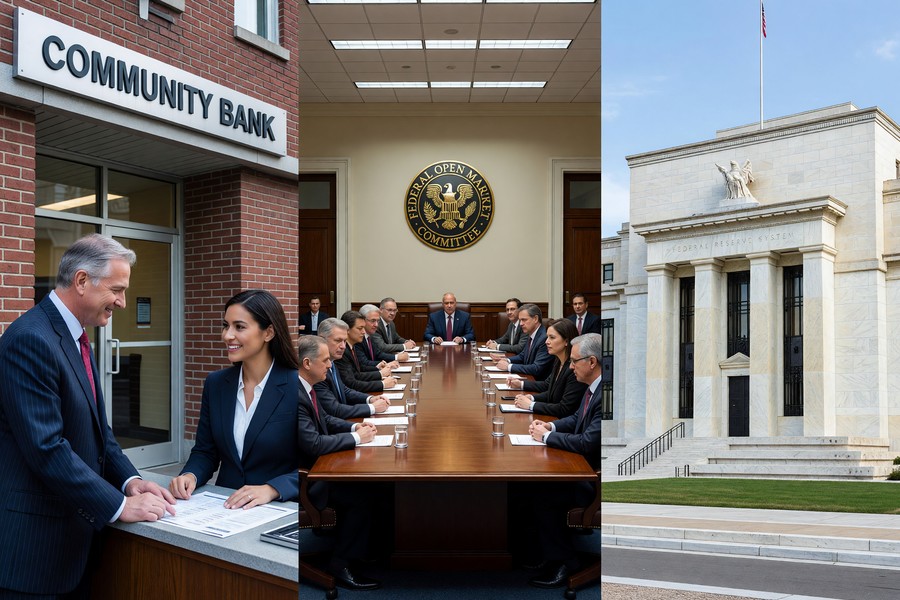
CD rates are set by individual banks and credit unions, but they closely track the federal funds rate set by the Federal Open Market Committee (FOMC). When the Fed raises rates, banks typically increase CD yields to attract deposits. When the Fed cuts rates, CD yields follow, though usually with a lag of several weeks. Understanding this mechanism is critical for timing your CD purchases in 2026.
How Will Federal Reserve Decisions Affect CD Rates in 2026?
Federal Reserve policy is the single most important factor determining what CDs pay in 2026, and current projections point to modest easing, meaning CD yields will trend lower, but likely remain historically attractive through much of the year. The Fed’s own Summary of Economic Projections (the “dot plot”) released in early 2025 indicated a median expectation of the federal funds rate ending 2025 near 3.75%–4.25%.
Projected Fed Rate Path Through 2026
Most market forecasters expect one to two 25-basis-point cuts before year-end 2025, followed by a possible pause or additional cut of 25–50 basis points in early-to-mid 2026. That would put the federal funds rate somewhere between 3.50% and 4.00% for most of 2026. CD rates typically run 10 to 50 basis points below the upper bound of the fed funds rate, so savers can expect top CD yields to settle in the 3.25%–4.25% APY range for 1-year terms through much of the year.
The Federal Reserve cut rates three times in late 2024, reducing the federal funds rate by a total of 100 basis points from its 2023 peak. CD rates at top online banks dropped by roughly 60–80 basis points in the same period, a lagged but significant transmission (Federal Reserve, 2025).
Inflation’s Role in the Forecast
The Consumer Price Index (CPI), published monthly by the U.S. Bureau of Labor Statistics, remains above the Fed’s 2% target. Stickier-than-expected inflation, a scenario multiple Fed officials have flagged as a real risk, could delay rate cuts and keep CD rates elevated longer than the baseline forecast suggests. Conversely, a faster economic slowdown could accelerate cuts and compress CD yields more quickly. Neither scenario is off the table.
Greg McBride, CFA, Chief Financial Analyst at Bankrate, has noted that the Fed is in a “higher for longer” phase winding down gradually rather than abruptly, and that savers who act within the next six months can still capture yields that would have seemed extraordinary just three years ago, but that the window is narrowing (Bankrate, 2025).
What Is the CD Rate Forecast for 2026?
The 2026 forecast calls for a gradual decline from current levels, with the most competitive rates landing in the 3.50%–4.25% APY range for 12-month terms at top online institutions by the middle of the year. Lower than the peaks seen in 2023–2024, yes, but still significantly higher than the near-zero rates that prevailed from 2020 through mid-2022.
Quarterly Rate Projections
| Period | Fed Funds Rate (Est.) | Top 1-Year CD APY (Est.) | Nat. Avg. 1-Year CD APY (Est.) |
|---|---|---|---|
| Q3 2025 (Now) | 4.25%–4.50% | 4.50%–4.75% | 1.80%–1.90% |
| Q4 2025 | 4.00%–4.25% | 4.25%–4.60% | 1.65%–1.80% |
| Q1 2026 | 3.75%–4.00% | 4.00%–4.35% | 1.50%–1.65% |
| Q2 2026 | 3.50%–3.75% | 3.75%–4.10% | 1.35%–1.55% |
| Q3 2026 | 3.50%–3.75% | 3.50%–4.00% | 1.25%–1.50% |
| Q4 2026 | 3.25%–3.50% | 3.25%–3.75% | 1.10%–1.35% |
These projections are based on CME FedWatch futures pricing, Bankrate analyst forecasts, and the Federal Reserve’s own dot-plot median estimates. Actual rates will depend heavily on inflation data, labor market strength, and any unforeseen economic shocks. Treat these as the central scenario, not a guarantee.
Longer-Term CD Rate Outlook
For savers considering 3-year or 5-year CDs, the calculus is different. These products are already priced near their expected future level, roughly 3.25%–3.80% APY today at competitive banks, because the bond market has priced in expected rate declines. Locking in a 3-year CD now effectively beats the forecast if rates fall faster than expected, but you sacrifice liquidity in the process. That trade-off is real and worth weighing honestly against your actual timeline.
Use the CME Group’s FedWatch Tool to check real-time market probability estimates for future Fed rate moves before choosing your CD term. This is the same tool professional traders use to price rate expectations.
Which CD Terms Offer the Best Value in 2026?
In the current inverted-to-flat yield curve environment, short- and medium-term CDs of 6 to 18 months offer the best combination of yield and flexibility heading into 2026. Locking in longer terms beyond 24 months only makes sense if you believe rates will fall significantly and quickly, and even then, the liquidity cost is steep.
Comparing CD Terms Side by Side
| CD Term | Top APY Available (July 2025) | Best For | Early Withdrawal Penalty (Typical) |
|---|---|---|---|
| 3-Month | 4.25%–4.50% | Short-term parking of cash | 30–60 days interest |
| 6-Month | 4.40%–4.75% | Rate flexibility, near-term goals | 90 days interest |
| 12-Month | 4.50%–4.75% | Best yield-to-flexibility balance | 150–180 days interest |
| 18-Month | 4.25%–4.60% | Bridging to 2026 rate environment | 180 days interest |
| 24-Month | 4.00%–4.40% | Locking in above forecast 2026 rates | 180–270 days interest |
| 36-Month | 3.75%–4.00% | Conservative savers, retirement ladders | 270–365 days interest |
| 60-Month | 3.50%–3.80% | Long-horizon certainty | 365 days interest |
The 12-month CD stands out as the sweet spot in 2025 for most savers. It captures near-peak yields available today while maturing in mid-2026, at which point you can reassess the rate landscape and either roll into a new CD or redirect funds. Renewing into even a 3.50% APY CD in 2026 still outperforms most traditional savings accounts by a significant margin.
No-penalty CDs, which allow early withdrawal without fees, are currently available at rates up to 4.25% APY for 11-month terms at select online banks (Bankrate, 2025). They sacrifice roughly 25–50 basis points versus standard CDs but eliminate the liquidity risk entirely.
When Longer Terms Make Sense
A 36-month or 60-month CD makes strategic sense when you have a specific future expense, a down payment in 2028, a planned retirement contribution, and you want to guarantee a known return. Consider the downside honestly: if the economy surprises to the upside and the Fed holds rates higher than expected, you will be locked into today’s rate while shorter-term instruments reset higher. That scenario is less likely than the rate-decline case, but it is not impossible.
Rates falling to 2.50%–3.00% by 2027 (a more aggressive cut scenario) would make a 3-year CD locked in today at 3.80%–4.00% look like the right call in retrospect. The key question is whether you can genuinely afford to lock up the funds for that duration.
Which Banks and Credit Unions Have the Best CD Rates?
Online banks and credit unions consistently offer the highest CD rates, typically 2 to 5 times the national average at traditional brick-and-mortar banks. Lower overhead costs and aggressive competition for deposits explain most of that gap. All deposits at FDIC-member banks or NCUA-member credit unions are insured up to $250,000, so higher rates do not mean higher risk on the principal.
Top CD Rate Providers in 2025
Institutions consistently topping CD rate surveys include Ally Bank, Marcus by Goldman Sachs, Discover Bank, Synchrony Bank, Bread Financial, LendingClub Bank, and credit unions such as Alliant Credit Union and PenFed Credit Union. Each of these institutions has FDIC or NCUA insurance and transparent fee structures. Rates change frequently, sometimes daily, so always verify the current APY directly on the institution’s website before opening an account.
Weighing CDs against other savings vehicles? Our guide to high-yield savings accounts in 2026 offers a direct comparison of liquid alternatives that may complement a CD strategy.
What to Look for Beyond the Rate
The advertised APY matters, but it is not the only factor. Check the minimum deposit requirement (some high-yield CDs require $1,000–$10,000), the early withdrawal penalty structure, whether the CD automatically renews (and at what rate), and whether the institution offers a rate-bump or step-up option. A CD that auto-renews at a lower rate without notification can silently cost you hundreds of dollars in foregone yield.

What Is a CD Ladder and Should You Build One Now?
A CD ladder is a strategy where you split a lump sum across multiple CDs with staggered maturity dates, so a portion of your savings becomes available at regular intervals while the rest continues earning interest. It is one of the most effective strategies for a period of declining interest rates like the one projected for 2026.
How a CD Ladder Works in Practice
Imagine you have $40,000 to invest. Instead of putting it all in one 12-month CD, you divide it into four $10,000 CDs with terms of 6 months, 12 months, 18 months, and 24 months. As each CD matures, you reinvest into a new 24-month CD (or the longest term that still offers an attractive rate). Over time, you end up with a CD maturing every six months, providing both liquidity and consistently competitive yields.
This approach is especially powerful right now because short-term CD rates are still near their peak. Building a ladder today locks in high yields on the longer rungs while retaining access to cash on the shorter rungs, a hedge against both a rate-decline scenario and unexpected expenses. For more on building financial systems that balance growth with liquidity, see our piece on how to build a personal financial system.
A $40,000 CD ladder built in July 2025 with rungs at 6, 12, 18, and 24 months at current top rates could generate approximately $6,800–$7,400 in total interest over a 24-month period, compared to roughly $2,900 in a traditional savings account at the national average rate (Bankrate CD calculator estimates, 2025).
CD Ladder vs. Single Long-Term CD
A single 24-month CD at today’s top rate of roughly 4.40% APY will earn more than the ladder’s blended yield if rates fall sharply. But if rates stay elevated or you need access to part of your funds, the ladder wins on flexibility. For most savers, the ladder’s combination of competitive yield, liquidity, and risk management makes it the stronger default strategy heading into 2026, though it is not the right choice for someone who genuinely will not need the money and wants to maximize a single locked-in rate.
How Do CDs Compare to High-Yield Savings and Treasuries in 2026?
CDs are not the only high-yield, low-risk option available to savers in 2025–2026. High-yield savings accounts (HYSAs), Treasury bills, and money market accounts all compete for the same dollars, and each carries distinct trade-offs in yield, liquidity, and tax treatment. The right choice depends on your timeline and how much flexibility you need.
CDs vs. High-Yield Savings Accounts
HYSAs currently offer rates near 4.25%–4.50% APY at top online banks, comparable to CDs for short terms but with full liquidity. The catch is that HYSA rates are variable. When the Fed cuts rates, your HYSA rate drops immediately, often within days. A 12-month CD at 4.60% APY locked in today will still pay that rate six months from now even if the Fed has cut twice in the interim. For money you will not need for at least 6–12 months, a CD typically wins on yield certainty.
CDs vs. U.S. Treasury Bills
Treasury bills, notes, and bonds issued by the U.S. Treasury via TreasuryDirect currently offer competitive yields, 4-week T-bills were yielding around 4.30%–4.50% in mid-2025. Treasuries have one major tax advantage: their interest is exempt from state and local income taxes, which matters significantly for savers in high-tax states like California or New York. CDs offer FDIC insurance per account, while Treasuries are backed by the full faith and credit of the U.S. government. Both are extremely safe, but the tax angle can tip the scales for high-income savers.
Bankrate’s chief financial analyst Greg McBride has pointed out that savers in high-tax states should compare the effective after-tax yield on Treasuries against CD returns before deciding, since the state tax exemption on Treasury interest can add the equivalent of 20 to 50 basis points to the real yield (Bankrate, 2025).
Money Market Accounts and Funds
Money market accounts (MMAs) at banks are FDIC-insured and currently offer rates of 4.00%–4.50% APY at competitive institutions, with check-writing and debit access. Money market funds at brokerages like Fidelity, Vanguard, and Charles Schwab are yielding near 4.50%–5.00% on government money market funds as of mid-2025, but they are not FDIC-insured (though they are generally considered very safe). For emergency funds or operational cash, a money market account or HYSA beats a CD on flexibility. For dedicated savings with a known timeline, CDs remain competitive.
When Is the Right Time to Lock In a CD Rate?
The best time to lock in a CD rate is before the next Federal Reserve rate cut, and based on current market pricing, that cut could come as soon as the September or November 2025 FOMC meeting. Waiting for rates to go higher in the current environment carries real opportunity cost: every month spent in a standard savings account at 0.50% APY while competitive CDs offer 4.50%–4.75% APY is a quantifiable loss.
Signals That the Rate Peak Has Passed
Three key signals suggest the window for maximum CD yields is closing: the Fed’s dot plot showing cuts ahead, falling yields on short-term Treasury bills (which lead CD rates), and banks beginning to trim their advertised APYs. All three are currently active in July 2025. Rates have not collapsed, but the directional bias is clearly downward. Acting now, or within the next 60 to 90 days, captures the most favorable part of the current cycle.
Modest savings rate advantages compound meaningfully over time. Pairing a CD ladder with an understanding of how compound growth rewards boring decisions makes clear why locking in a guaranteed rate today is often smarter than chasing a slightly higher variable rate later.
Many CDs automatically roll over into a new term at whatever rate the bank currently offers, which could be significantly lower. You typically have a narrow 7 to 10 day grace window after maturity to redirect funds without penalty. Mark your maturity date on your calendar now and set a reminder two weeks in advance.
The Cost of Waiting
With $30,000 sitting in a traditional savings account paying 0.50% APY instead of a top CD at 4.60% APY, you are forfeiting approximately $1,230 per year in interest income. That is the concrete cost of inaction, and it grows with every dollar and every month you delay. For savers who have already experienced a financial disruption, our guide on handling a financial setback without resetting your plan provides useful context for getting back on track, including when redirecting idle cash into CDs makes sense.
What Are the Tax Implications and Early Withdrawal Penalties on CDs?
CD interest is taxed as ordinary income, not at the lower capital gains rate, in the year it is received, regardless of whether you withdraw the funds. This is a meaningful distinction from some investment accounts and is worth factoring into your net yield calculation, especially if you are in a higher tax bracket.
How CD Interest Is Taxed
The IRS requires banks to report CD interest on Form 1099-INT for any account earning $10 or more in interest during the tax year. For multi-year CDs, most banks report the interest in the year it is earned (accrual basis), even if the CD does not mature until a future year. On a $25,000 CD earning 4.50% APY, you would owe ordinary income tax on approximately $1,125 in interest income for the first year. In the 22% federal tax bracket, that reduces your effective after-tax yield to roughly 3.51%.
Early Withdrawal Penalties
Withdrawing from a CD before its maturity date triggers an early withdrawal penalty (EWP), typically ranging from 60 days of interest for short-term CDs to 365 days of interest for 5-year terms. On a $20,000 5-year CD with a 365-day interest penalty, an early withdrawal could cost you approximately $900 in forfeited earnings at 4.50% APY. In some cases, particularly if you withdraw early in the CD’s life, the penalty can actually eat into your principal, resulting in a net loss.
No-penalty CDs eliminate this risk entirely. They typically offer rates 25–50 basis points lower than comparable standard CDs, but for savers who value flexibility, the difference is often worth it. Managing credit card debt or installment loans alongside your savings strategy? It may be worth reviewing how your credit score affects your access to competitive financial products as part of your overall picture.
On a $50,000 5-year CD at 4.00% APY, a saver in the 24% federal tax bracket would owe approximately $480 in federal income tax on year-one interest of $2,000, leaving an after-tax return of roughly 3.04% APY (IRS Publication 550, 2024).
Real-World Example: Building a CD Ladder Before Rates Fall
David, 41, has $60,000 in a traditional savings account earning 0.45% APY, a legacy account he never switched from his original bank. In June 2025, he builds a four-rung CD ladder: $15,000 in a 6-month CD at 4.60% APY, $15,000 in a 12-month CD at 4.70% APY, $15,000 in an 18-month CD at 4.50% APY, and $15,000 in a 24-month CD at 4.40% APY. His blended rate is 4.55% APY.
Over 24 months, David earns approximately $5,640 in total interest. Had he left the money in his savings account, he would have earned roughly $540 over the same period, a difference of $5,100. When his first CD matures in December 2025, rates have dropped slightly to 4.10% for 24-month terms, but he still reinvests at that rate. The ladder continues generating returns well above the national average even as the rate environment softens, exactly as designed.
Your Action Plan
-
Compare current CD rates at top online banks
Visit Bankrate’s best CD rates page and NerdWallet’s CD rate comparison tool to see live rates from FDIC-insured institutions. Filter by term length and minimum deposit to match your situation. Check at least five to seven institutions before deciding, rates vary significantly even among competitive banks.
-
Calculate your after-tax yield before committing
Use your marginal federal and state tax rate to calculate your real after-tax return. A CD paying 4.50% APY to someone in a 22% federal bracket and a 5% state bracket yields approximately 3.24% after tax. Savers in a high-tax state should compare this to the after-tax yield on Treasury bills (which are state-tax exempt) using the TreasuryDirect calculator.
-
Decide on a CD term strategy based on your timeline
For money you will not need for 12 months, a standard 12-month CD at the top available rate is your best single move. With a longer horizon and a desire to hedge against rate declines, build a ladder across 6-, 12-, 18-, and 24-month terms as described in this guide. For emergency funds you might need at any time, stick with a no-penalty CD or a high-yield savings account instead.
-
Open your CD account and fund it promptly
Most online banks allow you to open a CD account entirely online in under 15 minutes with a Social Security number, government ID, and linked bank account. Rates are locked at the moment of funding, not application. Move funds promptly after opening to secure the rate before any advertised change takes effect, banks can and do adjust rates daily.
-
Set maturity date reminders to avoid auto-renewal at a lower rate
Mark your CD maturity dates in your calendar and set an alert 14 days in advance. Most banks provide a 7 to 10 day grace period after maturity during which you can redirect funds without penalty. Use this window to re-evaluate the rate environment using tools like the CME FedWatch Tool and Bankrate’s current rate tables before deciding whether to renew, extend, or redeploy.
-
Maximize FDIC and NCUA insurance coverage
The FDIC insures up to $250,000 per depositor, per institution, per account ownership category. With more than $250,000 to invest in CDs, spread them across multiple FDIC-member institutions or account types (individual, joint, IRA) to ensure full coverage. Use the FDIC’s Electronic Deposit Insurance Estimator (EDIE) to verify your coverage before depositing.
-
Consider IRA CDs for retirement savers
Many banks offer IRA CDs at the same competitive rates as standard CDs, but with the added benefit of tax-deferred or tax-free growth. For 2025, the IRA contribution limit is $7,000 ($8,000 if you are 50 or older), per IRS retirement contribution limits. An IRA CD effectively eliminates the annual tax drag described earlier in this guide.
-
Integrate CDs into a broader savings strategy
CDs should complement, not replace, a diversified financial plan. Keep three to six months of living expenses in a liquid HYSA or money market account before locking funds in CDs. For long-term wealth building, CDs work alongside index funds and retirement accounts. Also managing debt obligations? Review our debt consolidation options for 2026 to ensure you are optimizing both sides of your balance sheet at once.
Frequently Asked Questions
Will CD rates go up or down in 2026?
CD rates are expected to trend modestly lower throughout 2026, following projected Federal Reserve rate cuts of 25–75 basis points from current levels. Top online bank rates for 1-year CDs are forecast to range between 3.25% and 4.25% APY for most of 2026, down from the peak of nearly 5.50% seen in late 2023.
What is the best CD rate available right now?
, the best CD rates available at FDIC-insured online banks reach up to 4.75% APY for 6- to 12-month terms. These rates are significantly higher than the national bank average of approximately 1.81% APY for 1-year CDs, according to FDIC aggregate data. Always verify current rates directly with the issuing institution before opening an account.
Is a 12-month or 24-month CD better in 2025?
A 12-month CD is generally the better choice for most savers in mid-2025 because it offers near-peak yields (up to 4.75% APY) with a shorter commitment. A 24-month CD makes more sense if you believe rates will drop sharply, locking in today’s rate for two years provides insulation against a faster-than-expected Fed easing cycle. The two-year term currently pays slightly less (around 4.25%–4.40% APY) due to the inverted yield curve.
Are CDs safe if a bank fails?
Yes, CDs at FDIC-member banks are insured up to $250,000 per depositor, per institution, per ownership category. Credit union CDs are protected by the NCUA under the same $250,000 limit. In the event of a bank failure, the FDIC guarantees depositors will receive their insured funds, typically within a few business days. CD principal has never been lost due to bank failure within FDIC coverage limits.
Can I lose money in a CD?
You cannot lose principal in an FDIC- or NCUA-insured CD, but you can lose a portion of your earned interest if you withdraw early and incur an early withdrawal penalty. On a short-term CD with a 30–60 day interest penalty, the net impact is small. On a 5-year CD with a 365-day penalty, an early withdrawal in the first year could technically result in a net return below your initial deposit if the penalty exceeds earned interest.
What happens when my CD matures?
When your CD reaches its maturity date, most banks automatically roll the funds into a new CD of the same term at the current rate unless you instruct otherwise. This is called an automatic renewal. You have a grace period, typically 7 to 10 days, to withdraw funds or redirect them without penalty. Miss this window, and your money is locked into the new term, which may carry a significantly lower rate.
Are CD rates the same at all banks?
No, CD rates vary dramatically between institutions. Online banks and credit unions typically offer rates 2 to 5 times higher than traditional brick-and-mortar banks on identical terms. All are equally safe if insured by the FDIC or NCUA, so there is no risk-based reason to accept a lower rate from a traditional bank. Comparison shopping across at least five institutions is always recommended before opening a CD.
How much does CD term length affect what I earn?
In the current inverted yield curve environment, shorter terms actually pay more than longer ones, a 6-month CD at 4.75% APY beats a 5-year CD at 3.60% APY right now. That said, the advantage flips if rates fall sharply after you open a short-term CD and you are forced to renew at a lower rate. Term length affects both total earnings and reinvestment risk, so match your term to how long you can genuinely leave the money untouched.
Do CD rates affect my credit score?
Opening a CD does not affect your credit score. CDs are deposit products, not credit products, so they are not reported to credit bureaus like Equifax, TransUnion, or Experian. The only exception is a CD-secured loan or CD-secured credit card, which can help build credit, but these involve a separate credit application that may result in a hard inquiry.
How do I report CD interest on my taxes?
CD interest is reported as ordinary income on your federal tax return using Form 1099-INT, which your bank will send you (or make available online) by January 31 following each tax year. Interest is taxable in the year it is credited to your account, regardless of maturity date. You report this income on Schedule B of Form 1040. For IRA CDs, interest grows tax-deferred (Traditional) or tax-free (Roth) and is not reportable until distribution.
Should I put my emergency fund in a CD?
Generally, no. Your core emergency fund of three to six months of expenses should stay in a liquid account like a high-yield savings account or money market account. That said, if your emergency fund is larger than necessary, parking the excess in a short-term (6-month) no-penalty CD can boost your returns meaningfully. Think of it as a tiered system: liquid reserves first, then CDs for the portion you are unlikely to need immediately.
Our Methodology
The rate data and forecasts presented in this article were compiled in July 2025 using multiple sources: FDIC weekly national rate cap data, Bankrate’s national CD rate survey (updated weekly), NerdWallet’s rate aggregation engine, and the Federal Reserve’s most recent FOMC projections and dot-plot data from the Summary of Economic Projections. Forward-looking rate forecasts are based on CME FedWatch Tool futures pricing (probability-weighted), Bankrate analyst consensus, and the Federal Reserve’s own median projections, not on proprietary modeling. All institutions mentioned as offering competitive rates are FDIC- or NCUA-insured as verified through FDIC BankFind and NCUA Credit Union Locator. Rate ranges shown reflect the top tier of available products, not guaranteed minimums. Rates change frequently, sometimes daily, and readers should verify current rates directly with any institution before opening an account. This article is updated periodically; the most recent verification date is noted in the first paragraph.
Sources
- Federal Reserve, FOMC Meeting Calendars, Statements, and Minutes
- Federal Reserve, Summary of Economic Projections (Dot Plot), March 2025
- Bankrate, Current CD Interest Rates Survey
- Bankrate, Best CD Rates (Updated Weekly)
- U.S. Bureau of Labor Statistics, Consumer Price Index (CPI)
- TreasuryDirect, Treasury Bills: Rates and Terms
- IRS, Retirement Topics: IRA Contribution Limits
- IRS Publication 550, Investment Income and Expenses (2024)